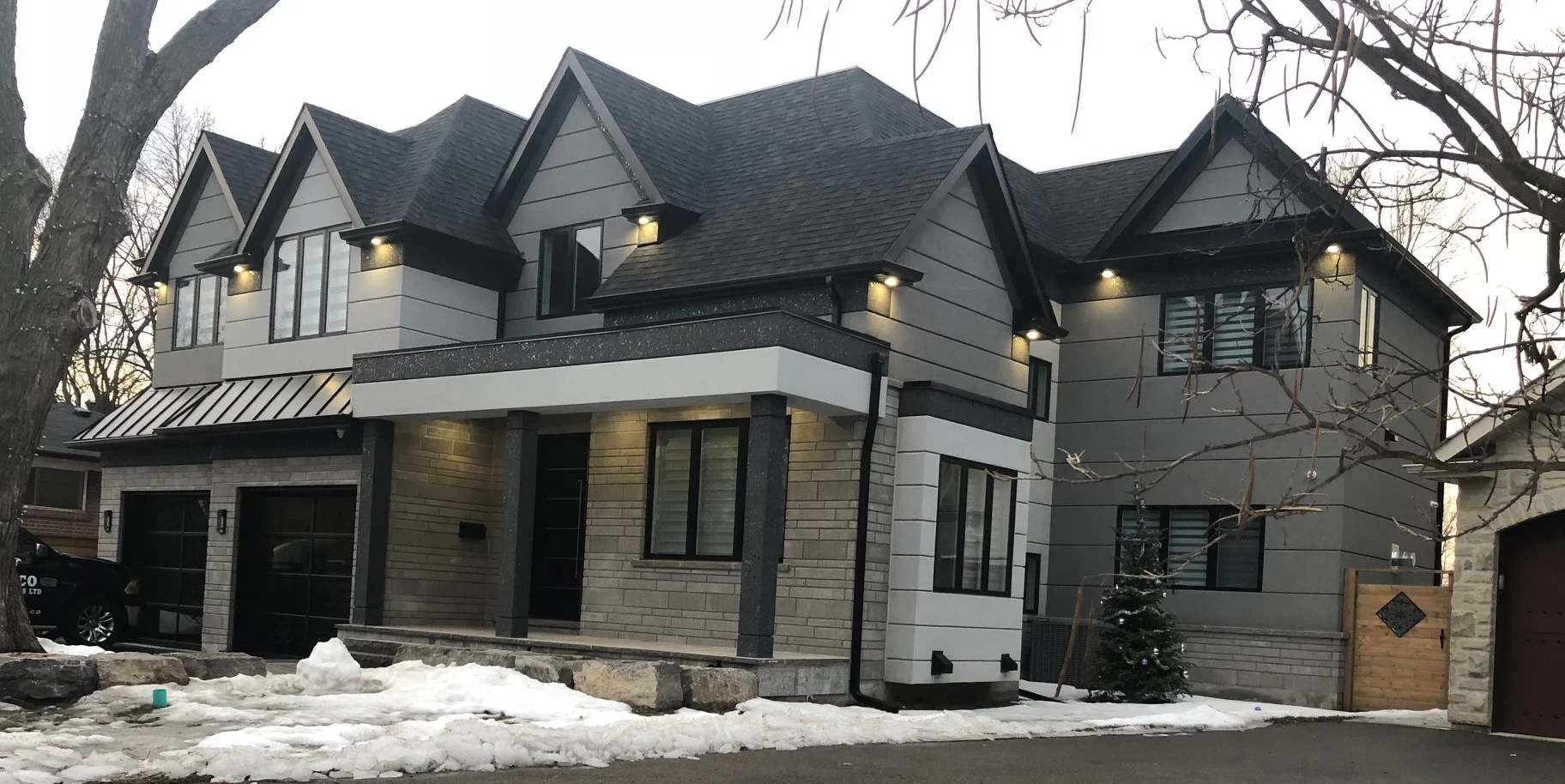
“How much does stucco cost?” is the first question on almost every call I take, so here are the real numbers. Stucco cost in Toronto and the GTA in 2026 runs $8–$16 per square foot installed for most residential work, and $10–$18 for commercial facades. After 25+ years quoting walls from Oakville to Markham, I can also tell you exactly what pushes a project to either end of that range — and it’s rarely what homeowners expect.
How much does stucco cost per square foot in the GTA?
Most GTA homes land between $8 and $16 per square foot installed. Traditional cement stucco sits at the lower half of that range; insulated acrylic EIFS sits higher because you’re also buying a continuous insulation layer. Height, access, prep work and detailing move the number inside the range more than the system choice does.
| Project type | Typical range (installed) | What drives it |
|---|
| Traditional cement stucco | $8–$12 / sq ft | Prep, lath condition, texture choice |
| Insulated EIFS (acrylic) | $11–$16 / sq ft | Foam thickness, detailing, trim profiles |
| Commercial facade | $10–$18 / sq ft | Height, phasing around tenants, code detailing |
| Accent wall / partial | $12–$18 / sq ft | Small-job setup costs spread over less area |
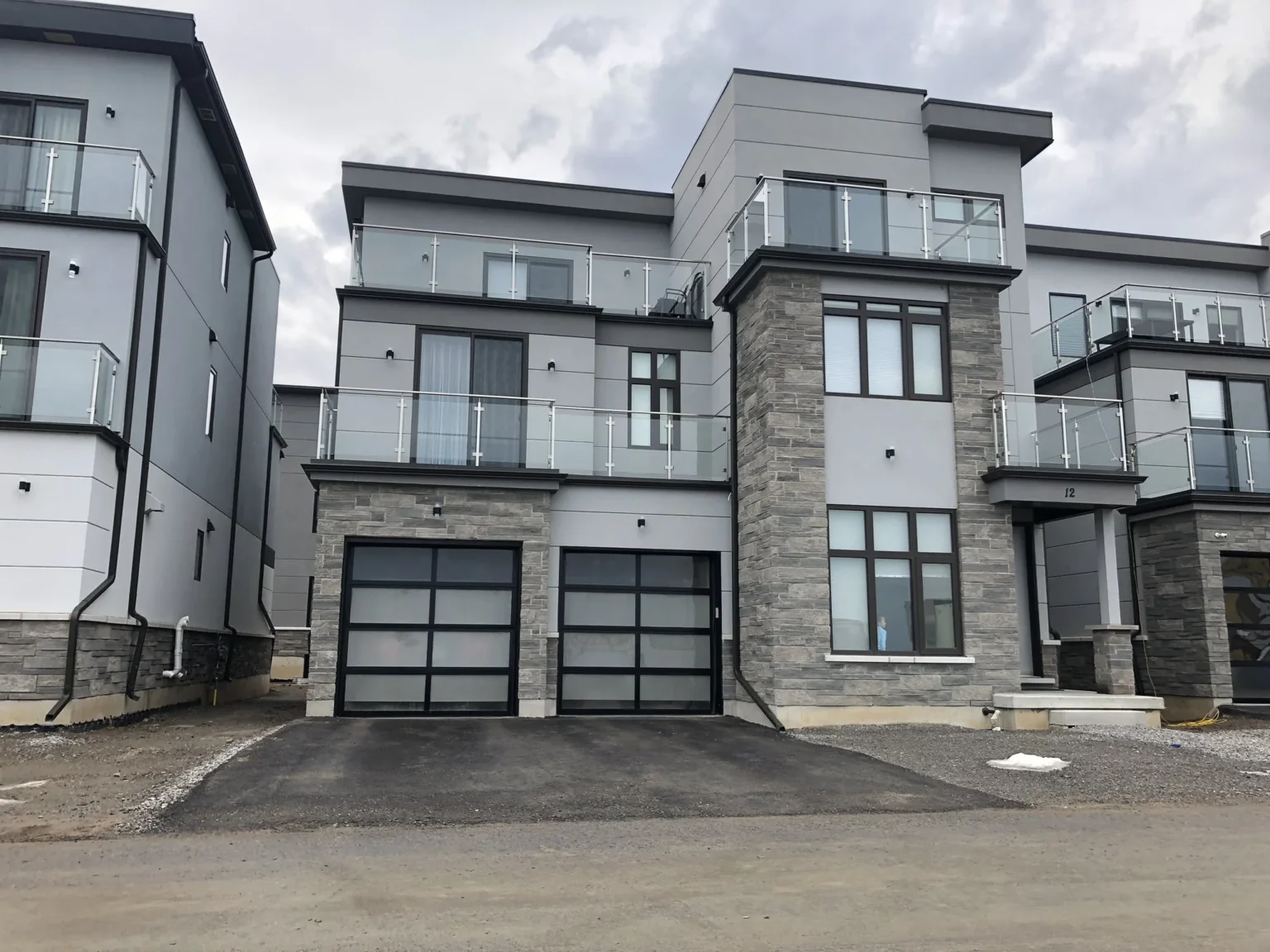
For a typical detached two-storey with about 2,500 sq ft of wall area, that works out to roughly $20,000–$40,000 for a full exterior. A bungalow with simple lines can come in well under that; a three-storey custom build in Vaughan with deep reveals and heavy trim can go over.
What makes a stucco quote higher or lower?
Five things decide most of the price: wall condition, height and access, the system you pick, the amount of detailing, and timing. A flat, sound wall at ground level with simple trim is the cheap end. Rotten sheathing, three storeys of scaffold, and ornate quoins are the expensive end — no matter which contractor you call.
| Factor | Moves the price | Example from our jobs |
|---|
| Wall condition | Up to +30% | Water-damaged sheathing in a 1990s Erin Mills subdivision had to come off first |
| Height & access | +10–25% | Downtown Toronto semis: tight lots, permit parking, full scaffold |
| System (cement vs EIFS) | +$3–4 / sq ft | EIFS adds foam insulation — higher upfront, lower heating bills |
| Detailing & trim | +5–20% | Kleinburg customs with banding, keystones and deep window returns |
| Season & scheduling | ±5–10% | Finish coats need above-freezing cure — spring slots book out first |
How much does stucco repair cost?
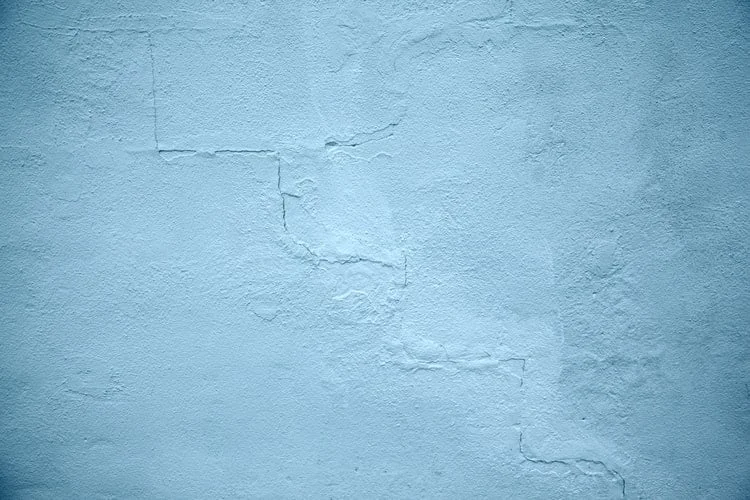
Small repairs are a few hundred dollars; bigger ones scale with what we find behind the finish. Hairline cracks and single impact holes are the cheap end. Water damage is the wild card — the visible stain is usually smaller than the wet substrate behind it, and the price follows the damage, not the stain.
| Repair | Typical range | Urgency |
|---|
| Hairline / map cracking | $300–$800 | Low — cosmetic, monitor |
| Impact hole or damaged corner | $400–$1,200 | Medium — water gets in eventually |
| Failed sealant / joints | $500–$1,500 | Medium — cheap insurance |
| Water damage / soft substrate | $1,500–$5,000+ | High — spreads into framing |
If you’re weighing repair against replacement, my rule from the tools: if the underlying system is sound, repair it and match the finish. If the base has failed across the wall, patching is throwing money at a wall that will keep failing — I’ll tell you which one it is on site, honestly.
Why do stucco quotes in the GTA vary so much?
Because “stucco” isn’t one product. One quote might be a thin coat over existing cladding with no prep; another is a full insulated EIFS system with new flashing and control joints. The cheap quote usually isn’t the same wall. Compare scope line by line, not the bottom number.
Three questions expose a weak quote fast: What exactly is the wall assembly, layer by layer? Where are the control joints and flashing details? Is the price fixed in writing? If any answer is vague, the “savings” usually show up later as cracks — I’ve rebuilt enough of those walls across the GTA to say that with confidence.
One more honest note: permits. Simple re-finishing usually doesn’t need one; structural changes or additions can. The City of Toronto lays out when a building permit applies — check toronto.ca’s building section or ask us during the assessment and we’ll flag it.
What does a written Stucco Wall Systems quote include?
Every quote we issue is free, fixed and in writing: the exact system and layers, prep work, control joint and flashing locations, colour and texture, timeline, and the total price. No hourly rates, no “we’ll see when we open the wall” surprises — if the scope changes, we re-quote in writing before touching anything.
Want a real number for your walls instead of a range? Send me the address and a couple of photos — we assess on site across Toronto, Mississauga, Oakville and the rest of the GTA, usually within a few days.