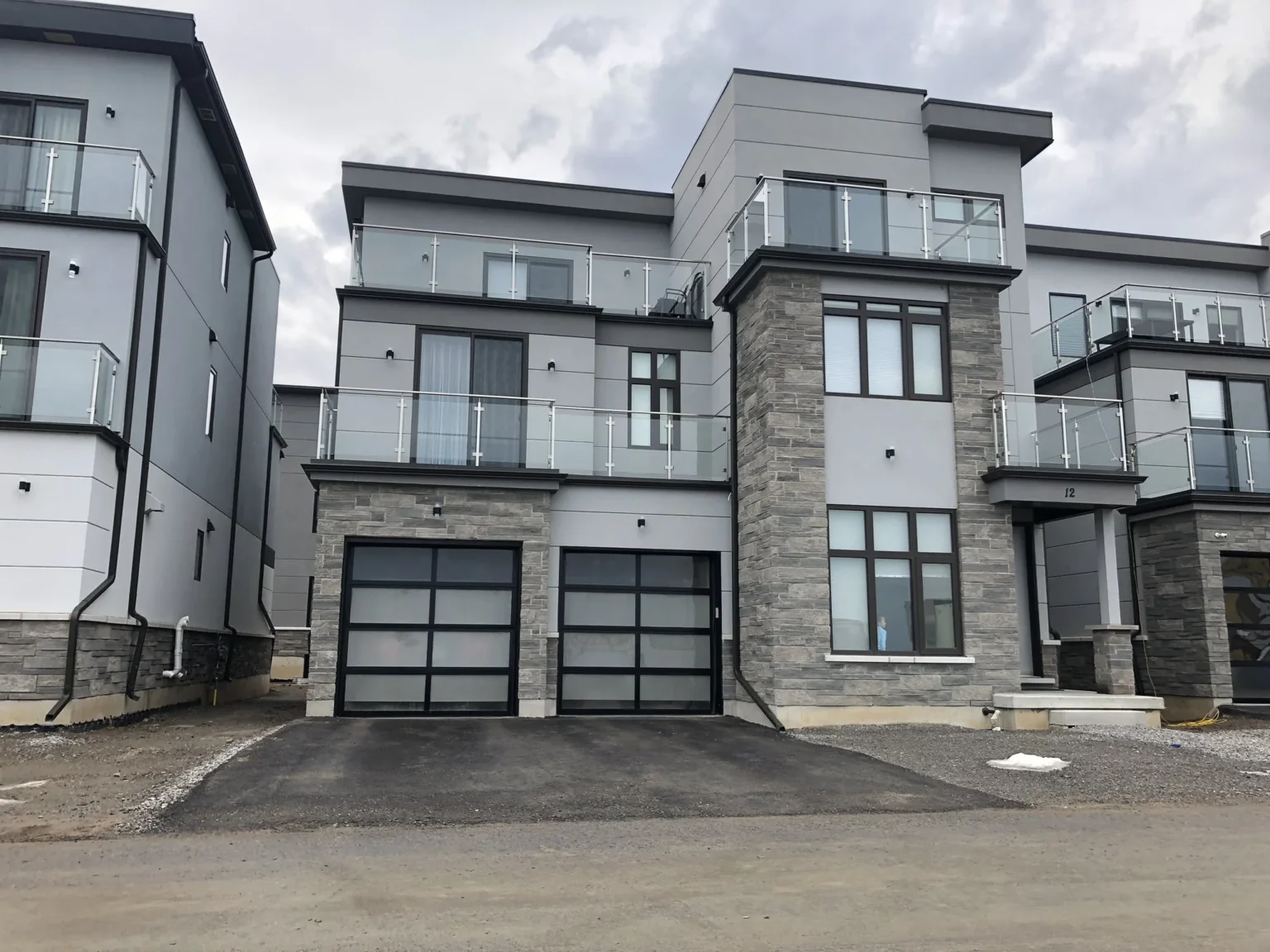
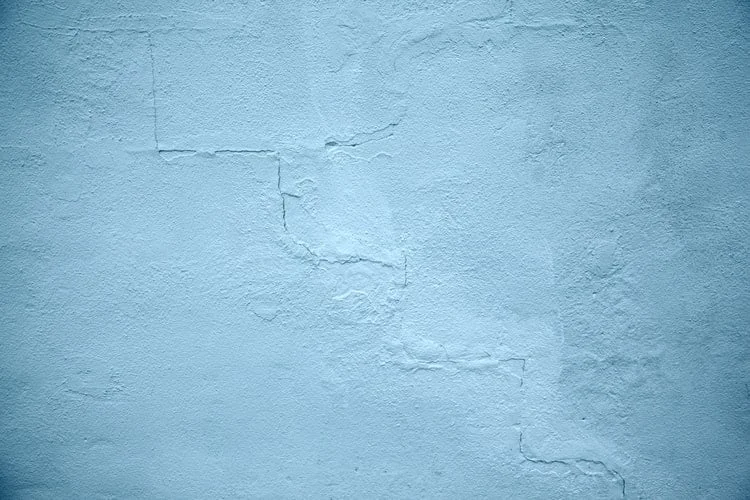
“What colour do I paint it?” is the wrong question for most stucco — because most of it isn’t painted at all, it’s mixed. Choosing a stucco colour for a GTA home really means choosing between two different systems: acrylic finish with the colour mixed all the way through, or traditional cement stucco painted after the fact. Pick wrong and you’re not just picking a shade — you’re picking a repaint schedule, a repair headache in ten years, or both. After 25+ years mixing and matching colour on walls from Oakville to Markham, here’s what I walk clients through before they fall for a 2-inch paint chip.
What's the difference between integral colour and painted stucco?
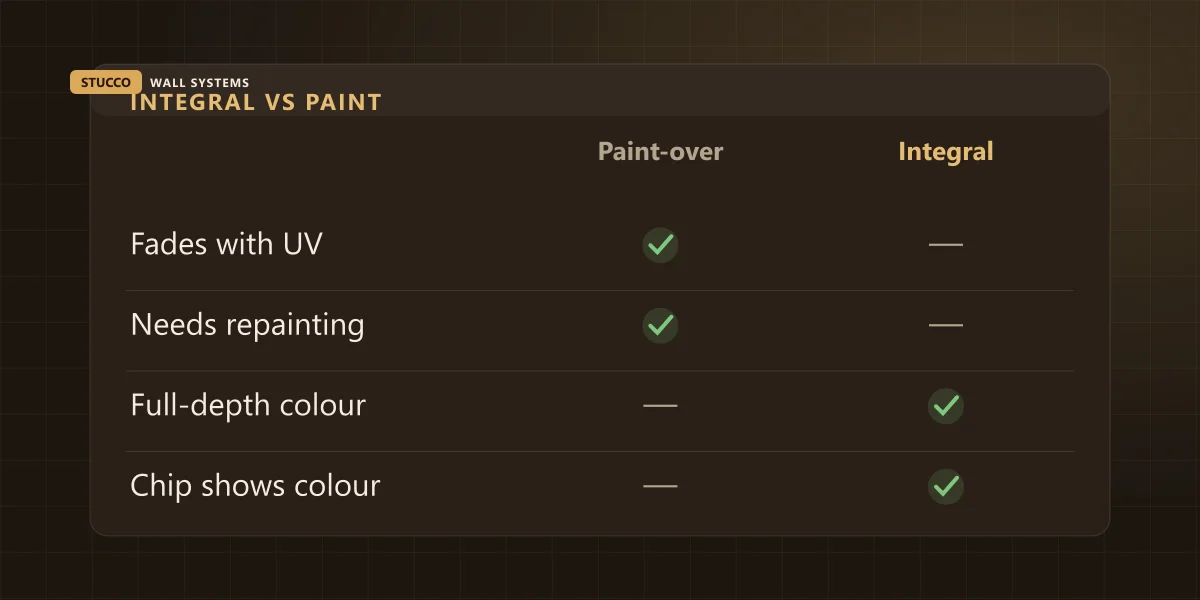
Integral colour is mixed into the acrylic finish coat itself, so a chip or scratch shows the same colour underneath — it can’t peel or wear through to something else. Painted stucco is cement finished in a neutral base, then coated with exterior paint on top, which sits on the surface and needs redoing roughly every 8–12 years as UV breaks the film down.
| Painted cement stucco | Integral acrylic colour |
|---|
| Where the colour lives | On the surface, on top of the finish | Mixed through the finish coat itself |
| Fades with UV over time | Yes — noticeably by year 8–10 | Minimal — slow, even weathering |
| Repaint cycle | Every 8–12 years | Never, unless you want a new colour |
| Chip or scratch shows | A different colour underneath | The same colour underneath |
| Typical GTA cost impact | Cheaper up front, ongoing repaint cost | Higher up front, no repaint line item |
Neither is wrong. A painted finish is the standard on most traditional cement stucco, including the century homes we work on in Riverdale and Roncesvalles, and repainting on schedule is just part of owning it. Integral colour is the norm on insulated EIFS, and it’s one of the quieter reasons that system costs more up front — you’re buying decades of colour, not just decades of wall.
How do you pick a stucco colour that still looks good in 15 years?
Sample the actual colour on a real wall section, in full sun and in shade, at two different times of day — not a 2-inch chip held up to the siding. Favour tones close to what’s already fixed on the house (roof, brick, stone, trim), and think about the repaint or repair cycle before you fall for a shade that photographed beautifully on someone else’s house in different light.
A paint chip lies to you in three ways. It’s tiny, so your eye can’t judge how a colour reads across 2,000 square feet of textured wall. It’s usually viewed indoors under warm bulbs, not GTA daylight. And stucco texture itself changes how a colour reads — a rough dash finish holds shadow in every pit and reads noticeably darker and more textured than the same mix in a smooth trowel finish. I’ve had clients pick a “warm greige” off a chip and end up with something that reads almost taupe once it’s spread across a real elevation in a heavy texture. Ask for a sample board or, better, a test patch on an inconspicuous corner of your own wall before we commit to the whole house.
The other trap is chasing a colour because it’s trending on a renovation feed. Trend colours cycle every 5–7 years; a stucco job is a 20–30 year decision on a painted wall and effectively permanent on integral acrylic. I’m not telling anyone to pick boring — I’m telling you to pick something you’ll still like in a decade, because that’s roughly how long you’re committing to it either way.
Which stucco colours actually hold up well on GTA homes?
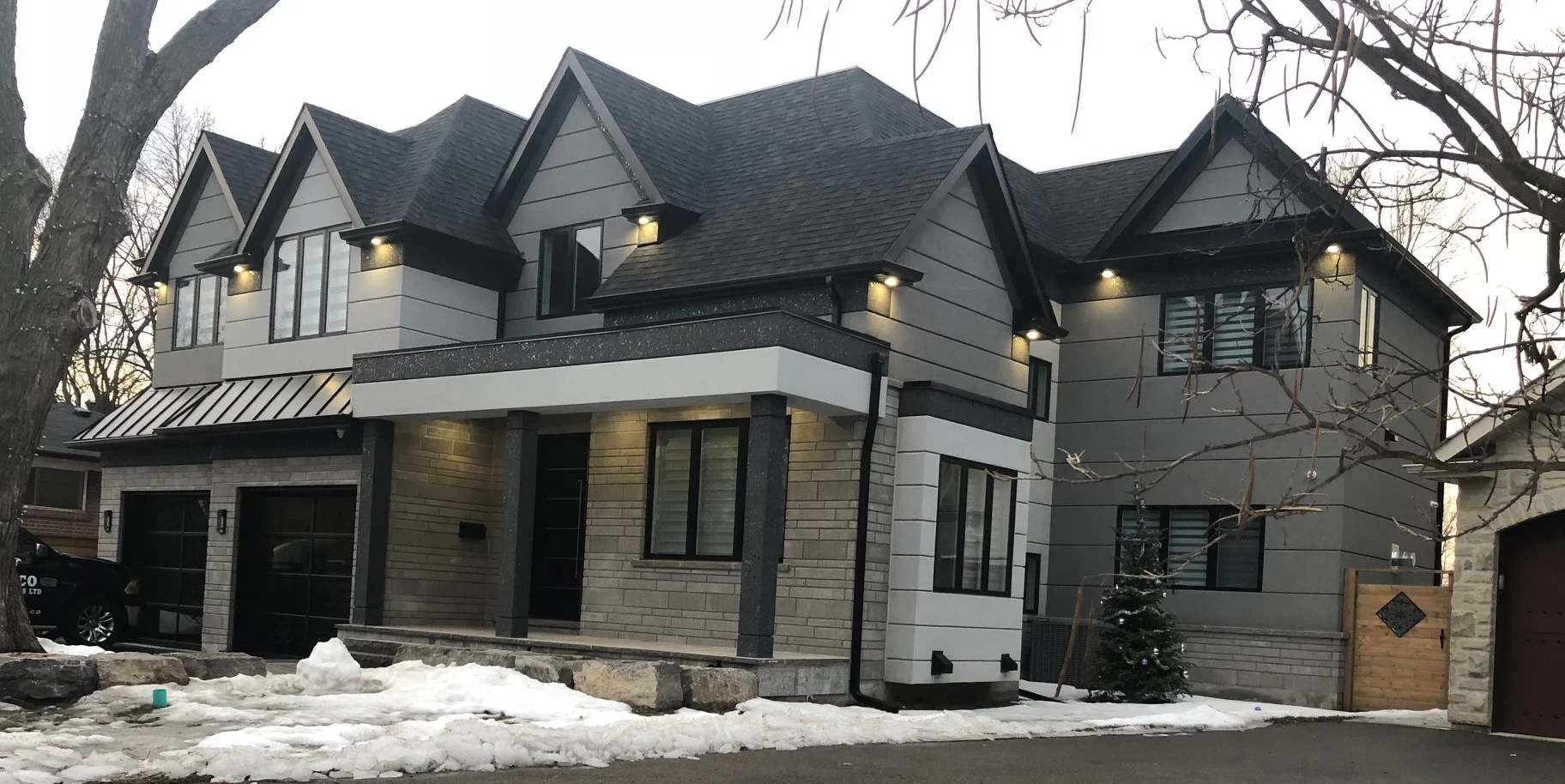
Warm greiges and soft neutrals are the most forgiving choice — they hide dust and minor weathering and pair with almost any brick or roof colour already on the house. Deep charcoal and near-black tones look sharp on new custom builds but show water spots, chalk streaking and pollen film faster than lighter tones, and they run hottest in direct summer sun.
| Colour family | Fade / weathering risk | Where it works well in the GTA |
|---|
| Warm greige / taupe | Low — most forgiving of dirt and UV | The safe, versatile default — most Erin Mills and Meadowvale re-clads |
| Soft white / cream | Medium — shows dirt streaks near downspouts and eaves | Classic look, needs a maintained downspout and grade to stay clean |
| Charcoal / deep grey | Medium-high — shows dust, pollen and water spots faster | Modern custom builds in Kleinburg and Vaughan, paired with black trim |
| Warm terracotta / brown | Low-medium — ages gracefully, complements masonry | Older Toronto streetscapes with brick neighbours — Roncesvalles-style |
None of that is an aesthetic rule — it’s just what I see coming back for repaint or re-coat first. A dark charcoal wall on a west-facing elevation in Vaughan takes more direct summer sun than almost anything else we colour-match, and it shows chalking sooner than the same mix would on a shaded north wall in Etobicoke. If you love the dark look, it’s not off the table — just budget the repaint cycle honestly, or spec it in integral acrylic so fading isn’t the failure mode at all.
Does stucco colour affect resale value?
A well-maintained neutral stucco colour supports resale because it reads as move-in ready; a heavily faded or unusually bold colour can cost you showings because buyers start mentally pricing in a redo. Neutral tones — greige, warm white, soft taupe — sell fastest and appeal to the widest range of buyers; personal statement colours narrow your pool, even if they look great to you.
I’m not a realtor and I won’t pretend to be one, but I’ve worked enough pre-listing jobs to notice the pattern: sellers rarely ask for a bold colour, they ask us to freshen a tired, chalky one back to something neutral before photos go up. A wall that’s clearly overdue for a repaint reads as deferred maintenance to a buyer walking the driveway, even if the stucco underneath is structurally perfect. That’s a cheap fix relative to what it can cost you in a soft offer.
Will a heritage district restrict what stucco colour I can use?
Most GTA homes have zero restriction on exterior colour — paint or re-colour however you like. The exception is a property inside a designated Heritage Conservation District or on the heritage register, where exterior colour and finish changes can require approval before you touch the wall.
This comes up most in older Toronto pockets — parts of Cabbagetown, Rosedale and the Annex carry heritage designations that govern exterior alterations, colour included. The City of Toronto publishes which areas and what triggers approval on its heritage preservation pages — see toronto.ca’s heritage preservation section if your street looks like it might qualify. We flag it during the assessment either way, but it’s worth checking before you fall in love with a colour that isn’t yours to choose.
How do you match stucco colour on a repair years later?
On integral acrylic colour, matching is straightforward — the mix is identifiable and consistent all the way through the material, so a patch made properly is genuinely hard to spot. On painted cement, matching is harder because the existing paint has weathered and faded unevenly across the wall; sometimes the honest answer is repainting the full elevation so the new patch doesn’t sit as an obvious clean square next to a dulled original.
That’s the same diagnose-first approach I use on crack repairs generally — the colour match only holds if the base repair is done right first. You can see what a properly matched repair looks like on a real wall in our Mississauga repair & restoration project.
Common stucco colour mistakes I see on GTA homes
Picking off a tiny chip instead of a full-wall sample, matching to a Pinterest photo shot in golden-hour light, ignoring the brick and roof colour already fixed on the house, and going darker than the owner can actually live with once it’s showing water spots — those four account for almost every colour regret I hear about.
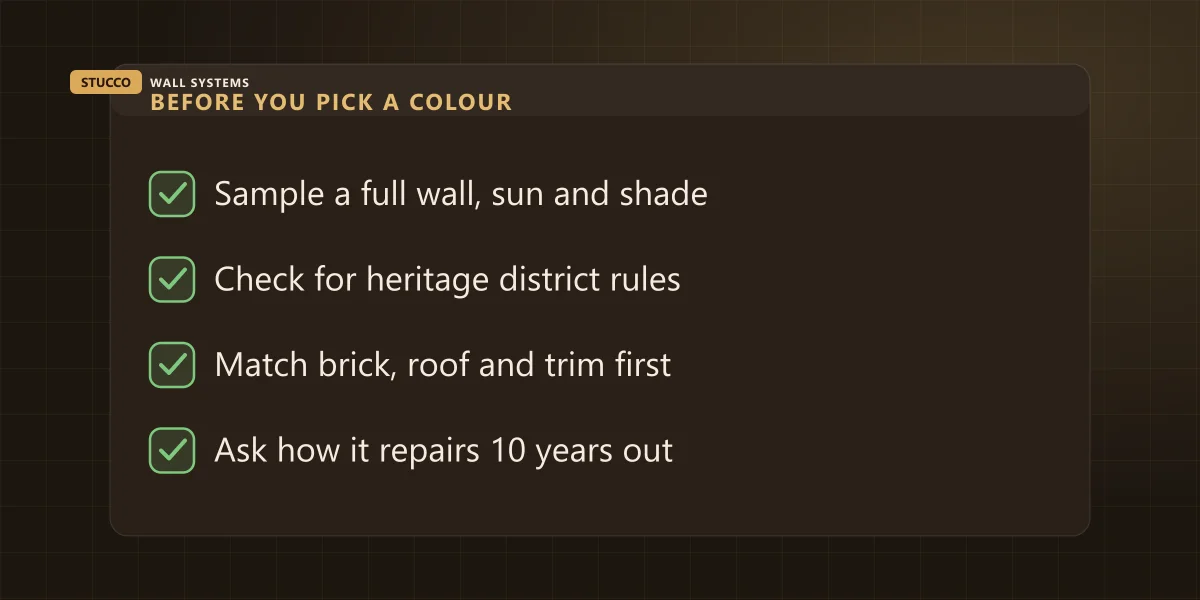
The fix for all four is the same: slow down before the order goes in. Get a real sample on your actual wall, check whether your street has any heritage rules, look at the colour next to your existing brick and trim in daylight, and ask your contractor directly how that colour behaves on repair and on repaint. If a contractor can’t answer that last one, they haven’t colour-matched enough walls to be advising you on it.
Not sure which system or colour fits your wall?
That’s exactly what a free assessment is for — we’ll look at your existing brick, roof and trim, walk you through integral versus painted for your specific wall, and give you sample boards to test in your own light before anything gets ordered. Every quote is written and fixed, for a home or a commercial building anywhere across the GTA. Send us your address and a few photos and we’ll talk colour honestly, not just upsell the darkest chip on the board.