“Should I do stucco or brick?” comes up on almost as many calls as “how much does it cost?” Stucco vs brick in Ontario isn’t a question with one right answer — it’s a question about what you’re actually optimizing for: upfront cost, long-term maintenance, insulation, or matching the house next door. I’m a stucco contractor, not a mason, so I won’t pretend to price brick to the dollar the way I price my own walls — but after 25+ years quoting stucco jobs against brick bids on the same houses across the GTA, I’ve got an honest read on where each one actually wins.
How much does brick cost compared to stucco in Ontario?
Stucco usually costs less to install. Residential stucco runs $8–$16 per square foot installed; a full clay brick veneer typically runs $15–$25 per square foot once you include the brick ledge, flashing and labour — that’s the range I hear back from clients who get both quotes on the same house.
| Traditional cement stucco | Insulated EIFS | Clay brick veneer |
|---|
| Typical installed cost | $8–$12 / sq ft | $11–$16 / sq ft | $15–$25+ / sq ft |
| Structural prep needed | None beyond sheathing | None beyond sheathing | Foundation brick ledge or shelf angle |
| Adds insulation | No | Yes, continuous foam | No, add separately |
| Typical GTA use | Older homes, re-clads | New builds, Kleinburg/Vaughan customs | Traditional Toronto streetscapes |
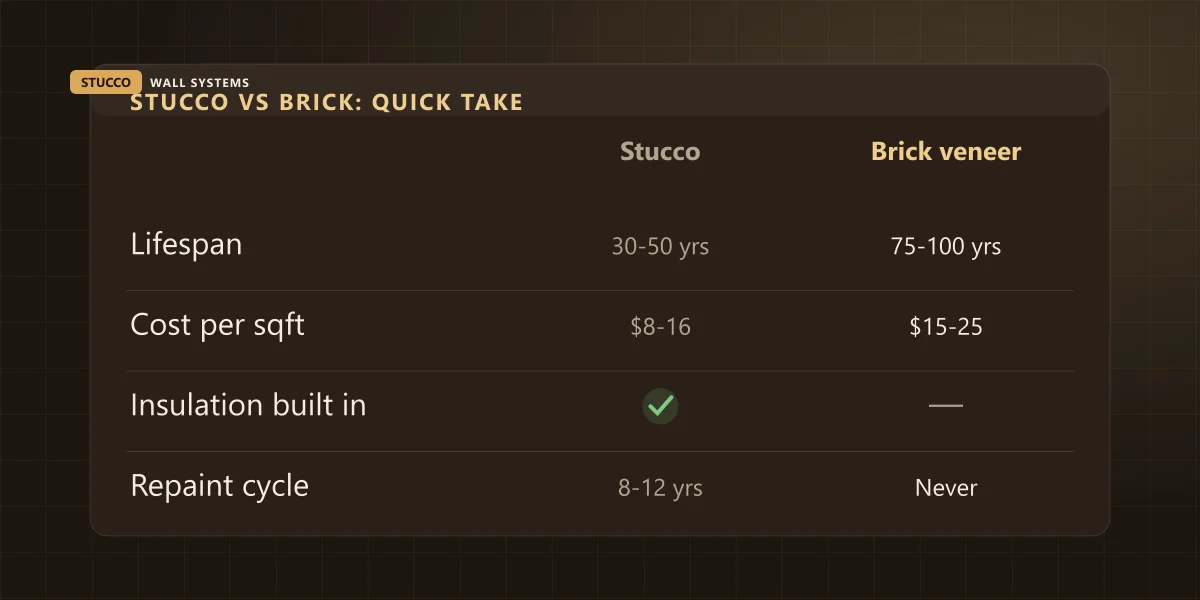
That brick number isn’t a wall I’d put my name on — it’s the general market range, and it moves a lot with brick selection. Reclaimed or specialty brick to match a century home in Riverdale costs real money over standard modern brick. If you’re comparing bids, ask both trades for the same thing I quote: a full written scope, not a per-square-foot number floating with no assembly behind it.
Does brick last longer than stucco?
The material itself, yes. A well-built clay brick veneer can outlast the house it’s on — 75 to 100-plus years is normal. Stucco, done right and maintained, runs 30–50 years. Neither number means much on its own, though — both systems fail on the details behind the finish, not the finish itself.
Brick's long life is really the clay unit's life. The wall assembly behind it — the airspace, the weep holes, the flashing at the base and over openings — is what actually decides whether that brick stays dry for a century or starts spalling in twenty years. I’ve seen 1980s brick veneer in Etobicoke with weep holes buried under decades of landscaping mulch, holding water against the back of the brick every winter. The brick itself was fine. The detailing around it wasn’t. Stucco has the same story with a different villain — that's the whole subject of why stucco cracks in GTA winters, and it comes down to the same thing: water finding a way in and freezing.
How do stucco and brick handle water and freeze-thaw differently?
Brick veneer relies on an airspace and weep holes behind the brick to drain water out; block those and moisture gets trapped, freezes, and spalls the brick face. Modern stucco (drainable EIFS or properly detailed cement) uses a drainage plane behind the finish for the same purpose. Both systems are only as good as that hidden drainage layer — not the visible finish.
This is genuinely a building-science question, not a brand preference, and the Canada Mortgage and Housing Corporation has published good plain-language material on how rainscreen wall assemblies are supposed to manage water behind any cladding — see cmhc-schl.gc.ca if you want the technical version. In practice on GTA houses: brick spalling shows up as the face of the brick popping or flaking off, usually near grade or under a window sill where water concentrates. Stucco cracking shows up as hairline map-cracking or, worse, cracks that follow a corner where flashing failed. Different symptom, same root cause — water that had nowhere to go, freezing and expanding.
Which is cheaper to repair, stucco or brick?
A single damaged brick is cheap to cut out and replace — often a few hundred dollars for a small area. Where brick repair gets expensive is colour-matching: older brick runs are frequently discontinued, and repointing mortar across a large wall is slow, skilled labour. Stucco repairs run a similar range for similar-sized damage, but colour and texture match are more forgiving.
| Repair scenario | Brick veneer | Stucco (cement/EIFS) |
|---|
| Small localized damage | $300–$1,000, if brick is matchable | $300–$1,200 |
| Discontinued/hard-to-match material | Can force a full elevation re-face | Rare — texture and colour re-mix easily |
| Water damage behind the finish | $1,000–$5,000+, plus masonry access | $1,500–$5,000+ |
The honest wildcard on both sides is what’s behind the finish once you open it up. On stucco jobs, that’s the difference between a patch repair and a full re-clad. On brick, it’s the difference between replacing a course of brick and discovering the sheathing behind it has been wet for years. Neither trade can honestly price that over the phone — it's an assessment, not a guess.
Which one looks better and holds resale value in the GTA?
Both hold value when they're well maintained; neither wins outright. Brick reads as traditional and low-fuss to most buyers, especially in older Toronto neighbourhoods where it's the dominant material. Insulated stucco reads as modern and custom, and it's become the default look on new builds in Kleinburg, Vaughan and parts of Oakville — a heavily painted, chalky stucco wall reads as deferred maintenance either way.
What actually moves resale isn’t the material, it’s the condition and the fit with the street. A pristine brick semi in Roncesvalles and a crisp, freshly finished stucco custom in Kleinburg both show well — because both look cared for and match what buyers expect on that street. A tired brick veneer with efflorescence staining, or a faded, cracking stucco wall on the same block, both cost you showings. I’d rather see a homeowner spend on maintaining what they have than tear off sound brick to chase a trend, or vice versa.
Can you combine stucco and brick on the same house?
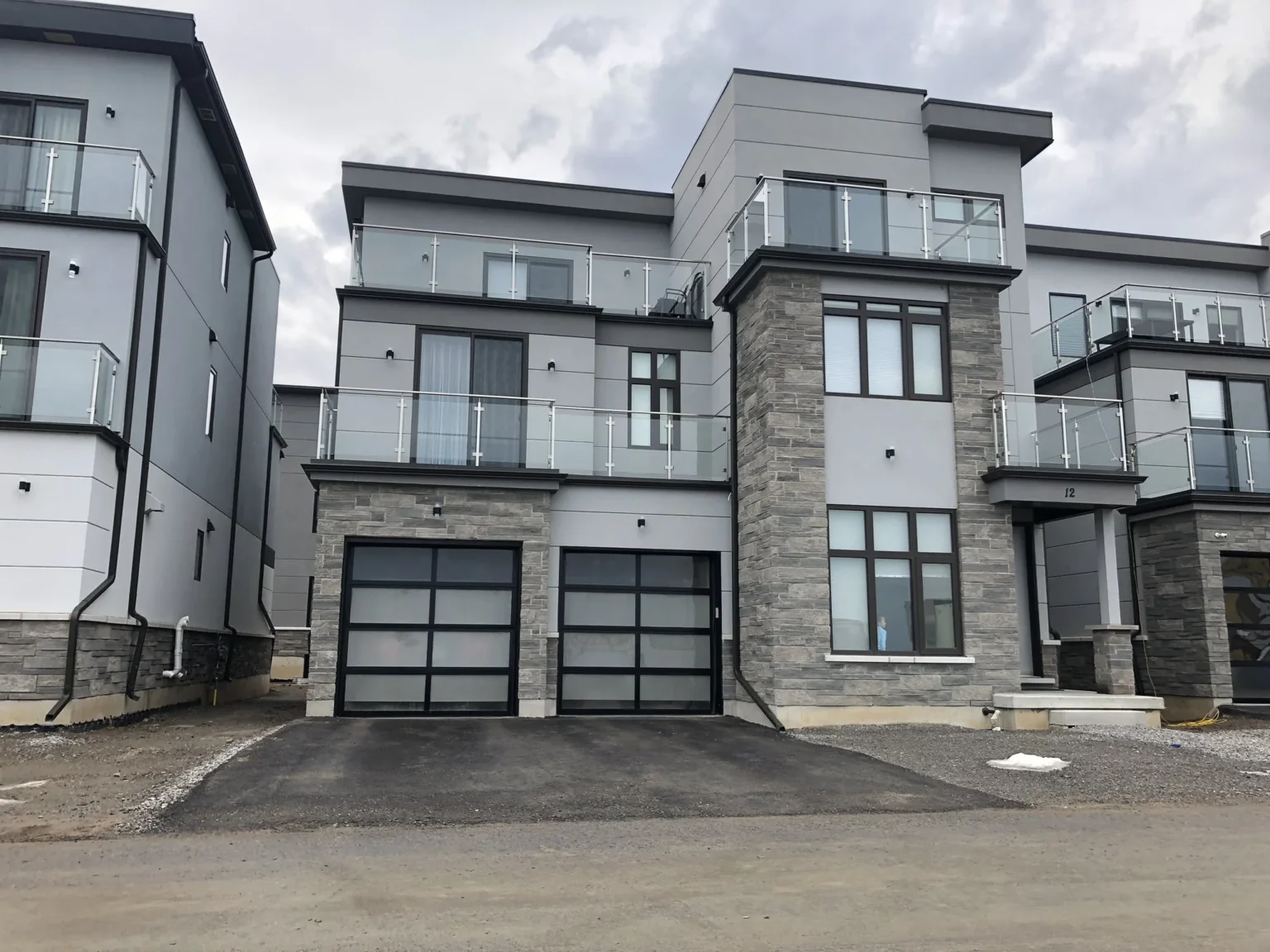
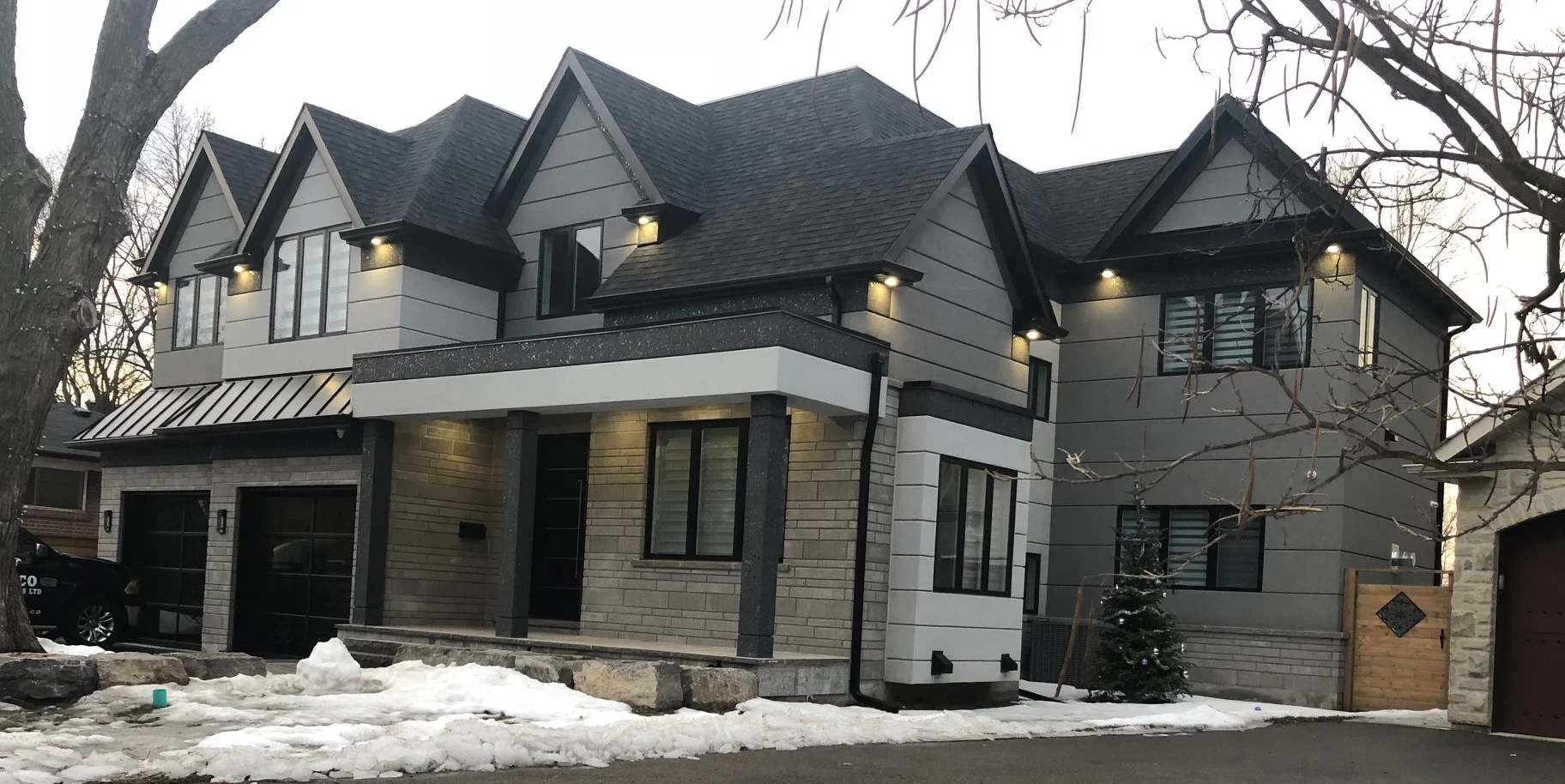
Yes, and it's one of the more common custom-build details we install — stucco on the upper storeys with a brick or stone base, or brick returns around entries with stucco fields elsewhere. The transition detail (flashing where the two materials meet) is the part that has to be right, or that seam becomes the first place water gets in.
On new builds especially, this mixed approach lets a homeowner get brick’s low-maintenance look at grade — where it takes the most weather and physical abuse — with stucco’s lighter weight and insulation value everywhere else. It's a good compromise when done with a proper transition detail, and a leak magnet when it isn't. If your builder's drawings show a material transition without a flashing detail called out, ask about it before the wall goes up, not after.
So which one should you actually pick?
If minimizing upfront cost and getting continuous insulation matters most, EIFS stucco usually wins. If you want the lowest-maintenance, longest-horizon material and don't mind the higher installed cost and the structural prep it needs, brick usually wins. Most GTA homeowners I quote aren't choosing in a vacuum — they're matching what's already on the house, or what's already on the street.
I won’t tell you brick is wrong, because it isn’t — it's a genuinely excellent material when the assembly behind it is built right, same as stucco. What I will tell you honestly is what I tell every client: get both quotes in writing, with the full assembly spelled out layer by layer, and compare the real scope, not just the number at the bottom. You can see both systems on real GTA houses in our project portfolio, including the Mississauga repair & restoration project where the original assembly, not the finish coat, was the actual problem.
Not sure which wall makes sense for your house?
That's exactly what a free, on-site assessment is for — I'll look at your existing structure, your street, and your budget, and tell you honestly which system I'd put on it if it were my own house. Every quote is written and fixed, for a home or a commercial building anywhere across the GTA. Send us your address and a few photos and we'll talk it through, brick bid and all.