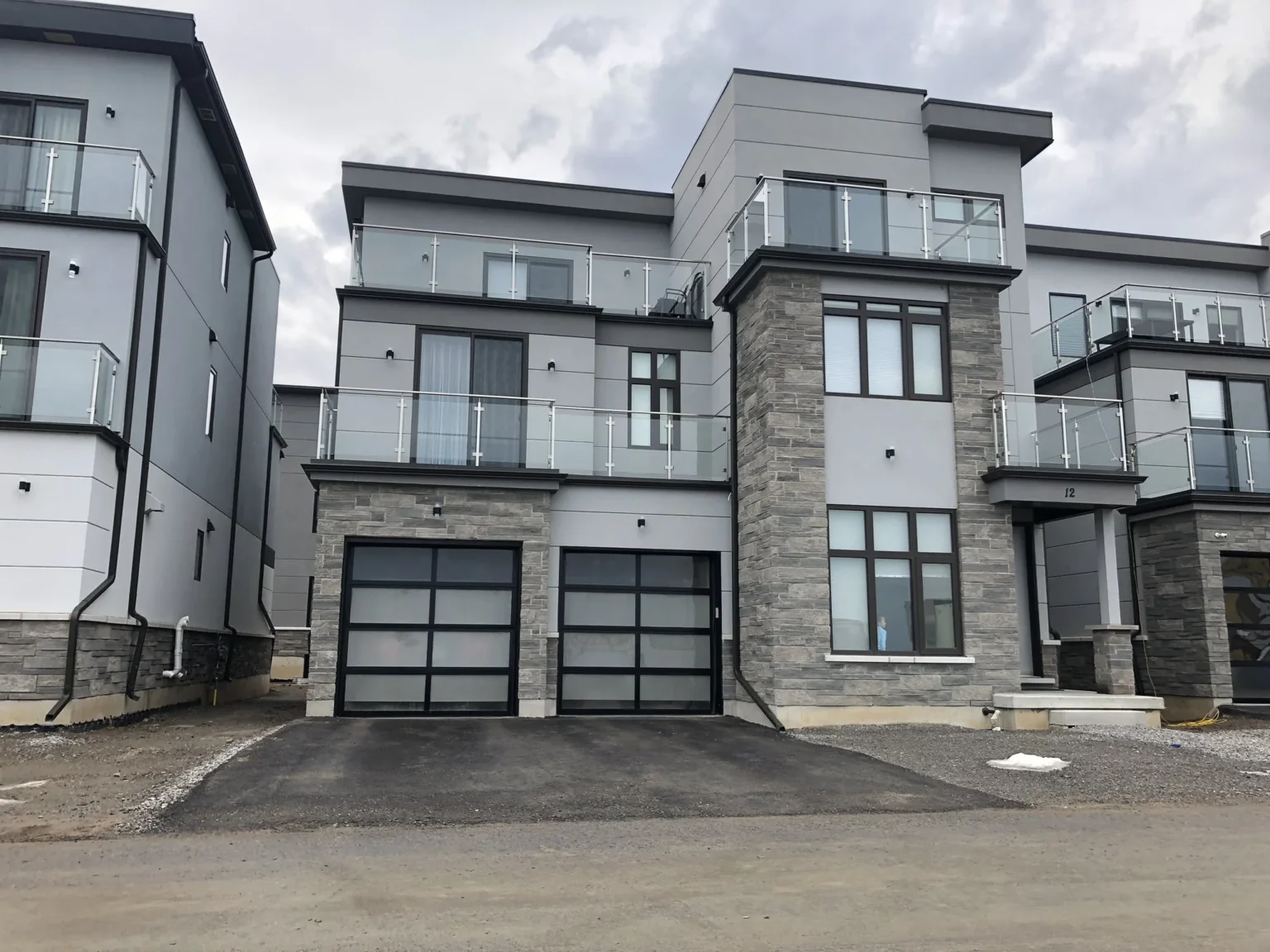
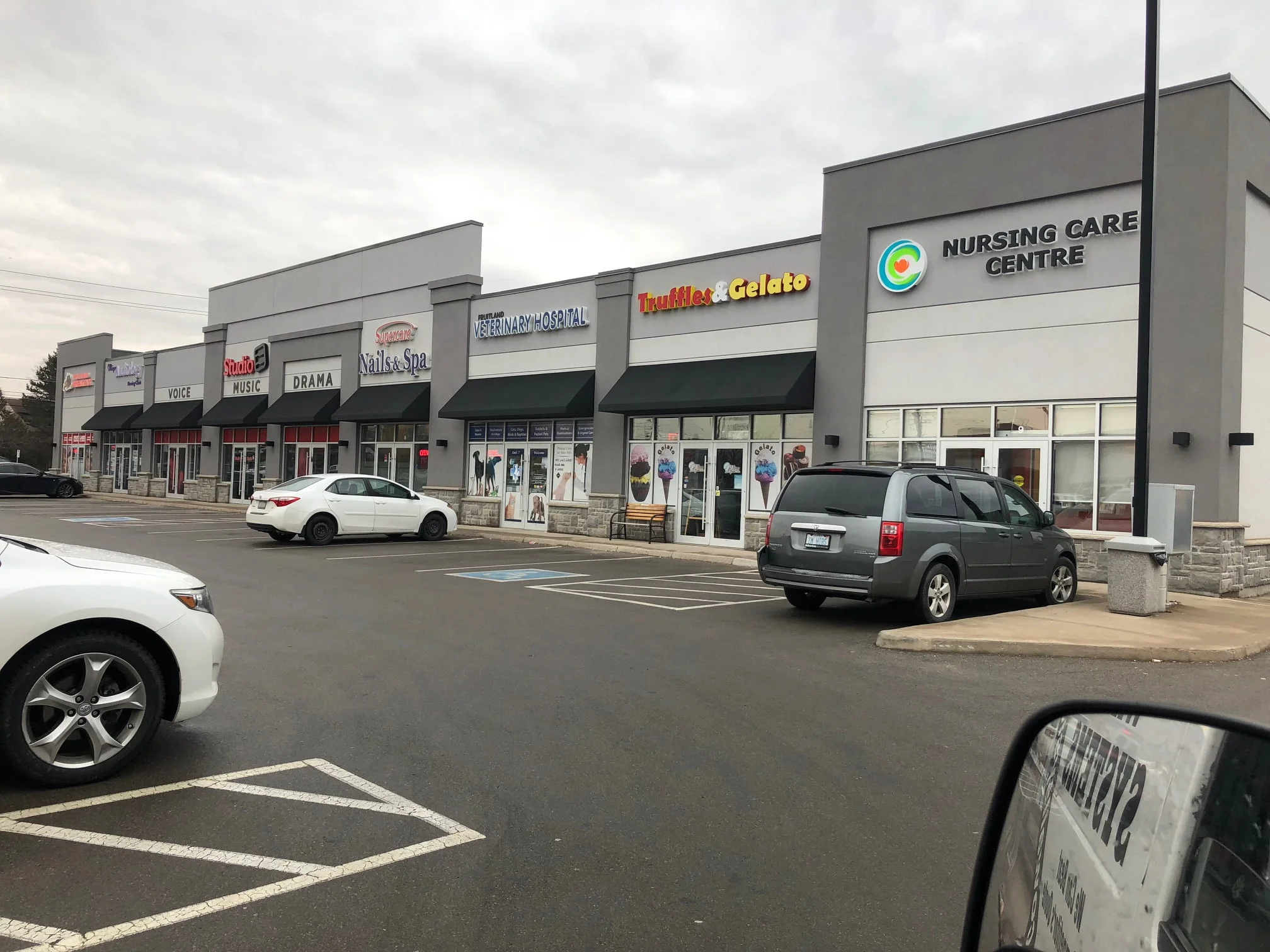
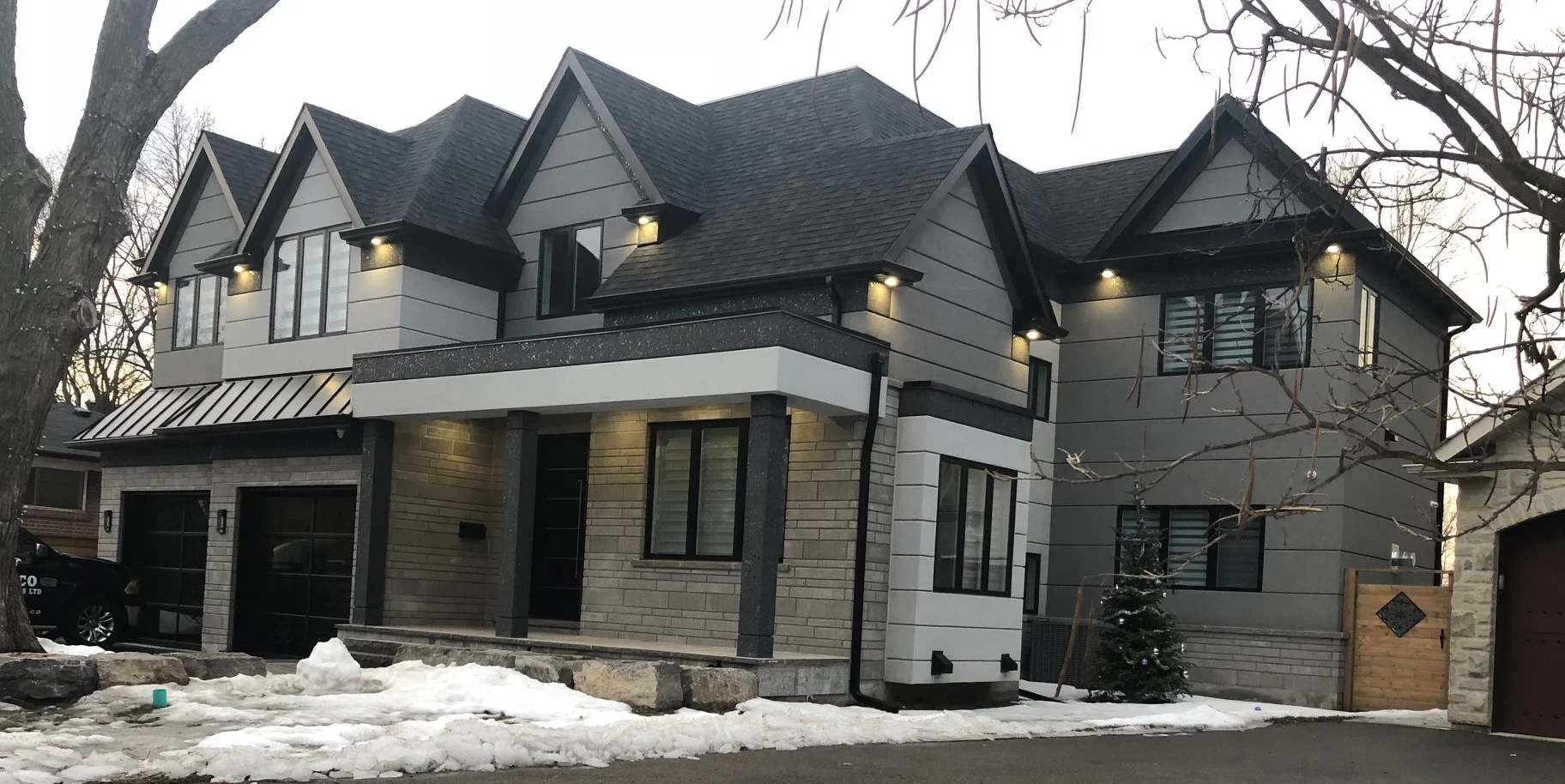
I get a version of this call every spring. Somebody in a townhouse block off Erin Mills sends me three photos of a cracked wall, asks what stucco repair is going to cost, and is thrown when my first question has nothing to do with the crack. It is: do you actually own that wall?
Maybe half the time the answer is no. The person about to pay me is standing in front of a common element their condominium corporation is already obliged to look after, and that money would have come out of their pocket twice. The other half, they own the wall outright and have spent a year and a half emailing a property manager who was never responsible for it. Both are expensive, and both get settled in one afternoon with paperwork that is already sitting in a drawer.
I have been on the tools in the GTA for 25+ years, and a good share of that is townhouse work in Mississauga, Vaughan, Markham and Milton, where whole blocks went up clad in stucco and EIFS through the 2000s and are all coming due at once. Here is how ownership really works on those walls, what happens when one owner goes it alone, and what the work is worth.
Who pays for stucco repair on a condo townhouse?
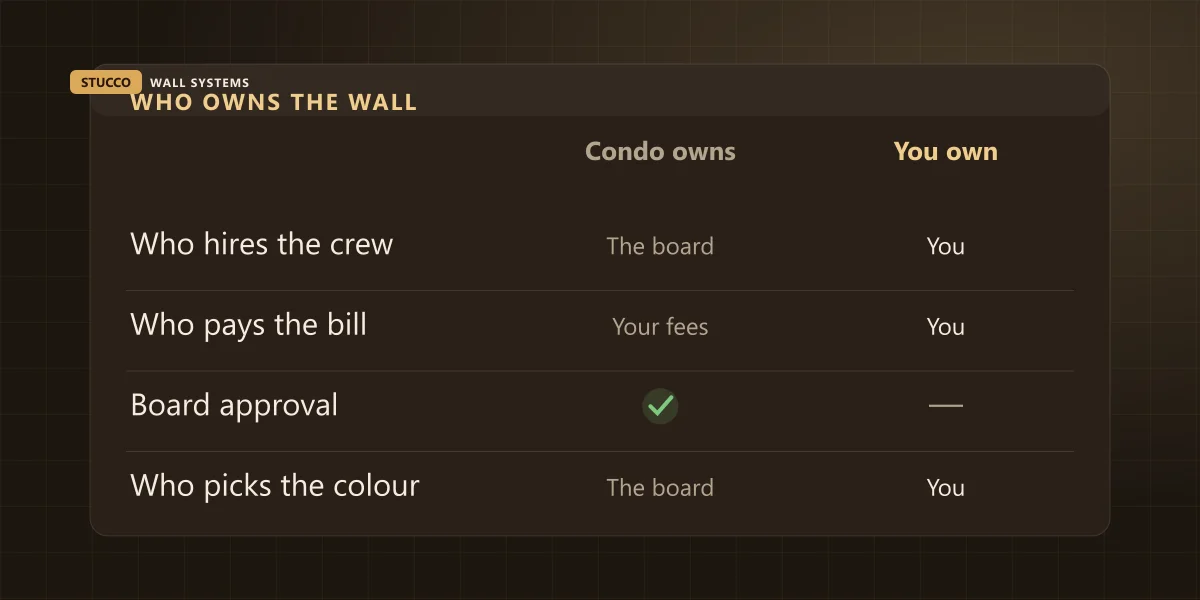
In a standard condominium the exterior walls are common elements, so the corporation repairs them and the cost comes out of common expenses — your monthly fee and the reserve fund. In a freehold townhouse the wall is yours and so is the bill. Your registered declaration decides that, not the shape of the building.
That last part is what people skip. From the sidewalk, three blocks in the same subdivision can look identical and be owned three different ways. What separates them is a document registered on title, and the building itself tells you nothing at all. I have stood in front of two blocks across a street from each other, same builder, same finish, same year, and one of them was a corporation's problem and the other was not.
Three arrangements cover almost everything I run into around here.
| What you actually own | Who owns the stucco | Who pays for the repair |
|---|
| Standard condominium townhouse | The corporation — the wall is a common element | The corporation, from common expenses and the reserve fund |
| Common elements condominium (POTL) | You. The house and lot are freehold | You, directly. The fee covers the road and grounds only |
| Freehold townhouse, no corporation | You | You, and nobody has to approve the colour |
The middle one catches the most people out. A common elements condominium — you will hear it called a POTL, a parcel of tied land — means the corporation owns the private road, the visitor parking and the grass, and nothing else. Your house, your lot and every square foot of stucco on it are freehold. You pay a monthly fee, you have a property manager's phone number, and none of that has the slightest thing to do with your walls. I have quoted people who spent two years waiting for “the condo” to deal with a wall the condo had no legal interest in whatsoever.
Worth saying plainly before we go further: I am a plasterer, not a lawyer. What I can tell you is what I see on jobs and what the documents are called. If there is real money or a genuine dispute in it, reading your own declaration is a job for a lawyer, and the province publishes the Condominium Act, 1998 in full if you want the framework sitting behind all of this.
How do I tell which one I own?
Four documents settle it and you can have all four inside a week. Your monthly fee proves a corporation exists but says nothing about what it covers. The declaration defines what is unit and what is common element. The status certificate summarises it. The parcel register says whether the land under your house is yours.
Read them in that order and stop as soon as you have your answer.
- The declaration. This is the document, and everything else is a summary of it. It sets the boundary of your unit — frequently the inside face of the exterior wall, which puts everything outside that face into common elements. Every owner is entitled to a copy; the property manager or a board member can send you one.
- The status certificate. Ordered from the corporation, this is the plain-language package a buyer's lawyer reads: fees, the state of the reserve fund, and anything the corporation knows about that could push costs up. If a block-wide cladding project is coming, this is usually where it surfaces first.
- The reserve fund study. The corporation has one, updated on a legislated cycle, and it is essentially a schedule of major components with an expected replacement year and a cost against each. If the cladding is in there, somebody has already planned to spend money on your wall and you are entitled to ask when.
- The parcel register. Cheap to pull and it ends the POTL argument, because it shows whether your lot is a freehold parcel or a unit inside a condominium plan.
There is a shortcut that works most of the time. Ask the property manager who paid the last time anything was done to the outside of the building. Whoever cut the cheque for the roof or the front doors almost always owns the walls too.
Why patching your own section of a block goes wrong
Because the block is one wall. Your property line runs through it on a drawing and nowhere else. Stucco has no idea where your unit stops, so a repair that stops there announces itself for the rest of the building's life — and it is the one repair I regularly get called back to fix twice.
The pattern is always the same. An owner hires a crew to sort out the cracking over their own front door. The crew does honest work inside the boundary they were given and goes home. Two years later that elevation reads as five units and one rectangle.
Five things have to line up for a patch to disappear, and on a shared elevation four of them sit outside any one owner's control.
| What a patch on a shared wall has to match | Why it is hard here | What you get when it is missed |
|---|
| The finish colour | Integral colour on the block has been fading evenly since the builder’s crew left | A rectangle a shade lighter than everything around it, permanently |
| The texture | It is hand-applied. Two plasterers with the same product leave two different walls | A visible outline that shows up in low evening light |
| Where the repair stops | The party wall is a line on a plan, not a break in the stucco | A hard edge across the middle of an elevation that never blends out |
| The control joint layout | Joints were laid out for the whole block, not for one unit | A fresh crack a season later, running from wherever the patch ended |
| Access and staging | Mixing, scaffold and tarps land on ground that may be common element | A stop-work call from the property manager halfway through |
The colour row deserves a sentence of its own. If the block has an integral-colour finish — pigment mixed through the material rather than paint laid over it — then every unit has been weathering together, evenly, since handover. A new patch is a brand-new wall dropped into the middle of a fifteen-year-old one. It does not settle in later. It stays a shade off, and raking light at the end of the day makes it worse. I went through the whole problem in why stucco repairs show, and the fix; the honest short version is that you break a repair at a natural line — a control joint, a corner, a change of plane — never at an invisible property boundary.
On a standard condominium there is a permission problem stacked on top of the technical one. The cladding is a common element, so altering it normally needs the board's written approval before anybody opens a bag. A crew that works without it can be stopped on the spot, and the owner who hired them can end up paying a second time to put the wall back the way it was.
What does stucco work on a townhouse block cost?
Single-unit work is priced like any other stucco repair: $120–$400 for one crack routed out, meshed and matched, and $450–$1,200 for a visit covering a few of them. Whole-block work sits in the residential band at $8–$16 per square foot installed, and it always comes out cheaper per foot than one unit on its own ever can.
| Scope | What actually happens | What it costs |
|---|
| One crack on one unit | Routed out, reinforced, rebuilt and texture-matched | $120–$400 per crack |
| A few cracks in one visit | Same work, one mobilization, one set-up | $450–$1,200 for the visit |
| One unit with water behind the finish | Wall opened, sheathing replaced, flashing corrected, rebuilt | Up to $5,000 or more, depending what is behind it |
| A whole elevation across the block | Repairs first, then one continuous finish pass over every unit | $8–$16 per square foot installed |
| Phased across budget years | Whole elevations only — never half of one | Same rate. The saving is on mobilization, not on the wall |
A block being cheaper per foot is not a discount, it is arithmetic. Setting up costs the same whether I finish 400 square feet or 4,000: the same trip, the same staging, the same mixing station, the same tarps over the same cedars. Spread across twelve units it vanishes into the rate. Spread across one, it is most of the invoice. That is also why a small job reads expensive per square foot on paper, which I get asked about constantly and which is not me having a good day at somebody's expense.
If a board is phasing the work across budget years — and on a large block it usually is — the split has to land on a whole elevation. A finish coat goes onto a wall in one continuous pass, so half this year and half next year leaves a band across the middle that will not rub out. The long version of how phased exterior work gets surveyed, staged and priced is in how a facade restoration really runs. A townhouse block is the same logic at a smaller scale.
How do I get the corporation to actually do it?
In writing, with dated photographs, to the property manager, and framed as water rather than as looks. A leak reaching the inside of a unit is a repair obligation with urgency attached. Cosmetic cracking is a reserve-fund item that gets scheduled. Which of those two you describe changes how fast anything moves.
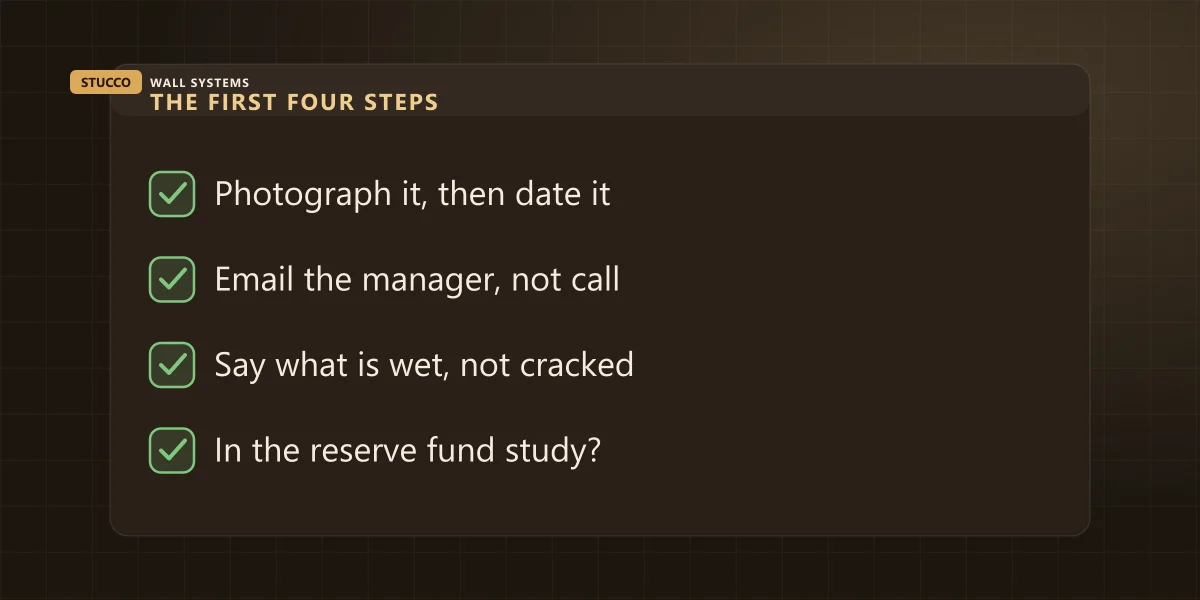
The sequence that works, in order:
- Photograph it properly and date it. One wide shot showing where on the block it sits, then close-ups, then anything visible inside — staining, a soft spot, paint lifting off drywall.
- Email the manager, do not phone. An email with the photos attached creates a record with a date on it. A phone call creates nothing anyone can find in two years.
- Say what is wet, not what is cracked. “There is water staining inside the front bedroom wall” moves considerably faster than “the stucco is cracked”, and it is the more accurate description of the actual problem anyway.
- Ask whether it is in the reserve fund study, and in which year. A specific question in writing gets a specific answer far more often than a complaint does.
- Ask whether the corporation has had a condition survey done on the blocks. If the answer is no, that is the sensible first spend — it is what turns a maintenance argument into a costed plan.
- Get the answer in writing. Boards turn over every couple of years. The paperwork is the only thing that outlasts them.
We do quote corporations and property managers directly — that is ordinary work for us, and how we set a scope out for a manager is on the commercial stucco page. But an owner forwarding a contractor's phone number to a board rarely helps anybody. What a board can act on is a documented condition and a process it can defend to every other owner in the block.
Buying into a stucco block?
Do the ownership check before you waive conditions, not after you get the keys. If the walls are common elements, you are buying a share of everything they need over the next twenty years, and the status certificate plus the reserve fund study is exactly where that shows up. If the walls are yours, freehold or POTL, it is an ordinary exterior inspection and any repair is yours alone to fund.
Either way the wall is worth walking. What to look at, junction by junction, is in eight things to check on a stucco house before you buy. On a block, add one item to that list: walk the entire elevation, not just the unit you are buying, and see whether one section already looks different from the rest. If it does, somebody has been down this exact road ahead of you, and the result is on the wall.
The short version
Find out whose wall it is before you spend a dollar on it. If it belongs to the corporation, put it in writing, describe the water rather than the cracks, and ask about the reserve fund study by name. If it is yours, treat it like any other exterior wall and get it looked at while it is still a crack instead of a rebuild.
We work on townhouse blocks right across the region, from single-unit repairs to whole elevations for boards, as a stucco contractor in Mississauga and the surrounding cities. If you genuinely do not know which situation you are in, send us the photos and the address and we will tell you straight — including the times the honest answer is that this one is not yours to pay for.