I get two kinds of calls about the same wall: one from the person who owns it, one from the person thinking about owning it, with a closing date coming. This is for the second caller. Buying a stucco house in the GTA means reading a wall you have stood in front of once, for twenty minutes, with an agent waiting at the door.
A stucco or EIFS wall is honest about what it has been through, if you know which three places to look. They are not the places in the listing photos.
What should I check on a stucco house before I buy it?
Everything on a stucco wall fails at a junction, so check junctions: where the wall meets the ground, where it meets the roofline, and every hole cut through it. Eight checks come out of those three places, and you can do all of them from the driveway in about twenty minutes.
| Where to look | What you are looking for | What it usually means |
|---|
| The bottom foot of wall | Soil, mulch or new paving tight against the finish | The drainage exit at the base is buried — the wall cannot dry downward |
| The height snow sits at | Crumbling or chalky finish at the same height right along a wall | Salt and freeze-thaw at the ploughed line, not a leak |
| Under every window | A stain, a diagonal crack out of the corner, a soft spot | The most common leak point on the whole house |
| Around anything screwed on | Lights, hose reels, dryer vents, cameras, old dish brackets | Every one is a hole; water gets in at the top edge of it |
| Where wall meets roofline | Rust streaks, dark runs, a gap where metal should be | A roof or flashing problem writing itself on your wall |
| Long straight lines in the wall | Clean vertical or horizontal lines at regular spacing | Control joints doing their job — this one is good news |
| One patch that looks newer | A rectangle of slightly different colour or texture | Somebody has already been here. Ask what for |
| The shaded wall | Green or black film, finish that looks permanently damp | Usually growth on the surface, not failure behind it |
Start at the bottom, because that is where the money is. The system drains at its base through a weep screed, a perforated strip that lets anything which got in run back out. Bury it under soil, mulch or new interlock and the exit is shut on a wall that still collects water at the top. Listings get landscaped before they are photographed, and fresh mulch heaped against the foundation is the most common thing I find on a house somebody is about to buy.
Then look at anything screwed to the wall. A light, a camera, a hose reel and a dryer vent are four holes through the water barrier, and water gets in at the top edge of a fixture, so the entry point sits above where the stain starts. Count the fixtures and look above each one. What should be behind them is in how a hole in a stucco wall should be done.
The patch is the check nobody thinks of. A repair blended properly is invisible; one that was not is a marker showing where the trouble was. Ask what it was for — the four things a patch has to match are why repairs show on some houses and not others.
Does a home inspection tell me if the stucco is sound?
Partly. Every general home inspection I have been called in behind was a visual one, done from the ground, on a wall the seller still owns. It finds what is showing. It cannot find what is behind a finish, because nobody opens up a wall that is not theirs yet.
| The question you actually have | A general home inspection | A trade look at the same wall |
|---|
| Are there cracks, and where? | Yes — from the ground, in daylight | Yes, plus which pattern is surface and which is movement |
| Is the base of the wall buried? | Sometimes noted | Always checked — it is the first thing I look at |
| Is there water behind the finish? | No — not without opening it | No — not without opening it |
| What will it cost to put right? | Not their job | A range, and what could move it |
| Which system is on the house? | Often “stucco” either way | Cement or EIFS, told apart in five seconds |

The third row is the honest one: neither of us sees through a finished wall on a house nobody owns yet. When a report says “recommend further evaluation for moisture intrusion,” the inspector is handing the question to somebody whose job is one wall. Read it as a handoff.
A general inspector has a few hours for a furnace, a roof, a panel, a foundation and every wall on the property, so the finish gets a few minutes. That is the right allocation, and it leaves the stucco question unanswered. The cheapest hour in the transaction is somebody who does the trade walking the wall with you before your condition comes off.
Which cracks on a stucco house actually matter?
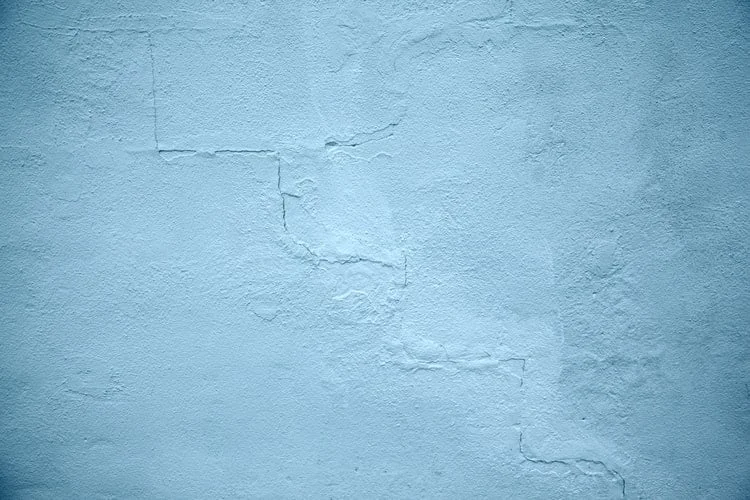
Fine map cracking across a field of wall is cosmetic and normal on a cured cement finish. What matters is a crack running diagonally out of a window or door corner, a crack wide enough to catch a fingernail, and any crack with a stain running down from it. Those three are water routes.
Diagonal cracks out of opening corners are the ones I would price. Every window and door concentrates stress at its corners, and a wall that was not reinforced diagonally there tells you about it in year three or four — the mechanism is in why stucco fails around windows first.
Straight lines are the opposite story. A clean vertical or horizontal line at regular spacing is a control joint, built in so the wall cracks where somebody decided rather than wherever it likes. Buyers read them as damage every week. Hard, split sealant in one is maintenance — the logic is in what those lines do.
Freeze-thaw is what moves a crack from the first list to the second. Water sits in it, freezes overnight, expands and opens it slightly for next time, so a hairline in September is a route by March. Seal what you find in your first season — crack repair costs in the GTA break the bands down by type.
Can I tell if there is water behind the wall without opening it?
Not with certainty, and anyone who tells you otherwise is guessing. What you can read are the four signs that show on the outside: a stain starting below a joint or a fixture, an area that sounds different from the wall around it, white powdery salts, and finish that has bubbled or lifted away.
The tapping test is the one buyers get wrong. An EIFS wall is foam under a thin finish, so the whole thing answers hollow — that is the foam, and on its own it means nothing is wrong. Hard-coat cement over lath answers solid, like a sidewalk. What you listen for is a change: a patch that sounds different from the two metres either side of it. On EIFS that is usually debonding; on cement, a failed repair.
White mineral bloom — efflorescence — means water has moved through the material and evaporated on the face, leaving salts behind. On a foundation wall it is common. In the same spot year after year, with a stain under it, it shows where water keeps going. The full symptom list is in 6 signs water is behind your stucco.
Before blaming the wall, look up. A downspout dumping against a corner for years, a blocked eaves run, a missing kick-out where a roof meets a wall — those write stains onto perfectly good stucco. I read the soffit and eavestrough before the wall, for the reason in flashing, explained for homeowners.
Is a 1990s EIFS house in the GTA a dealbreaker?
No, and the reputation is about thirty years out of date. Early EIFS was a barrier system: it kept water out and had no way to let water back out if any ever got in. Modern EIFS is drained, with a drainage plane behind the foam, flashings at the openings and an exit at the base of the wall.
So the age of the house matters more than the letters. On a 1990s wall the questions are simple: has the exterior been redone since, is there paperwork for it, and are the openings and the base detailed the way a drained system is. A barrier wall still dry after thirty years is telling you something too. The history is in why EIFS got a bad name in the 90s.
Knock on it before you decide anything. Hard-coat answers solid, EIFS answers hollow and slightly soft. Five seconds tells you which system you are buying, which decides what a repair looks like — the differences are in EIFS versus traditional stucco.
What should I ask the seller in writing?
Three questions, and on some houses the answers beat anything on the wall. Who did the exterior work, and when? Is there an invoice or warranty document, and whose name is on it? Was a permit involved? Silence proves nothing by itself, but it tells you to price the wall as an unknown.
Warranties are worth asking about because they usually do not follow the house. A workmanship warranty is a contract between whoever paid for the job and the company that did it, so ask whether it transfers and get that in writing. No invoice, no warranty — what makes one worth anything is in stucco warranties that are actually worth something.
Permits apply to additions and anything that changed the wall assembly, not to a straight refinish. Unpermitted work rarely stops a sale, but it surfaces at the worst moment, and the City of Toronto sets out the rules at toronto.ca on when you need a building permit. The stucco version is in stucco and building permits in Ontario.
One more if the house is newly built. New homes in Ontario carry 1-year, 2-year and 7-year warranties administered by Tarion, covering workmanship, water penetration and major structural defects; the province explains the claim routes at Ontario on what to know before buying a home. Inside that window, ask what has already been reported.
How much should I set aside for a stucco wall I am buying?
Sort what you found into bands. Cosmetic cracking and surface growth: a few hundred dollars, or a weekend of your own time. A real repair with a texture match: several hundred to a few thousand. A wall at the end of its life: $8–$16 per square foot installed, which is roughly $20,000–$40,000 on a typical detached two-storey.
| What you found | Typical range | What to do with it before closing |
|---|
| Hairline or map cracking | $300–$800 | Nothing. It is cosmetic and it will still be there next year |
| Impact hole, damaged corner | $400–$1,200 | Worth raising, rarely worth a fight |
| Failed sealant at joints and openings | $500–$1,500 | Get a number — it is the cheap thing that prevents the expensive thing |
| Water damage, soft substrate | $1,500–$5,000+ | Get somebody on it before your condition comes off |
| Whole exterior at end of life | $8–$16 / sq ft | Price it as a renovation, not as a repair |

Read that table from the bottom up: the bottom row decides whether you can live with the house, and everything above it is ordinary ownership spread over several years. Which row you are in comes from the age and condition of the system, not the number of cracks — how long stucco lasts in Ontario sets out the lifespans.
The honest ceiling: a visible stain is almost always smaller than the wet area behind it, and nobody can price what is behind a closed wall. What you can settle before you sign is which worst case you are prepared to carry. On most GTA houses that is a few thousand dollars.
One thing from the repair side rather than the transaction side: the money is worth more to you than a rushed repair. A wall patched by whoever could come Thursday, on a house the seller is already leaving, is not the job you would have commissioned, and a patch onto a wet substrate comes off again.
What I would do in the first year after closing
Nothing cosmetic. Spend the first year on water: renew the sealant at joints and openings, clear whatever is buried against the base of the wall, and get the downspouts pointing away from it. Then walk the whole exterior in your first spring and see what a GTA winter actually did to your house.
Timing decides what is possible. Finish coats need above-freezing temperatures to cure, so the season here effectively runs April to November and repair calendars fill from the middle out. Close in October with a wall that needs work and you book it rather than start it — the month-by-month picture is in the best time of year for stucco work.
The walk-around is the habit worth keeping: you know what the wall looked like on day one, so anything new is genuinely new. The route is in the 15-minute spring walk-around, and CMHC publishes a whole-house maintenance guide at cmhc-schl.gc.ca.
The short version
Check the three junctions, sort what you find into cosmetic, a number, or a reason to bring somebody in, and put three questions to the seller in writing. The material itself does not decide this one. A stucco wall has a known lifespan, failure points visible from the driveway, and prices you can look up before you sign anything.
If the house is in our service area and your condition has not come off yet, send me the address and a few photos of the elevations or call (905) 973-6470. The assessment is free and the quote is written, whether it turns out to be a repair, sealant and maintenance, or a full residential refinish later. We work across Oakville, Mississauga, Toronto and the rest of our service area, insured and WSIB covered, with 25+ years behind us — the finished work, including a Mississauga stucco repair and restoration, sits in our project portfolio.