Parging

Parging in Oakville & the GTA

Foundation parging done the way it holds: everything loose off, the concrete keyed and bonded, the coat built up rather than slapped on — and an honest answer when the real problem is water, not the coating.

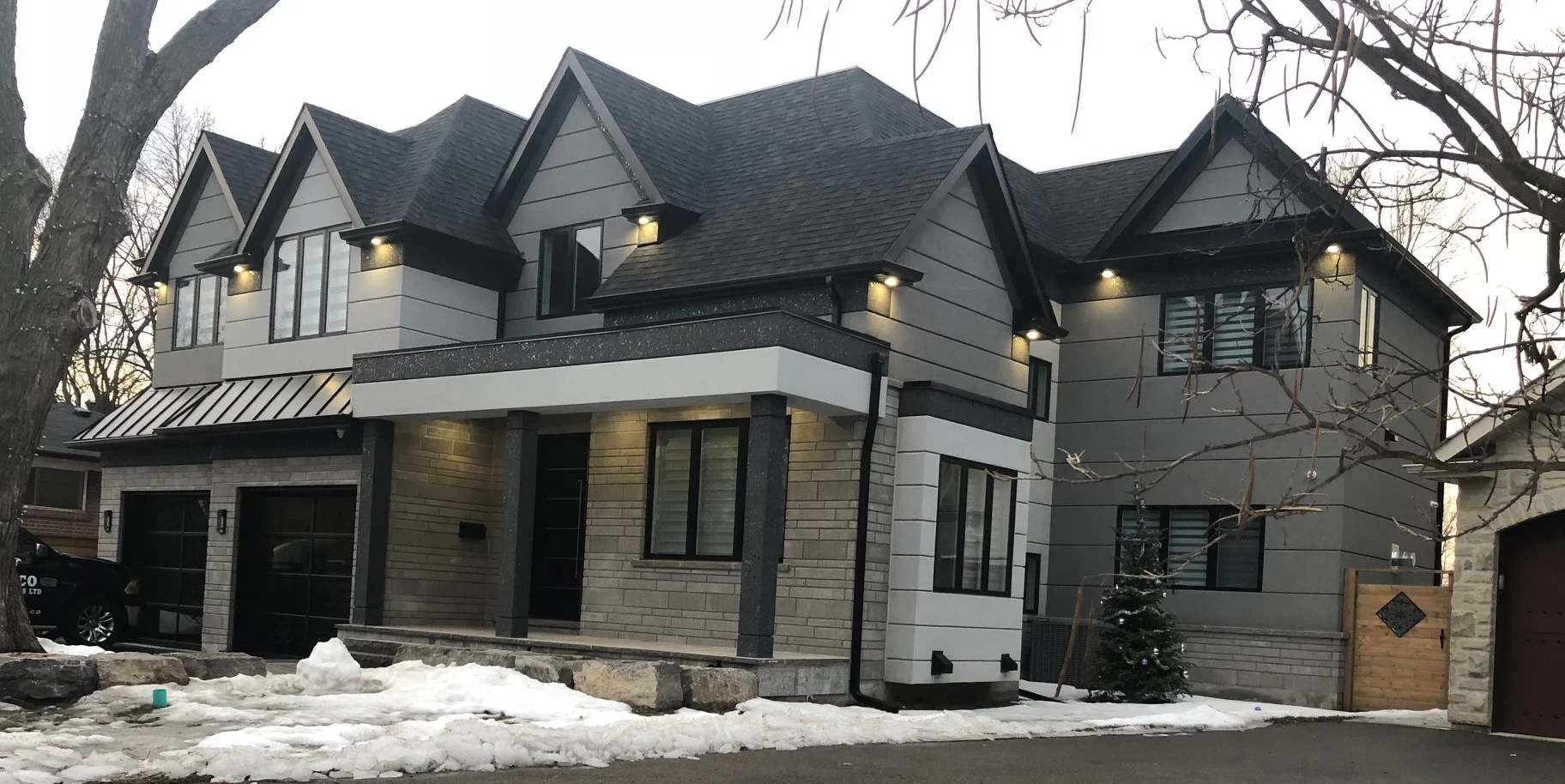
Parging in Oakville & the GTA — Stucco Wall Systems project photo
25+Years of hands-on experience
4.3★Google rating — 11 reviews
InsuredFully insured & WSIB covered
FreeFixed written quotes
WarrantyWorkmanship guarantee
GTAOakville-based, GTA-wide
Full perimeter re-parge$1,500 – $3,000
Crack touch-up$300 – $800
Coat thickness3/8 – 1/2″ over the foundation
Recoat cycle10 – 15 years

Ranges we quote from before seeing the property; the written quote after the site visit is fixed. Terms explained in our stucco glossary.

Start here

Parging is a coating, not a cladding — and that decides everything

Parging is a thin cement coat, usually 3/8 to 1/2 of an inch, troweled straight onto the exposed part of your foundation. It covers rough concrete or block, it evens out the colour, and it sheds surface water. That is the whole job. It has no lath, no reinforcing mesh, no drainage plane and no insulation behind it, which is exactly why it is not the same thing as the stucco on the wall above — we wrote the plain comparison in parging or stucco, how to tell what is on your foundation.

People call us every week to “fix the stucco on the foundation.” Half the time it is parging, and knowing which one you are looking at changes what it costs and who should touch it. Here is the honest line we draw: if the cracking, crumbling or staining is at or below where the foundation meets the ground, that is a parging job. If it is on the wall above, that is stucco repair. Most of the jobs we quote end up touching both, because they meet at the same wall.

And the one sentence nobody wants to hear: parging is not waterproofing. It covers concrete and sheds splash. It does not stop bulk water, and no thickness of it ever will. If your basement is wet, the fix is grading, downspouts, or exterior damp-proofing at the footing — a trowel does not solve that from the outside of a finished house. We would rather tell you that on the first visit than take the money and watch the same coat fail again in two winters.

The site visit

Five things we look at before quoting a foundation

A parge coat fails for a handful of reasons, and they do not all cost the same to fix. This is what the assessment actually checks, in the order we check it.

Hairline cracks, coat still tight

Cosmetic

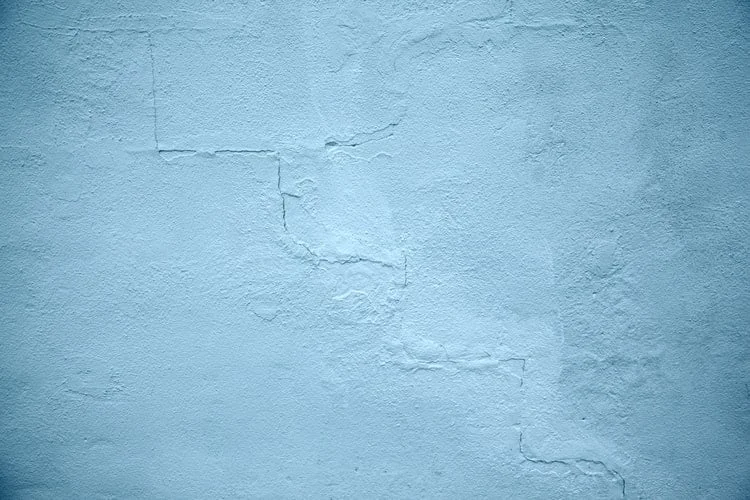
What you see: Fine lines in the grey coat, no movement when you press, nothing loose at the edges.

What it means: Normal shrinkage and freeze-thaw fatigue in a coating that has done its time. The concrete behind it is fine.

What we do: Clean out, fill and skim the affected area, then blend the texture across to a natural break.

Hollow sound when tapped

Fix this season

What you see: Nothing. You hear it — a drummy note over a patch that looks perfectly sound.

What it means: The coat has let go of the concrete. It is being held on by the sections around it and it will come off, usually in the spring.

What we do: Take the debonded area off back to sound coat, key the concrete, bond and re-coat the section.

Horizontal cracks on the block joints

Fix this season

What you see: Straight cracks at even spacing that line up with the mortar courses of a block foundation.

What it means: The parge coat is telegraphing the joints underneath. Common, usually cosmetic — but a crack that is growing is a different conversation.

What we do: Photograph and measure now, re-coat, and tell you what to watch. If it opens again, the movement is in the wall, not the coating.

Flaking and bulging low down at grade

Fix this season

What you see: The bottom 6 to 12 inches breaking up, often worst where snow piles or a downspout lands.

What it means: Splash-back and snow load putting that strip through far more freeze-thaw cycles than the rest of the wall.

What we do: Rebuild that band, and fix what is keeping it wet — the clearance rules are in our guide to clearance at grade.

Rust stains or white bloom bleeding through

Look before recoating

What you see: Orange streaks from behind the coat, or a chalky white deposit spreading across it.

What it means: Rust means steel is corroding somewhere behind the coat. White bloom is efflorescence — salts carried out by water moving through the wall, explained in white stains on stucco.

What we do: Open it up and find the source first. Neither of these is fixed by a new coat over the top.

Not sure which one you have? Text a photo of the wall and the ground in front of it to (905) 973-6470. If it is cosmetic and can wait a season, we will say so.

The work

How we re-parge a foundation, step by step

1. Everything loose comes off. Not most of it — all of it. We chip back to coat that is genuinely bonded, and if that means taking a section twice the size of the visible damage, that is the size of the section. A new coat is only ever as good as what it is stuck to.

2. The concrete gets cleaned and keyed. Dust, old paint, efflorescence and anything slick have to be off the surface. Poured concrete that is too smooth gets roughened so the new coat has something to grip.

3. Bonding agent, then the coat. A bonding agent goes on the prepared concrete, and the cement coat is worked into it while it is still doing its job. This is the step that gets skipped on the cheap jobs, and it is the reason those jobs sound hollow in three years.

4. Built up in thickness, not slapped on in one pass. Full thickness in a single heavy pass sags and shrinks. Where the existing surface is very uneven we scratch a first pass and come back to it.

5. Finished to match, and terminated properly. We match the texture of the sound coat beside it and take the new work to a corner or a natural break rather than stopping mid-wall, because a patch edge in the middle of an elevation will always read as a patch — the same logic as matching a stucco patch above grade.

6. The top edge is checked, every time. Where stucco above meets parging below there is a weep screed — the metal strip that lets water behind the stucco drain back out. We have opened up walls where that strip was buried under mulch or a patio stone, which turns a drainage detail into a dam. If yours is buried, we will tell you, because re-parging over it just hides it again.

Season: April to November. Cement will not cure properly below about 5°C, and a foundation coat put on in the cold is a coat that comes off — more on timing in the best time of year for stucco work in the GTA.
Cost

What parging costs in the GTA

What moves the number is linear footage of exposed foundation, how much of the old coat has to come off first, and whether we are patching a section or redoing the whole perimeter. The written quote after the site visit is fixed.

WorkTypical range
Hairline crack touch-upFilled, skimmed and blended into the sound coat$300 – $800
Localized re-coat, one sectionDebonded or broken-up area taken back and rebuilt$500 – $1,500
Full perimeter re-pargeAverage home, whole exposed foundation done at once$1,500 – $3,000
Water damage behind the coatOpened up, assessed and rebuilt — priced after we see it$1,500 – $5,000+

That last line is the one to take seriously. A stained or bulging patch of parging is almost always smaller than the wet area behind it. We open it up, see what is actually happening to the concrete and the grade around it, and quote it in writing before anything else is touched.

What you have

Block, poured concrete and insulated foundations

Concrete block

Older GTA stock

Block telegraphs. The mortar joints move a little differently than the coat over them, so straight horizontal cracking at course spacing is normal on these walls and usually cosmetic. Block is also more absorbent than poured concrete, so prep and bonding matter more, not less.

Poured concrete

Most homes since the 1970s

Poured walls crack in fewer places but bond worse, because a form-finished surface can be glass smooth. The coat holds where the concrete was properly keyed and lets go where it was not — which is why a poured wall can look perfect and still sound hollow over half its length.

Insulated and finished foundations

New builds and custom homes

On a new build, running an insulated system down to grade over the right below-grade protection is a legitimate detail, and we have specified it that way. It is a decision made at the drawing stage with the builder, not a swap on a house that is already standing.

Interior basement walls

Unfinished basements, cold cellars

A parge coat inside works as a moisture and dust barrier over block before anyone thinks about drywall. Same material, same limits: if the wall is actually wet, the water is coming from outside and parging the inside face changes nothing.

Straight answer

When parging is the wrong answer

When the water is the problem, not the coating. If what is behind the crumbling parge coat turns out to be real water intrusion, the fix moves outside our scope into excavation and exterior damp-proofing. We will tell you that instead of re-coating over a problem that is going to come straight back through the new work.

When somebody has sold you stucco on a foundation. Ripping off sound parging to build a full stucco assembly on the foundation of an existing house almost never pencils out. You would be excavating or building elaborate flashing transitions to protect a system that was never designed to go there. If the parging is failing, the honest fix is better parging.

When the crack is structural. A crack that is widening, stepping, or offset so one side sits proud of the other is the foundation moving, and that is an engineer's call before it is anyone's trowel. Coating over it hides the evidence and buys nothing.

When it is the wall above that is actually failing. Water that shows up at the base of a wall often started three metres higher — a failed sealant joint, a bad head flashing, a blocked eavestrough. The signs are in how to tell water has gotten behind your stucco, and the repair belongs to the stucco, not the foundation. If the whole exterior has aged out at once, that is a restoration conversation.

We are based in Oakville and run crews across the GTA. Send a couple of photos and the address and we will tell you which one you are dealing with, what it needs and what it costs — free, fixed, in writing. Book a free assessment or call (905) 973-6470.

How we work

From first call to finished wall

Site visit & honest diagnosis

We look at the actual walls and tell you what they need — and what they don’t.

Fixed written quote

System, prep, colour and timeline on paper. No hourly surprises.

Prep, detailing & finish

Control joints, mesh, flashing and finish coats done the way they should be.

Clean-up & walkthrough

Site left clean, and you sign off on the result before we leave.

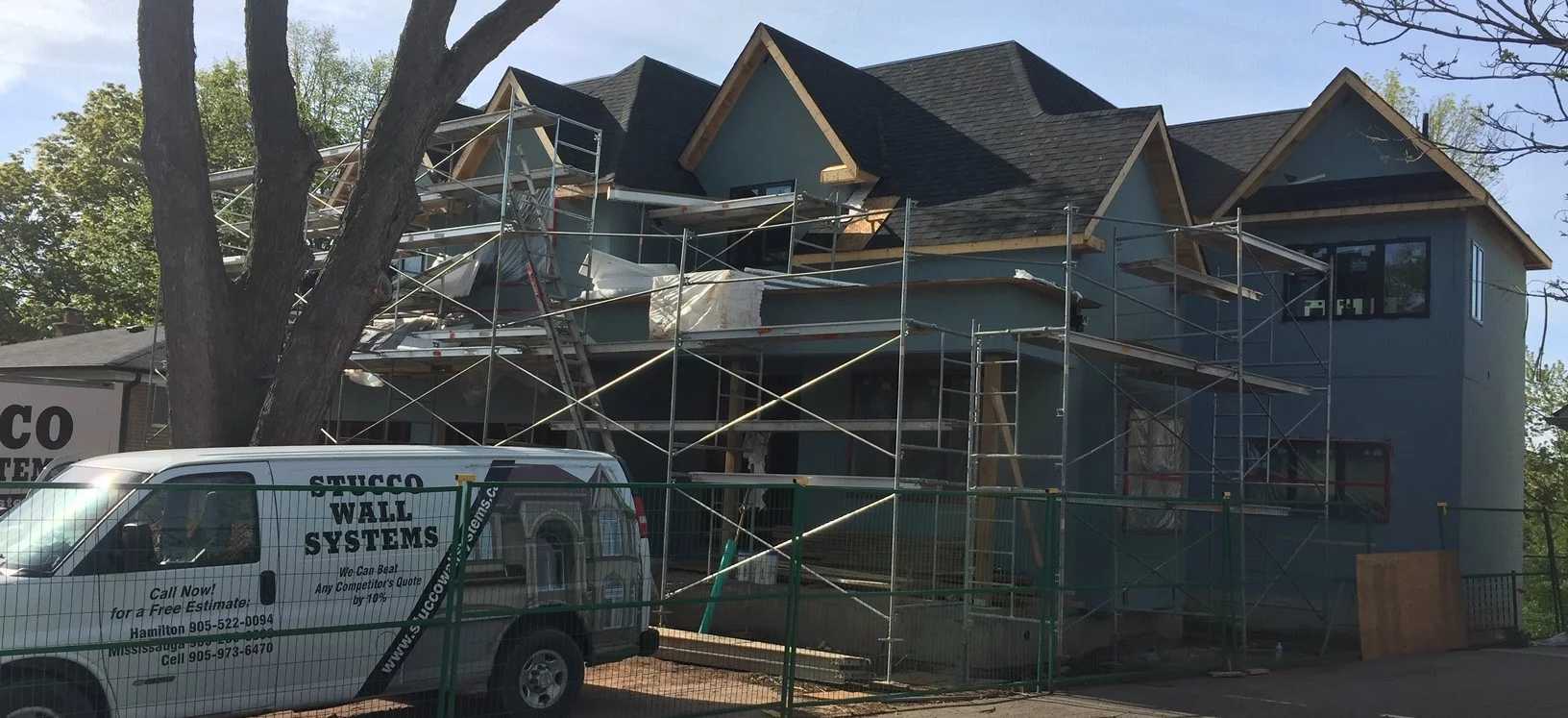
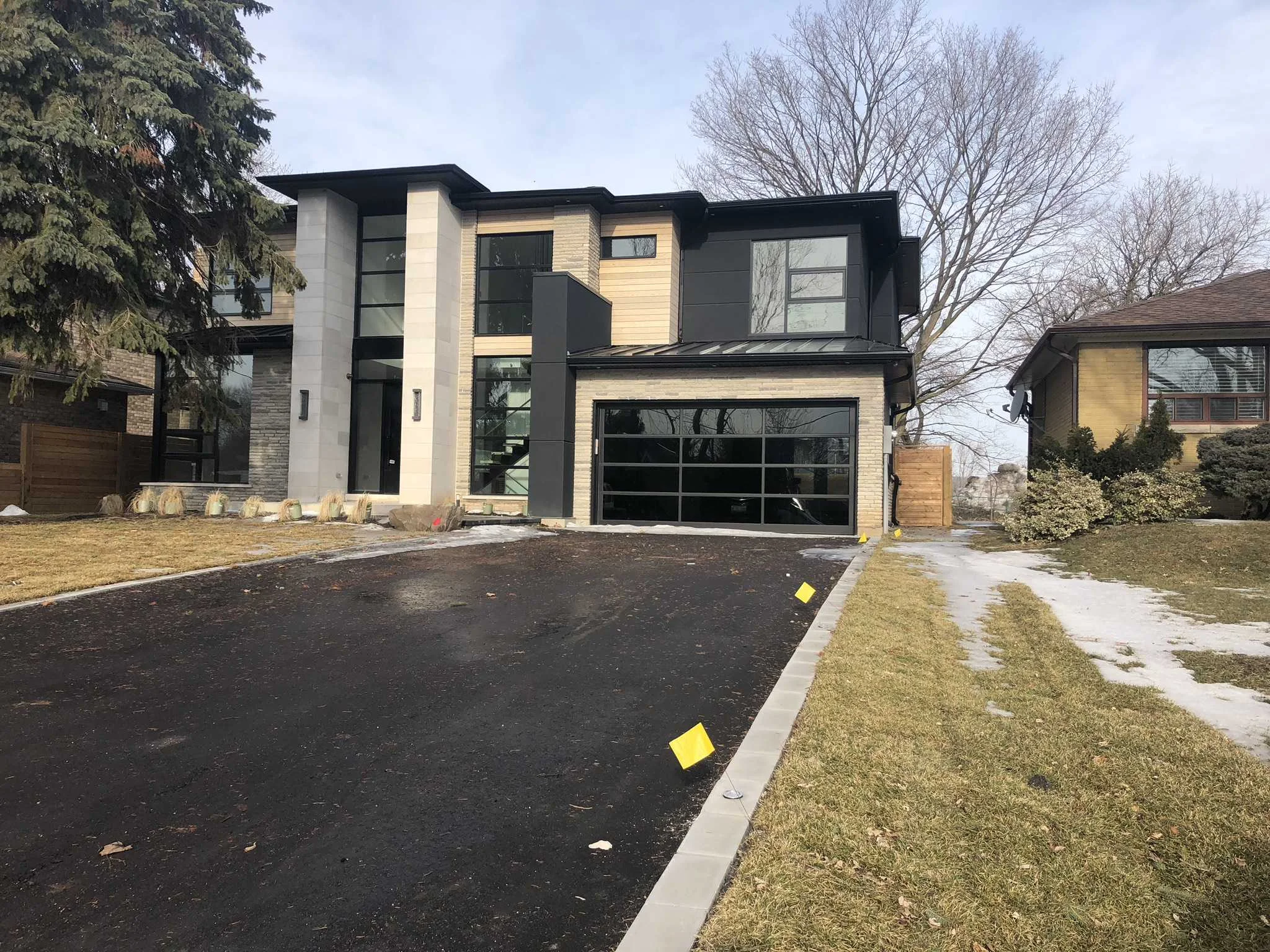
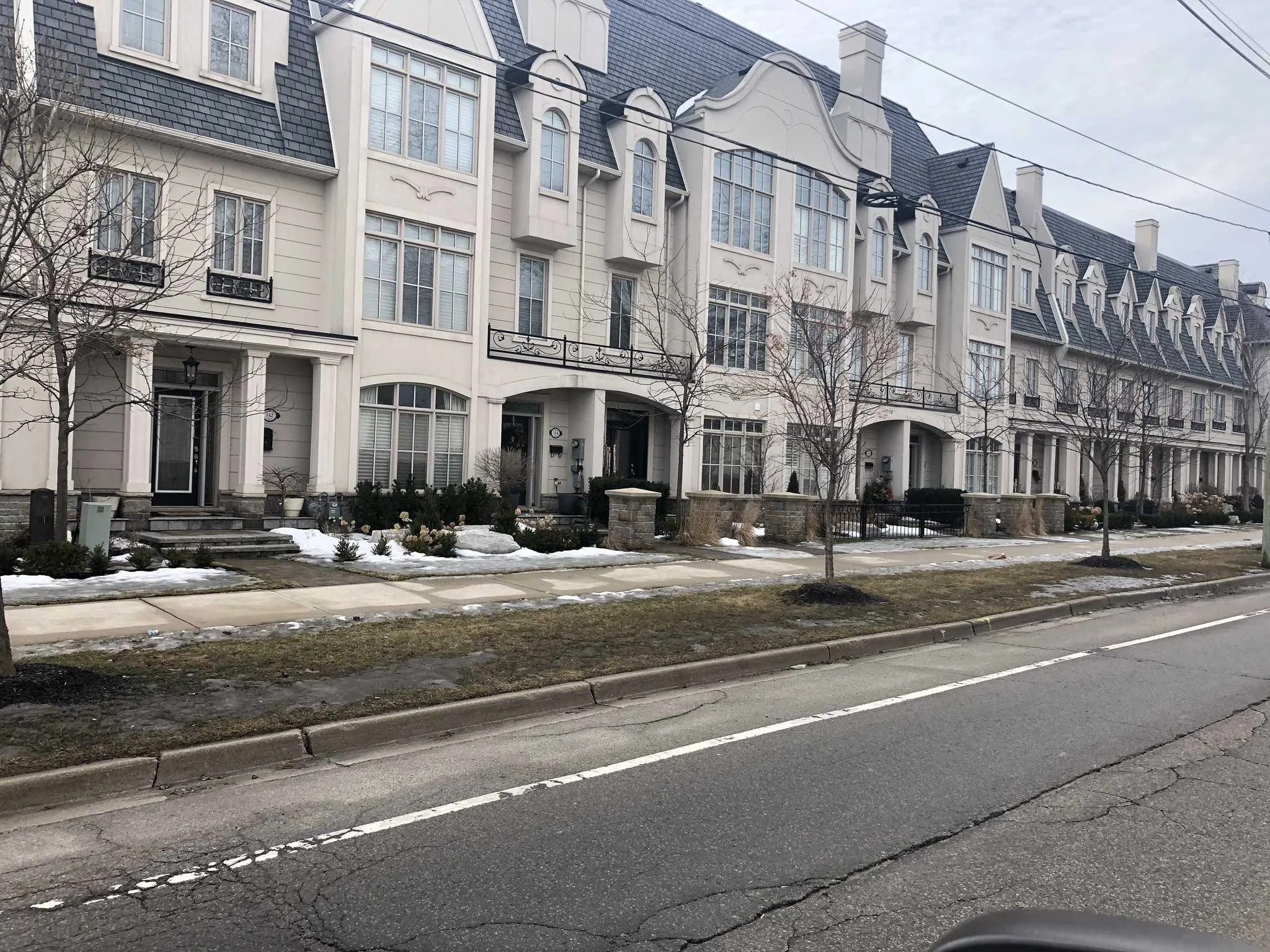
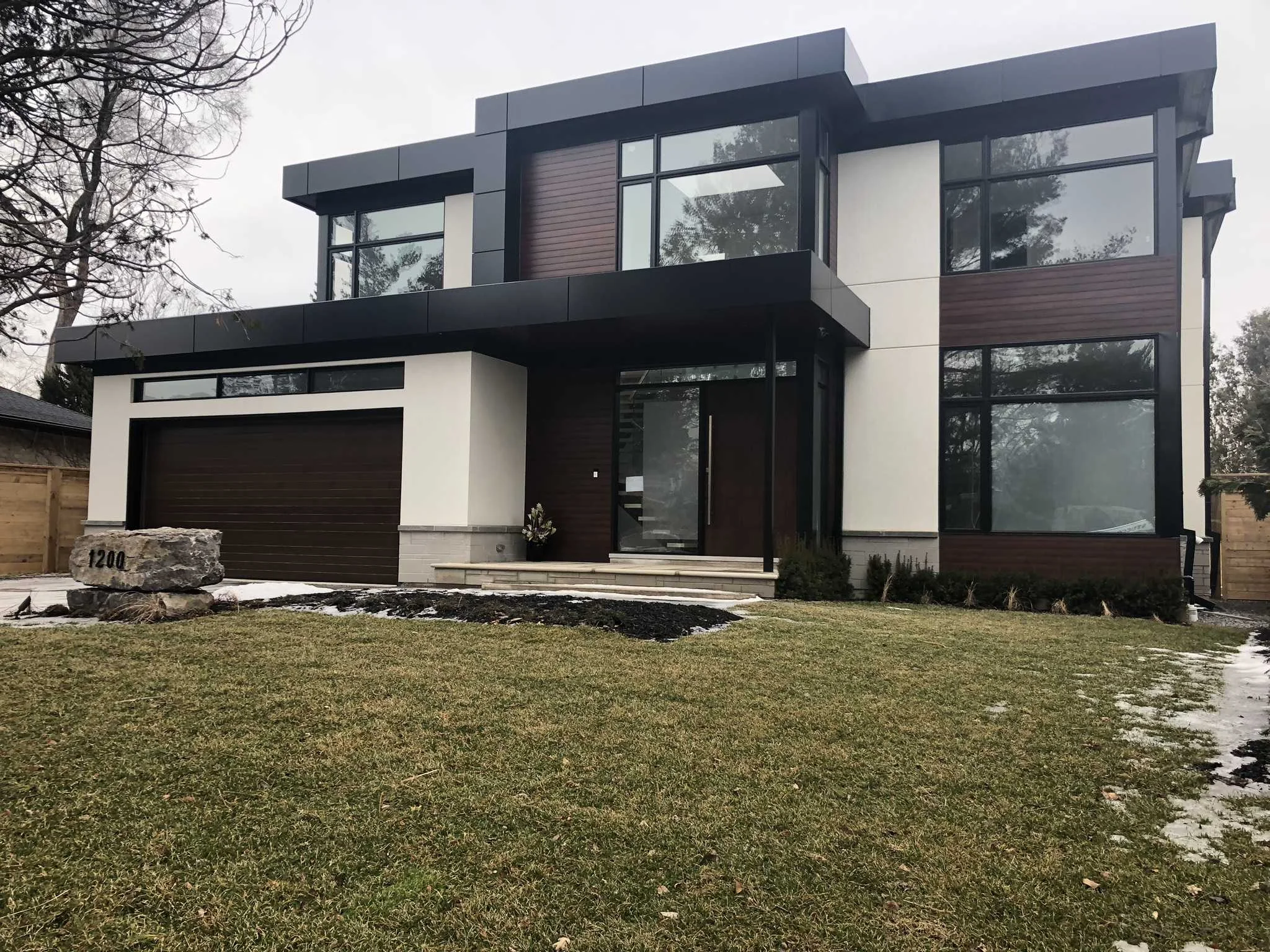
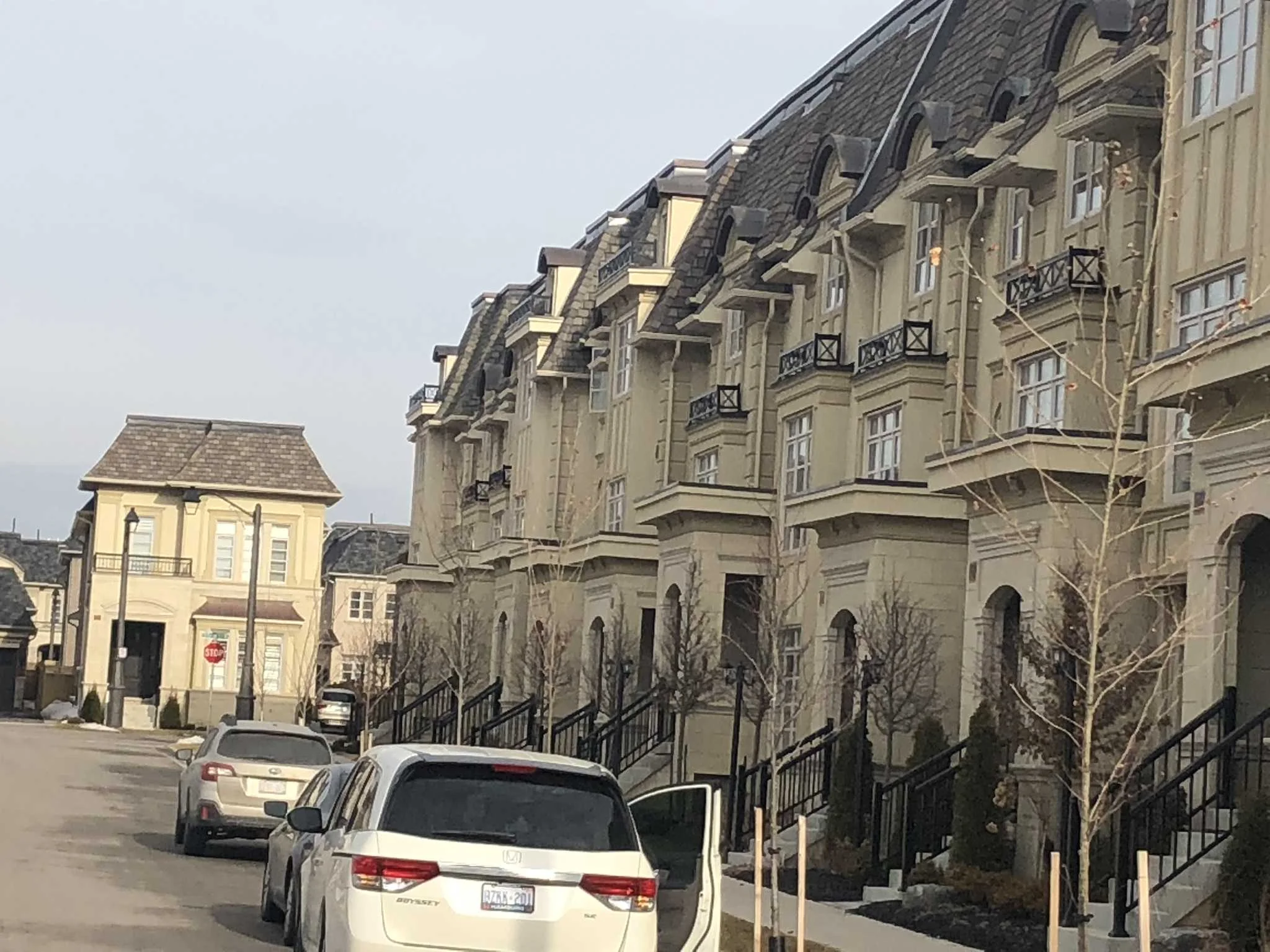
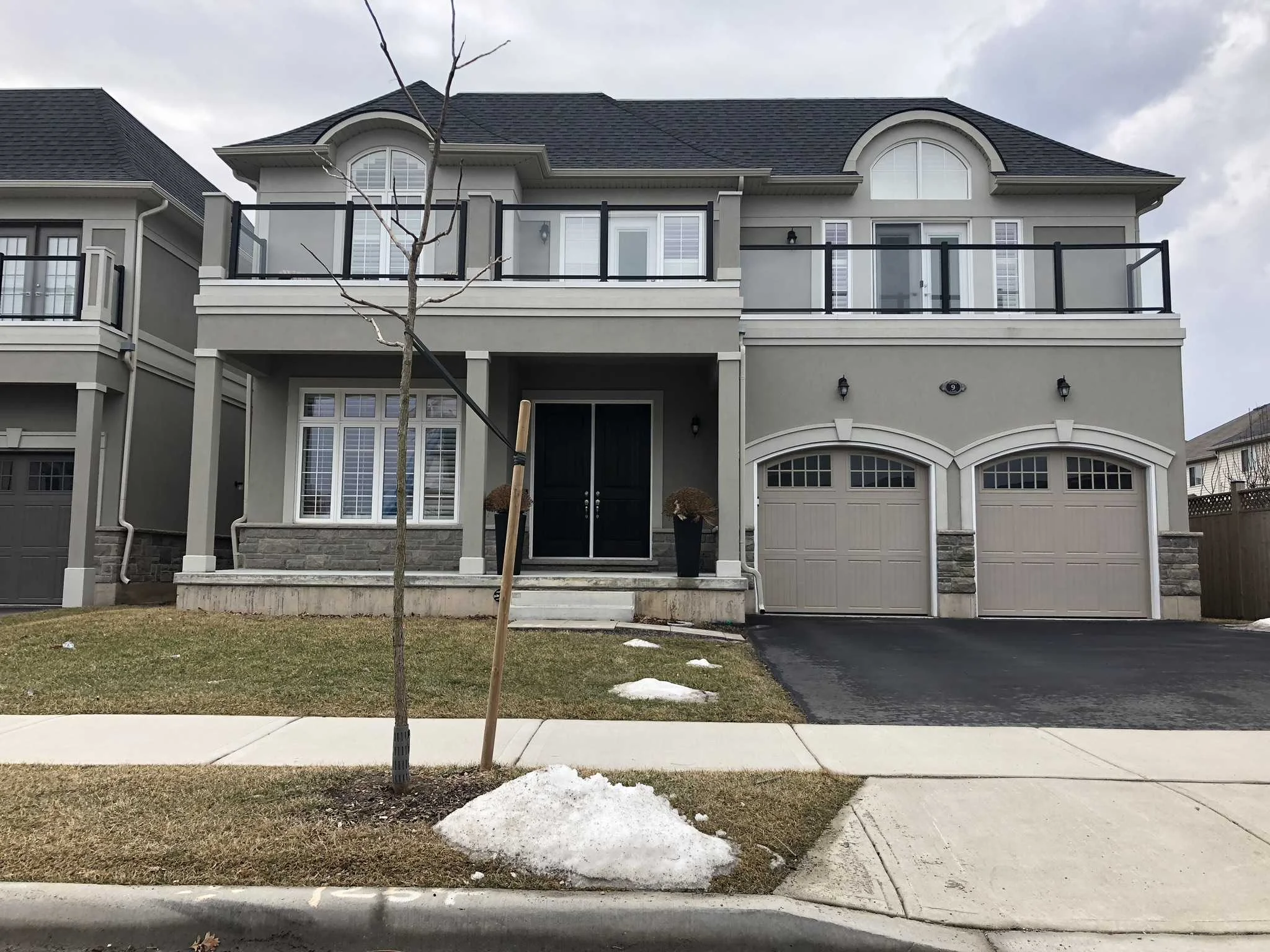
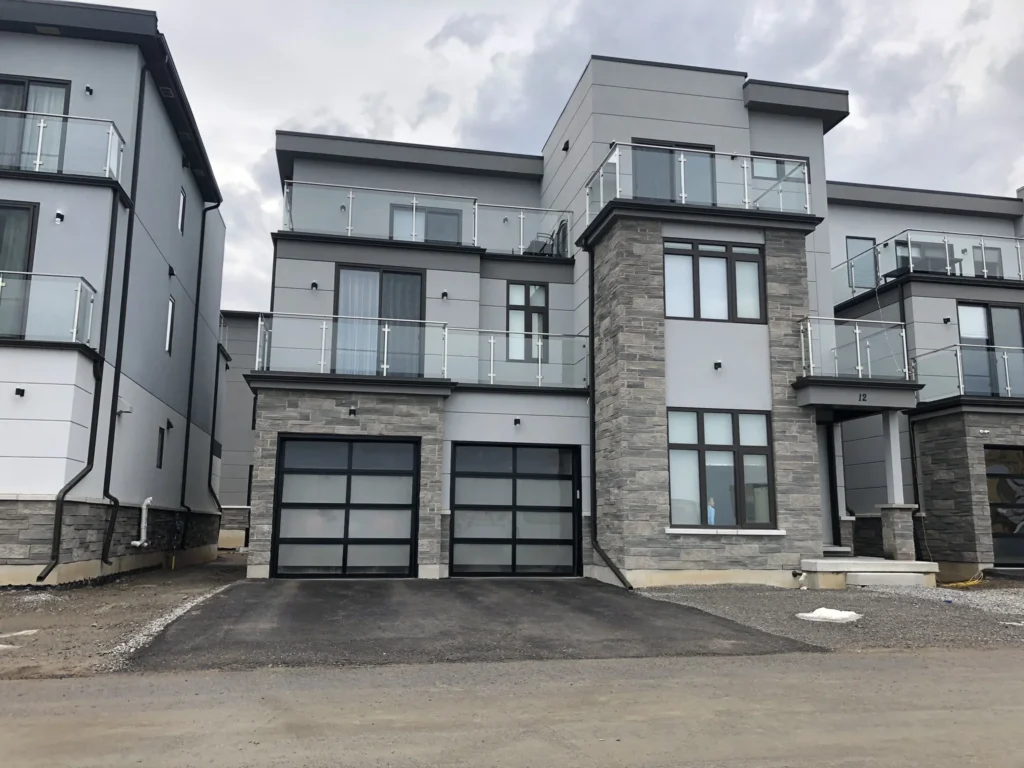
Residential stucco exterior finished by Stucco Wall SystemsCommercial stucco facade completed in the Greater Toronto AreaNew build home with a freshly applied EIFS stucco systemNatural stone accent installed alongside stucco wallsSoffit, fascia and eavestrough finished with the stucco workDetached GTA home after a full exterior stucco installationTwo-storey stucco home with arched garage baysLow-rise commercial building refinished in acrylic stuccoModern grey custom home in stucco and stone veneerLuxury home exterior remodelled with new stucco and trimResidential stucco exterior finished by Stucco Wall SystemsCommercial stucco facade completed in the Greater Toronto AreaNew build home with a freshly applied EIFS stucco systemNatural stone accent installed alongside stucco wallsSoffit, fascia and eavestrough finished with the stucco workDetached GTA home after a full exterior stucco installationTwo-storey stucco home with arched garage baysLow-rise commercial building refinished in acrylic stuccoModern grey custom home in stucco and stone veneerLuxury home exterior remodelled with new stucco and trim
FAQ

Parging questions, answered straight

What is parging?
Parging is a thin cement coating, usually 3/8 to 1/2 of an inch, troweled onto the exposed part of a poured concrete or block foundation. It covers rough concrete, evens out the appearance and sheds surface water. It is a coating, not a cladding system: there is no lath, no reinforcing mesh and no drainage plane behind it the way there is in a stucco wall above grade.
Is parging waterproofing?
No, and this is the most common misunderstanding we run into. Parging sheds surface water and protects the face of the concrete, but it is not a substitute for below-grade damp-proofing and drainage at the footing. If a basement is actually wet, the water is coming from outside and the fix is grading, downspouts or exterior damp-proofing done at excavation — not a trowel coat applied to a finished house.
How much does parging cost in the GTA?
A hairline crack touch-up runs $300 to $800, a localized re-coat of one section $500 to $1,500, and a full perimeter re-parge on an average home $1,500 to $3,000. If water has gotten in behind the coat it is $1,500 to $5,000 and up, because the damaged area is almost always larger than what shows. What moves the number is linear footage of exposed foundation and how much old coat has to come off first. Every quote is fixed and in writing after a site visit.
How long does parging last?
Most parging holds up 10 to 15 years before it needs recoating, and less on the elevations taking the worst snow load and splash-back. Cracking or flaking well before that usually points to a bonding problem or moisture behind the coat rather than normal age, which is why we sound the wall for hollow areas before quoting anything.
Why is my parging cracking along straight horizontal lines?
That is a block foundation telegraphing its mortar joints through a thin parge coat — the coating and the joint underneath move slightly differently. It is common and usually cosmetic. What matters is whether it is static or growing: a crack that keeps opening after a re-coat is movement in the wall itself, not a coating problem.
My parging sounds hollow but looks fine. Is that a problem?
Yes. A drummy note means the coat has debonded from the concrete and is being held on by the sound sections around it. It looks perfect right up until a freeze-thaw cycle takes it off, usually in spring. Debonded areas have to come off and be rebuilt with proper keying and a bonding agent; coating over them just adds weight to something already letting go.
Can you put real stucco on my foundation instead of parging?
On new construction, sometimes — running an insulated system down to grade over the right below-grade protection and drainage is a legitimate detail, decided at the drawing stage with the builder. On a house that is already standing it almost never makes sense: you would be excavating or building elaborate flashing transitions to protect a system that was never meant to go there. If the parging is failing, the honest fix is usually better parging.
When can parging be done in Ontario?
April through November. Cement needs sustained temperatures above roughly 5°C to cure properly, and a foundation coat is the last place to gamble on that — it sits in the coldest, wettest strip of the whole house. We will book winter site visits and quotes, but we will not put a parge coat on a cold wall and tell you it will be fine.
Where we work

Oakville-based, serving the Greater Toronto Area

We are a service-area contractor: no showroom, we come to you. Our crews cover Halton, Peel, Toronto and York Region — roughly a one-hour radius of Oakville.

We do not take work outside the GTA — if you are in Windsor, Essex County, Ottawa or elsewhere in Ontario, we are the wrong contractor for you and would rather say so than waste your time. Full list of areas: service areas.

25+years in stucco & EIFS
4.3★Google rating — real reviews
100sof projects across Ontario
24hopen — call anytime

Ready to upgrade your exterior?

Tell us about your project and get a free, fixed written quote. Oakville-based, serving the whole GTA — open 24 hours.

Get a free quote Call (905) 973-6470