Almost every “my stucco looks terrible” call I take isn’t a stucco problem — it’s a paint problem sitting on top of a stucco wall. Painting stucco isn’t the same job as painting siding or drywall, and the crews who treat it that way are the reason I get called back eighteen months later to fix blistering, peeling and cracks that reopened right through the fresh coat. After 25+ years on walls from Oakville to Toronto, here are the rules that actually matter — and the shortcuts I see broken on almost every “quick repaint” that later ends up back on my schedule as a real repair.
Can you paint stucco at all?
Yes — traditional cement stucco is designed to be painted, and most of it in the GTA already is. The part crews skip is that stucco has to breathe. It’s a porous, cement-based material that moves moisture vapour out through itself; the coating you put on it has to let that vapour keep moving, or you’ve just built a moisture trap with a nice colour on the outside.
Integral-colour EIFS is the exception. That colour runs through the finish coat itself — there’s no separate paint layer to begin with, and no reason to add one. I cover the difference in choosing stucco colours for GTA homes; the short version here is: painted cement, yes, expect to repaint it; integral acrylic, no, you shouldn’t be painting it at all.
How long does new stucco need to cure before you paint it?
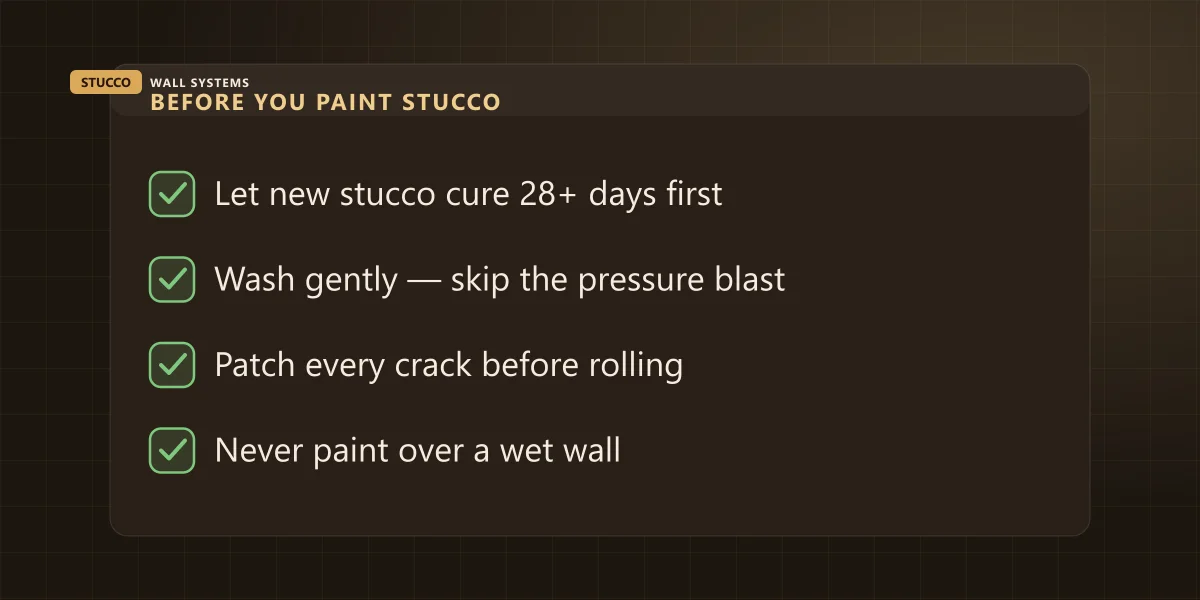
Minimum 28 days, and longer in cool or wet weather — sometimes 60. Fresh Portland cement stucco is highly alkaline while it cures, and paint applied too soon reacts with that alkalinity instead of bonding to a stable surface. The result shows up as blistering, chalking or patchy discolouration, usually within the first year.
I see this most on new builds and additions where the painting trade gets scheduled off a general contractor’s calendar instead of the stucco’s actual cure date. A crew under pressure to hit a closing date paints on day 12 because that’s when the schedule says “paint,” not because the wall is ready. It looks fine at handover. It doesn’t look fine at the one-year walkthrough.
What’s the difference between the coatings crews actually use?
Three coatings show up on GTA stucco jobs, and they’re not interchangeable. Mineral silicate and premium 100% acrylic both stay genuinely breathable and are the right call for most repaints. Elastomeric bridges hairline cracks with its flexible film, but that same thick film breathes less — a specific-purpose product, not a default upgrade.
| Coating | Breathability | Best for | Where crews go wrong |
|---|
| Mineral silicate | High | Repaints on sound painted cement | Rarely misused — mostly just not offered because it costs more |
| Premium 100% acrylic | High | Standard repaint cycle, most GTA homes | Swapped for a cheaper contractor-grade acrylic with a thinner, less breathable film |
| Elastomeric | Lower | Bridging hairline cracking on a dry, sound wall | Sold as a universal upgrade and applied over walls that are still drying out |
| Standard exterior latex | Low | Wood, not stucco | Used because it’s what’s in the truck, not because it’s right for masonry |
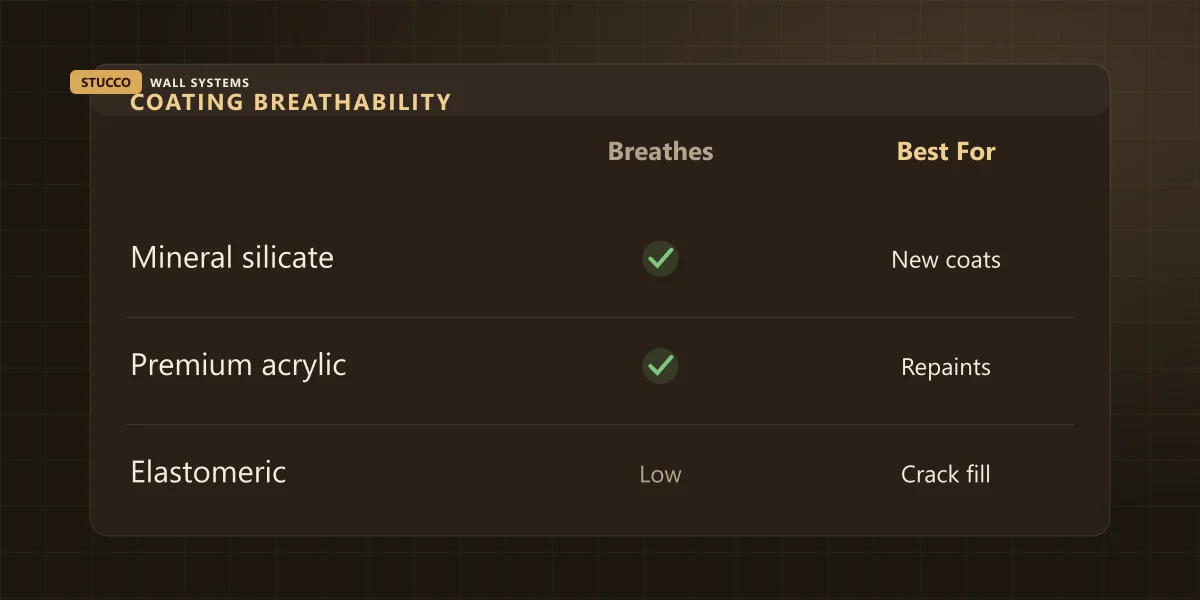
Elastomeric isn’t a bad product — I use it. But it’s a tool for a specific problem (a sound wall with cosmetic hairline cracking you want to bridge), not a premium blanket upgrade for every job. Put it over a wall that’s still shedding moisture from behind, and you’ve sealed the exit instead of opening it.
When should you not paint stucco at all?
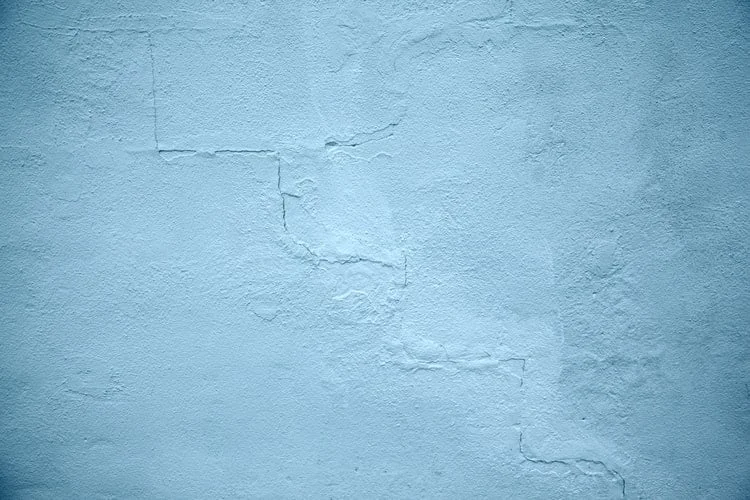
Don’t paint over an unrepaired crack, a stained or soft patch, or a wall you haven’t confirmed is dry. In every one of those cases, paint doesn’t fix anything underneath it — it just hides the problem under a fresh colour until it fails again, usually somewhere worse.
| Situation | Paint over it? | Why |
|---|
| Faded, chalky, but sound paint | Yes | Textbook repaint — this is the normal 8–12 year cycle |
| Hairline cracking, wall otherwise sound | Repair first, then paint | A repaired, matched crack takes paint fine; an unrepaired one reopens through it |
| Staining, soft spots, hollow sound when tapped | No | That’s moisture behind the finish — paint traps it, doesn’t stop it |
| New stucco under 28 days old | No | Cement is still curing; paint bonds to an unstable, alkaline surface |
The staining and hollow-sound cases are the ones I’d stop a homeowner on if they were about to book a painter. I go through exactly what those signs mean and how urgent each one is in 6 signs water is behind your stucco — worth five minutes before you get quotes, because it changes what the correct job actually is.
What do most crews actually get wrong?
Four things, in the order I see them: painting over cracks instead of repairing them, pressure-washing instead of a gentle wash, spraying a thin single coat where the manufacturer calls for two, and skipping primer on bare or patched cement. None of these save the homeowner real money — they save the crew a day.
Pressure washing is the one that surprises people. A wand set too aggressively drives water into the stucco instead of off it, and now you’re painting over a wall that’s wetter than when you started — which puts you right back in the “don’t paint yet” column above. A soft wash with a garden-hose-pressure rinse and a mild detergent does the job without loading the wall with water it now has to dry out before paint goes on.
And I’ll say the quiet part out loud: I’ve seen quotes written from a car window in Erin Mills that included “full exterior paint” as a single line with no mention of wash method, cure check, primer or coating type. That’s not a price, it’s a guess with a dollar sign on it. What’s skipped in that quote is exactly what shows up as a callback eighteen months later.
| Step skipped | What actually happens | Real fix cost after |
|---|
| Paint over a live crack | Reopens through the paint within a season, often wider | $120–$400 crack repair, redone |
| Pressure-wash too aggressively | Traps water; paint blisters and peels early | $300–$800 repaint after it fails |
| Skip primer on patched cement | Patch flashes a different sheen or colour permanently | Repaint the elevation to hide it |
| Paint over a soft, hollow-sounding wall | Moisture pushes finish off from behind | $1,500–$5,000+ — this is a repair job now, not a paint job |
How often does painted stucco actually need to be repainted?
Every 8 to 12 years for most GTA homes, driven by UV breaking down the paint film long before the cement underneath is anywhere near done. That cycle is honest, predictable maintenance — not a sign anything went wrong. I walk through the full integral-colour-vs-paint tradeoff, including which one ages better in full-sun exposures like Port Credit and Bronte, in choosing stucco colours for GTA homes.
Canada’s housing agency makes the same point from the building-science side: CMHC has written for decades that ongoing moisture management — not the paint colour or brand — is what actually decides how long a wall assembly lasts. A breathable coating, applied on schedule, over a dry and sound wall is doing exactly the job it’s supposed to do.
What does this mean for your wall?
If your stucco needs a repaint, the honest first step isn’t a colour swatch — it’s a walk around the house checking for cracks, stains and soft spots before anyone opens a paint can. We do exactly that assessment as part of every exterior painting quote, and we’ll tell you plainly if what you actually need first is a repair, not a repaint — you can see that kind of refinish work done properly on our Burlington exterior stucco renovation. Text a photo to (905) 973-6470 or send it through our contact page, and I’ll tell you honestly what your wall needs, for a home or a commercial building anywhere across the GTA.