Parging in Toronto
Foundation parging stripped, bonded and rebuilt on Toronto houses, from semis on narrow lots to new walkouts after underpinning. Published prices below and a fixed quote in writing.
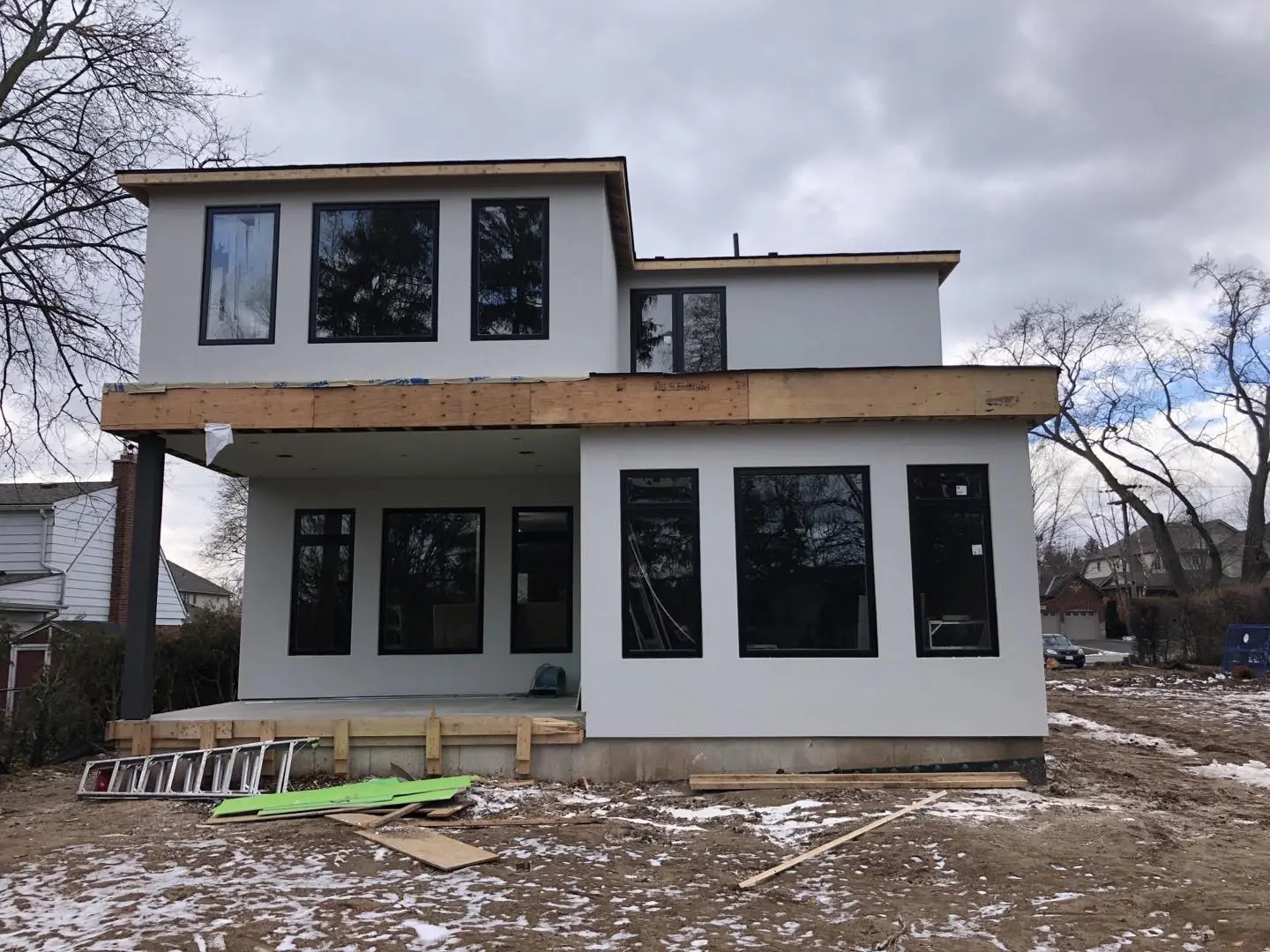
On a Toronto lot, the downspout decides how long parging lasts
Parging in Toronto tends to break up in the same two spots: under a downspout that empties at the wall, and along a side wall in a passage too narrow to dry out. Parging itself is a thin cement coat, about 3/8 to 1/2 inch, over the concrete or block between the soil and the stucco, brick or siding. Kept dry, it holds for years. Soaked by every storm, it lets go in a couple of winters.
Toronto made the rules for that water part of owning a house. Downspouts have to be disconnected from the City sewer, and the City tells you where the water should go:
- Onto grass or a garden, 1.8 metres (6 feet) from the foundation, says the City's page on managing water around the house.
- Never onto a neighbour's property, a driveway or a City sidewalk, says the mandatory downspout disconnection page.
- With the ground around the house sloping away from the foundation wall.
A short elbow at the corner puts a whole roof's water on the bottom foot of the parge coat. If we see one on the wall we are quoting, it goes on the same quote, because extensions and moved downspouts are part of our soffit and eavestrough work.
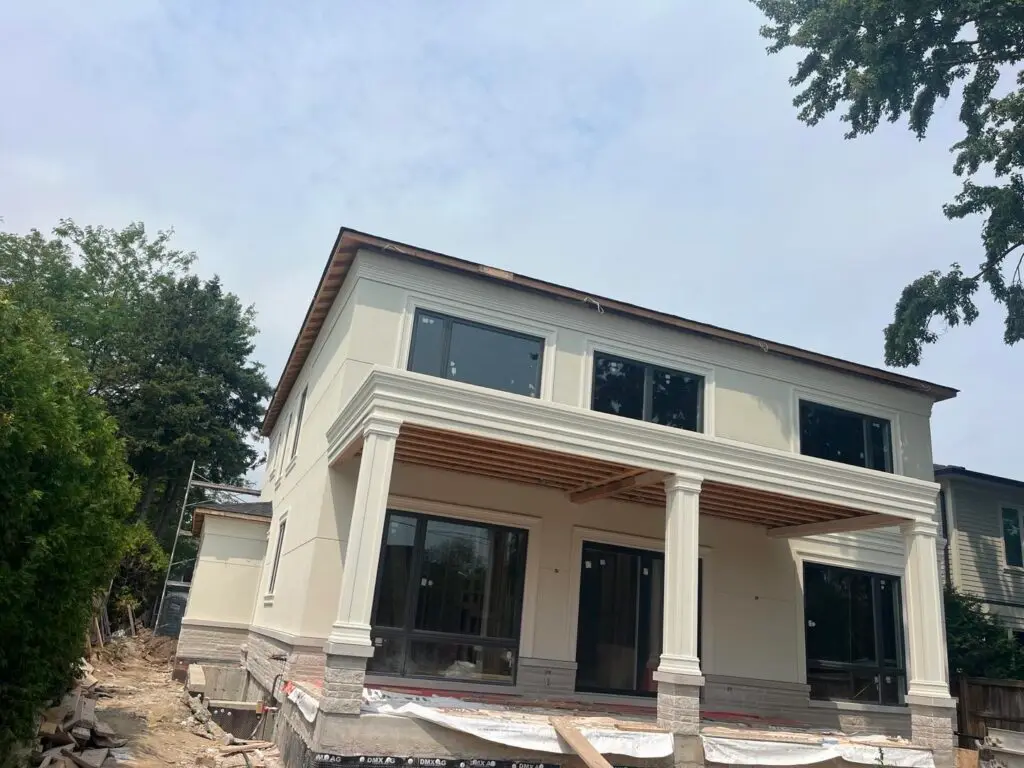
Above the soil is parging, below it is the waterproofing
A foundation wall has three layers from top to bottom, and each one is a separate piece of work on a quote.
Stucco, brick or siding
The wall itself. It ends at a metal strip called a weep screed, which lets water drain out from behind stucco.
Parging
The exposed strip of foundation from the screed down to the soil. This is the coat we strip, bond and rebuild.
Below grade
Membrane, damp-proofing and the drain at the footing. If the basement takes water, that is where it gets fixed, and the new parge coat goes on once the trench is closed.
When the far foundation wall is on your neighbour's side
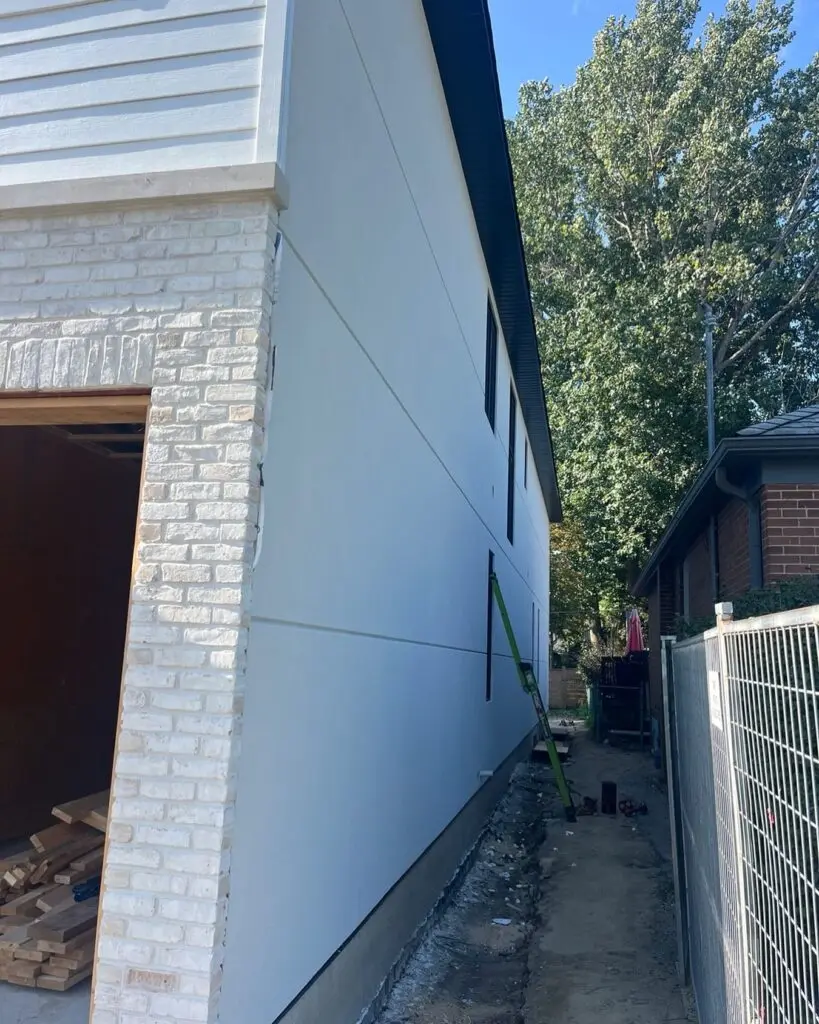
On semis and on detached houses with a metre between them, there is often no way to reach a wall from your own lot. Toronto changed the rule on March 1, 2023: you no longer need a City permit to step onto the next lot for a repair, as long as the work cannot be done from your own property or the street. You do need to tell your neighbour in writing, and the City's right to enter page says what the notice must hold.
At the free visit we measure the wall and tell you how many days the crew will need on that side and how wide a strip we stand on. Those are the numbers that go on your notice.
- What the work is: re-parging the foundation wall facing their lot.
- The date you will enter their land.
- How long the work will take.
- Your phone number.
- Handed to them in person, or sent by registered mail.
If the work grows or runs longer, a new notice is needed. In an emergency it can go out with less warning.
What the City asks of whoever enters
- Show identification if asked, and do only the work in the notice.
- No climbing onto their building, no storing materials or equipment there, no parking.
- Leave their land as it was and pay for any damage.
Reading a Toronto foundation from the screed down
Walk the house after a rain and look at the strip in four heights. Each one tells you something different about why the coat is failing.
Right under the stucco or brick
A dark line or rust streaks here usually means water is coming down from the wall above, from a window, a sill or a dried-out joint. That is a stucco repair in Toronto before it is a parging job.
The middle of the coat
Fine cracks on a tight coat are age. A hollow, drum-like sound when you knock means the coat has come away from the concrete and has to come off before new parging can bond.
The bottom 6 to 12 inches
Flaking and crumbling here is splash and snow. Look straight up: there is usually a downspout, a missing eavestrough or a roof valley above it.
At the soil
If soil, mulch or interlock has crept up the wall, the parging is sitting in wet ground. Lowering it is part of the fix, as our guide to clearance at grade explains.
What parging costs on a Toronto house
These are the same published figures as on our main parging page; a Toronto address does not change them.
What moves a quote is the length of exposed foundation, how much old coat has to come off before we start, and how material reaches the wall. On a semi with a shared passage it is carried in by hand, so we plan the days around that. After the free visit you get one fixed figure in writing.
| Hairline cracks filled and skimmed into the sound coat | $300 to $800 |
| One loose or broken section taken back and rebuilt | $500 to $1,500 |
| Whole exposed foundation re-parged on an average home | $1,500 to $3,000 |
| Water damage behind the coat, opened and priced once seen | $1,500 to $5,000+ |
After underpinning or a new basement walkout
Lowering a basement or cutting in a walkout is common in Toronto, and the new concrete needs a parge coat once it is out of the ground. The City's underpinning guide sets out what comes before that:
Underpinning the foundation of an existing house is done under a building permit.
Past that unsupported height, or in clay or silt, an engineer designs it and reviews it on site. The same applies when the new footings go below a neighbour's.
Every underpinning job needs an engineer's testing and reports at the first and last stages.
Our part starts after that: the walls are poured, the backfill is in and the grade is set. Call (905) 973-6470 while the job is still on paper and we will book the parging for the right week.
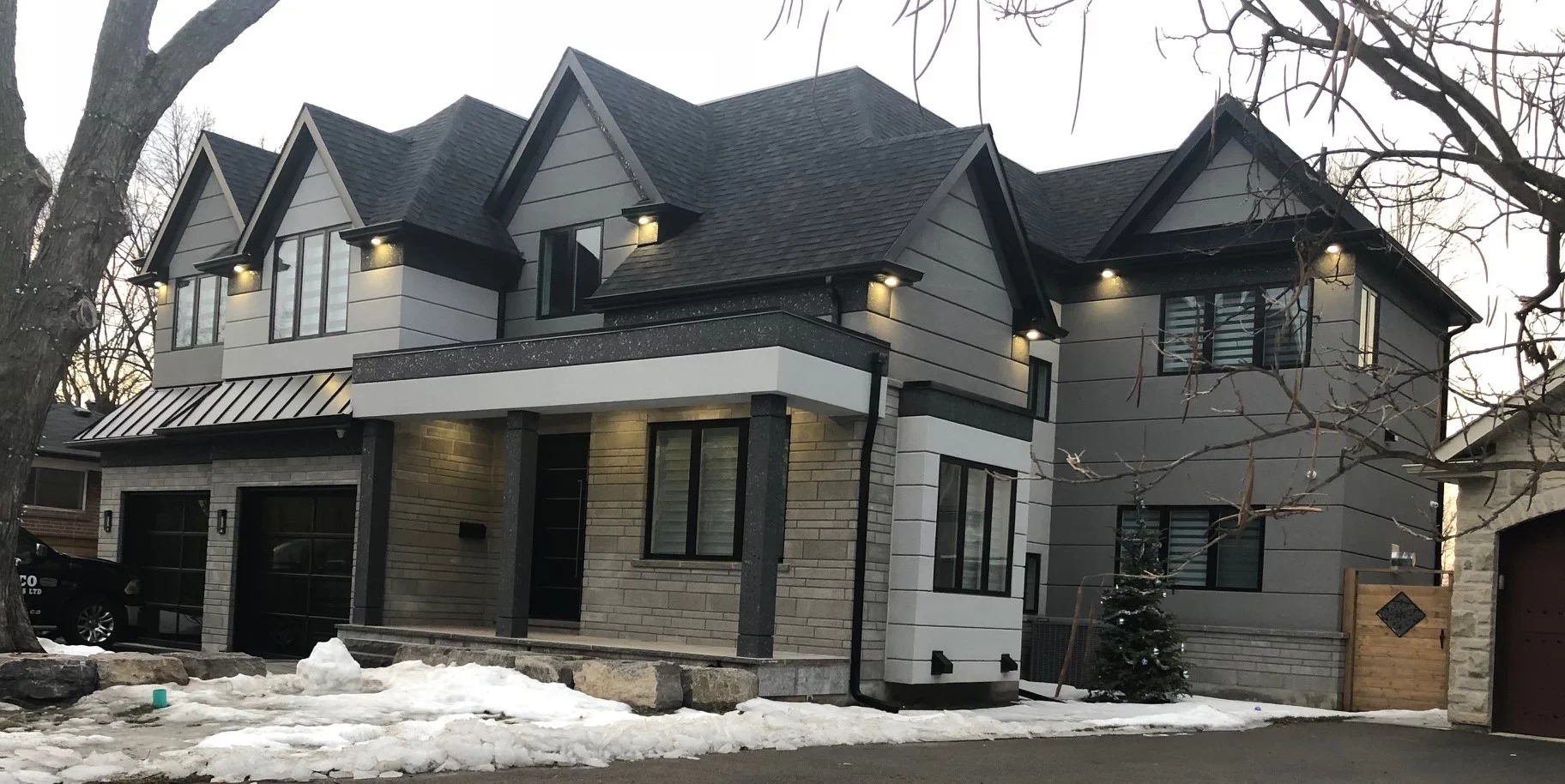
What a finished base looks like next to the neighbours
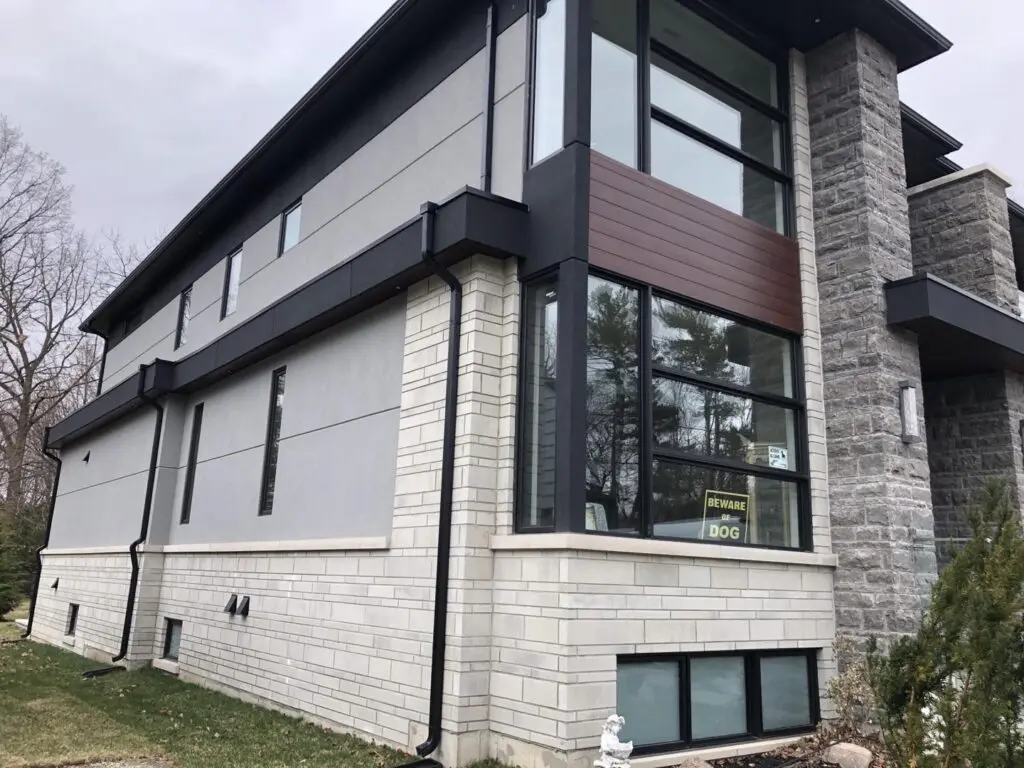
Need more than the foundation? Every service we offer in the city, from EIFS to full re-cladding, is on our Toronto stucco contractor page. We are open 24 hours, the quote is free, and Musa usually calls back within a day.
Toronto parging questions
How much does parging cost in Toronto?
Does Toronto require a permit to re-parge a foundation?
Can you parge a wall I can only reach from my neighbour's yard?
Why does my parging crumble right under the downspout?
When can parging be done in Toronto?
Ready to upgrade your exterior?
Tell us about your project and get a free, fixed written quote. Oakville-based, serving the whole GTA. Open 24 hours.