“Is that just a stain, or is something wrong behind it?” I get asked that more than almost anything else on a site visit. Here are the honest answers: six signs water is behind your stucco, what each one actually means, and how urgent it is. After 25+ years opening up walls across the GTA, I can tell you the stucco itself is rarely the problem — it’s almost always water that got in through a gap nobody sealed, and stayed.
What are the first signs water is getting behind stucco?
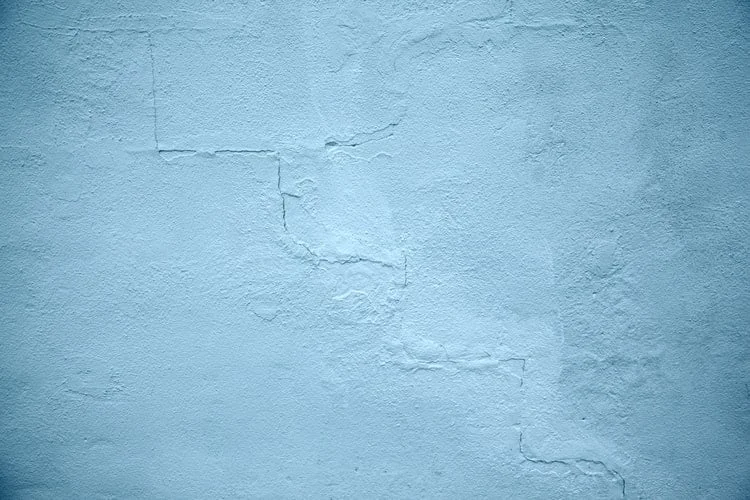
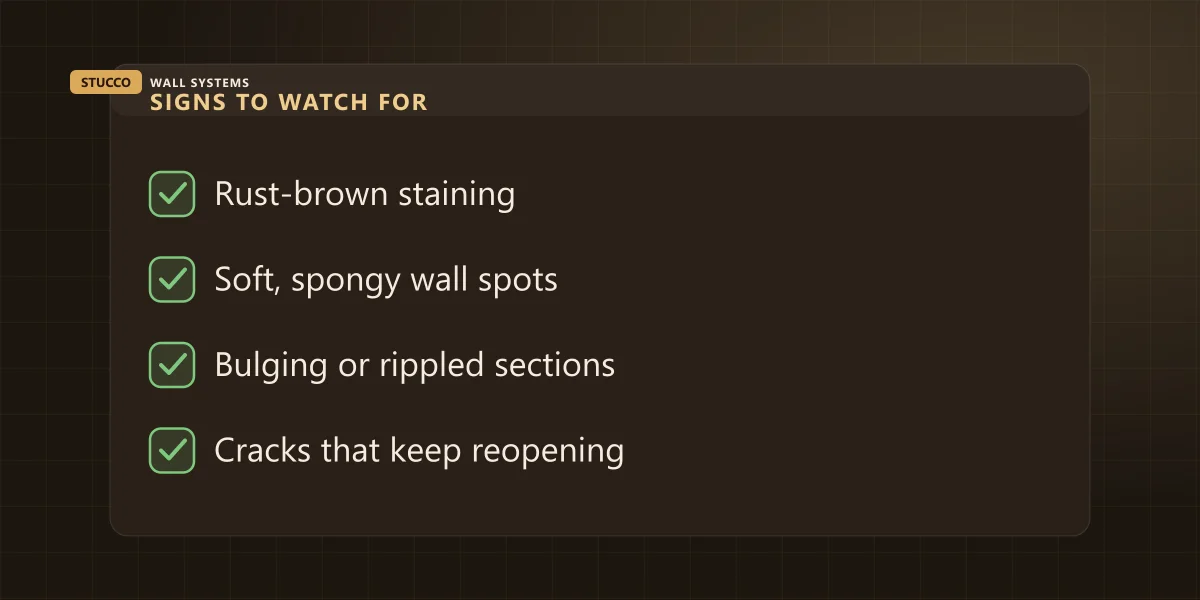
The earliest signs are usually small: a rust-brown stain that wasn’t there last year, a spot that feels soft when you press it, or a crack that keeps coming back in the same place after being patched. None of those look dramatic. All three mean the same thing — water found a way in and hasn’t found a way back out.
| Sign | What it usually means | Urgency |
|---|
| Rust-brown or dark staining | Water tracking down inside the wall, often from a flashing or sealant gap above | Medium — investigate this season |
| Soft or spongy spots when pressed | The substrate underneath is wet and starting to break down | High — open it up before it spreads |
| Bulging or rippled wall sections | Trapped moisture pushing the finish away from the base coat | High — the assembly has already failed locally |
| Cracks that keep reopening | Water cycling in and out is working the same weak point every freeze-thaw | Medium-high — diagnose the cause, not just the crack |
| Musty smell near an exterior wall | Moisture and mould inside the wall cavity, sometimes before any exterior sign shows | High — get it opened up |
| Peeling or bubbling paint/finish | Moisture pushing out from behind, not just old paint failing | Medium — check what’s under it |
How urgent is each sign, really?
Urgency comes down to one question: is the water still moving, or has it stopped? A stain from a leak that’s already been fixed is a cosmetic job. A soft spot, a bulge, or a musty smell almost always means water is still getting in right now — those move to the top of the list every time.
Rust-brown or dark staining
Staining is usually the first thing a homeowner notices, and it’s the most misleading sign on this list — it can look minor even when the damage behind it isn’t. The stain traces the path water took on its way down, which is often nowhere near where it actually got in. I’ve followed a stain three feet down a wall in Oakville back up to a window sill flashing that had been missing for years. Don’t just clean the stain — find where the water started.
Soft or spongy spots when pressed
Press the wall with your palm near grade, window sills and any spot that’s stained. A sound cement or EIFS wall feels solid — almost like knocking on a countertop. A soft or springy give under light pressure means the substrate is wet and starting to break down. This is one of the clearest signs I use on an assessment, and it doesn’t need any tools to check.
Bulging or rippled wall sections
Stand back from the wall at a low angle in afternoon light and look for waviness in what should be a flat plane. Bulging means water is trapped between layers and has already pushed the finish away from what it’s supposed to be bonded to. By the time you can see it from the sidewalk, the damage has usually been building for a while — this isn’t a monitor-and-wait sign.
Cracks that keep reopening
A crack that comes back in the exact same spot after being patched is telling you something a fresh crack isn’t: this location is a repeat entry point, and something behind it is still moving or still wet. I go through the mechanics of why cracks form in the first place in why stucco cracks in GTA winters — the short version here is that patching the surface without finding why it reopened just buys you one more season before it’s back.
Musty smell near an exterior wall
This one catches people off guard because it shows up inside the house, not outside on the wall. A musty or damp-basement smell along an exterior wall — especially near a window or where two walls meet — can mean moisture and early mould are already established in the cavity, sometimes before there’s any visible sign on the stucco itself. If you smell it, don’t wait for a stain to confirm it.
Peeling or bubbling paint and finish
Paint and acrylic finishes fail from UV and age too, so this one needs a second look before you assume the worst. The tell is location and pattern: peeling that’s spread evenly across a sun-exposed elevation is probably just an old paint job. Peeling or bubbling concentrated around one window, one corner, or one low section is moisture pushing out from behind — check what’s under it before repainting over it.
Why does stucco hide water damage so well?
Stucco and EIFS are both rigid, opaque finishes sitting in front of a wall assembly you can’t see into. Water that gets past the finish can travel sideways and down inside the cavity for months before it ever shows on the surface — by the time a stain appears, the wet area behind it is almost always bigger than the mark you can see. That’s not a flaw specific to any one system; Canada’s housing agency, CMHC, has documented moisture as the single biggest threat to wall assemblies for exactly this reason — you’re managing something you mostly can’t see.
Our climate makes the hiding worse, not better. Every freeze-thaw cycle takes water that’s already behind the wall and works it further in — expanding ice acts like a wedge on whatever gap let it in to begin with. I’ve written before about what shortens a stucco wall’s lifespan in Ontario, and water finding its way behind the finish and staying there tops that list every time. Lakeshore properties in Etobicoke, Port Credit and Bronte, and shaded north walls anywhere in the GTA, hold that moisture longer and show these six signs earlier than a sun-exposed south wall on the same street.
What should you do if you spot one of these signs?
Don’t paint over a stain and hope, and don’t wait for spring to “see if it gets worse.” The right first move is simple: document it, stop guessing, and get an actual moisture reading before deciding what the fix is.
| If you notice this | Do this first |
|---|
| A new stain | Photograph it and note the date — watch whether it grows over a few weeks |
| A soft spot | Stop pressing and probing yourself; get it opened up by someone with a moisture meter |
| A musty smell | Check the same wall from outside for staining or cracking, then book an assessment |
| Any of the above near a window or roofline | Treat it as urgent — those are the two most common entry points |
We diagnose these calls with a moisture meter and, where needed, by opening a small probe section — not by guessing off a photo from the street. That’s the same approach behind every stucco repair we do: find the actual wet area first, then fix the cause, then rebuild the finish so it matches. You can see what a properly matched water-damage repair looks like on a real house in our Mississauga repair & restoration project.
How much does it cost to fix water damage behind stucco?
The range is wide because the visible sign almost never matches the size of the actual repair — the wet substrate behind a stain is usually bigger than the stain itself. Caught early and localized, you’re looking at a few hundred dollars. Left to spread into the framing, it climbs fast.
| Situation | Typical cost | Urgency |
|---|
| Caught early, staining only, localized | $300–$800 | Low-medium — act this season |
| Soft substrate confirmed, one section | $1,500–$2,500 | High — open it before it grows |
| Water damage spread into framing | $3,000–$5,000+ | Urgent — structural exposure |

That last row is the one I want homeowners to actually avoid, and it’s completely avoidable — every wall in that column started as a stain or a soft spot someone decided to watch for one more season. The math only ever moves in one direction the longer water sits behind a wall, which is why we quote every water-damage assessment the same way: free, on-site, with the actual condition in writing before you spend anything on a fix.
Is your wall showing one of these signs?
If you’re looking at a stain, a soft spot, or a smell you can’t quite place, don’t wait to see if it settles down — wet walls don’t fix themselves. Send us the address and a few photos and we’ll tell you straight whether it’s cosmetic, urgent, or somewhere in between, for a home or a commercial building anywhere across the GTA.