Stucco Water Damage Repair in Oakville & the GTA
Stained, soft or bulging stucco opened up, dried or replaced to sound board, fixed where the water got in and rebuilt with a matched finish. Published prices below and a fixed quote in writing.

Where the water got in is rarely where it shows
Water that gets behind a cement stucco wall runs down the back of it until something stops it. The stain, the soft spot or the bulge appears there, often a metre or more below the gap that let the water in. Musa once followed a stain about three feet down an Oakville wall to a sill flashing that had been missing for years. So stucco water damage repair starts above the damage, at one of these five places.
The top and bottom of a window
A head flashing that ends short or a sill without a slope sends water into the wall at each corner. It shows below the window, usually at one lower corner.
Where a roof meets a wall
At the end of a lower roof, rain running down the shingles hits the stucco. Without a kick-out flashing it goes behind the wall. The stain appears under the eave, as we explain in our post on roof and wall junctions.
A deck or porch ledger
A board bolted through the stucco and flashed badly, or not at all. The damage sits right under it and is often hidden by the deck itself. More in deck ledgers on stucco houses.
A pipe, vent or light through the wall
Every hose bib, dryer vent and fixture is a hole. When its sealant dries out, water follows the pipe in.
The bottom edge at grade
Stucco that runs down into the soil or mulch wicks water up from the ground. The damage stays low and spreads sideways.
Why the opening ends up bigger than the stain
A moisture meter tells us how far the wet area spreads behind the finish. Opening the wall tells us what the wet did to the board behind it. We cut back until the board and base coat around the opening are solid, because new stucco tied into a soft edge fails at that edge.
Here is the arithmetic on an example, using the rate this site publishes for a water-damaged section rebuilt to the substrate. It is an illustration, not a past job.
Most repairs we price land between $450 and $2,500. When water has reached the framing, the work grows past the stucco and runs $3,000 to $5,000 or more. You get one fixed figure in writing after the free visit.
The job once the wall is open
A water-damaged section takes three to five days on the wall, cure time included. Most of that is waiting for each coat to set, and none of it can be skipped.
Cut back and look
The finish and base come off until we reach solid board on every side. Now you can see what the water did, not guess at it.
Let it dry, replace what is soft
Wet board that is still firm dries out. Board that crumbles or gives under a thumb comes out and is replaced.
Close the gap that let water in
The missing flashing, the flat sill or the dried-out joint around a pipe gets fixed here. Rebuilding without this step brings the stain back.
Barrier, mesh, base coat
A new water-resistive layer is lapped under the old one above it, then mesh goes into fresh base coat tied into the sound edges. The base has to cure before anything goes on it.
Finish matched to the wall
The finish coat is tinted and textured to the house and tried first where it will not show. The repair ends at a corner or joint where the eye expects a line.
These are the same four steps behind every stucco repair we do, with drying and board replacement added in the middle. You can see a finished repair on a smooth off-white house in our Mississauga repair and restoration project.
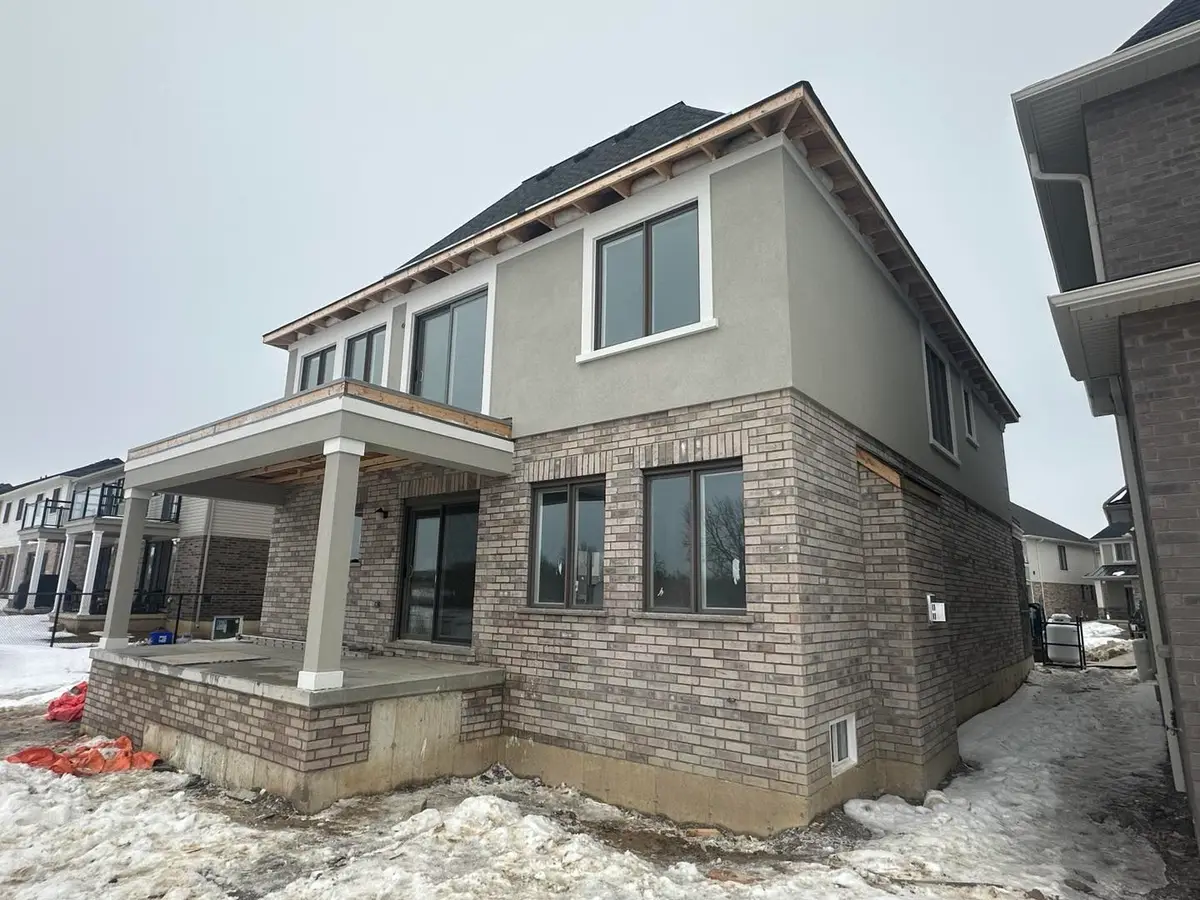
Where those five places sit on houses we finished
Two of our own jobs, photographed before the yards were done. Walk around your house and find the same spots on it. They are the first places to look when a stain turns up.

If there is mould on the board behind the stucco
A wall that stayed wet for a season often has mould on the back of the stucco or on the board. The health department of Halton Region sets the line at one square metre: a smaller area is a homeowner job done with proper procedures, a larger one it recommends handing to someone experienced in mould remediation.
The same page says to find and remove the moisture source first, and to replace drywall that has mould under its paper. On a stucco wall the moisture source is one of the five places above, so closing it is part of our job either way.
What can happen now, and what waits for spring
Most people find these stains in the wet months. Base coat and finish need warmth to cure, so the work splits by season.
- Any month
- Year round
- Emergency sealing and temporary weather protection over an open or failing section, so no more water goes in while the wall waits.
- We are open 24 hours. Call (905) 973-6470 and Musa usually calls back within a day.
- Finish repairs
- April to November
- Opening, drying, rebuilding and the matched finish coat. A section opened in late fall is closed up and protected, then finished when the season allows.
- Signs that tell you how urgent it is are in how to spot water damage behind stucco.
Cement stucco, a foam wall, or only the joint
This page is about traditional cement stucco. Knock on the wall: cement sounds hard and solid, foam sounds hollow and gives a little.
| What you find | What the wall is | The repair |
|---|---|---|
| A knock sounds hard and solid | Cement stucco | The sequence on this page. |
| A knock sounds hollow and the face gives a little | EIFS, with foam behind the finish | Wet sections cut out and rebuilt with new foam, on our EIFS repair page. |
| The wall is dry, only the joint around a window or pipe has split | Sound stucco, failed sealant | Renewing the joint is caulking work and costs far less. |
Stucco water damage questions
How much does stucco water damage repair cost?
Why is the repair bigger than the stain?
How long does it take to repair a water-damaged stucco section?
Can water damaged stucco be repaired in winter?
Will the stain come back after the repair?
Ready to upgrade your exterior?
Tell us about your project and get a free, fixed written quote. Oakville-based, serving the whole GTA. Open 24 hours.