Every week somebody calls asking me to “fix the stucco on the foundation,” and half the time what they’re describing isn’t stucco at all — it’s parging. Parging vs stucco trips people up because both are cement-based, both go on with a trowel, and both crack when nobody looks after them. But they’re not the same product, they don’t go on the same part of the house, and mixing them up is how homeowners end up paying for the wrong fix. After 25+ years quoting walls from Port Credit basements to Kleinburg new builds, here’s the plain difference — and how to tell which one you’re actually looking at.
What’s the difference between parging and stucco?
Parging is a thin cement coating — usually 3/8 to 1/2 inch — troweled straight onto the foundation wall, mostly for looks and light moisture protection. Stucco is a full multi-layer cladding system built above grade over lath, mesh and often insulation board, engineered to shed weather for decades. Same trade, same trowel, completely different job on the wall.
| Parging | Stucco |
|---|
| Below grade? | Yes | No |
| Reinforced mesh | No | Yes |
| Insulated option | No | Yes |
| Recoat cycle | 10–15 yrs | 20–50+ yrs |
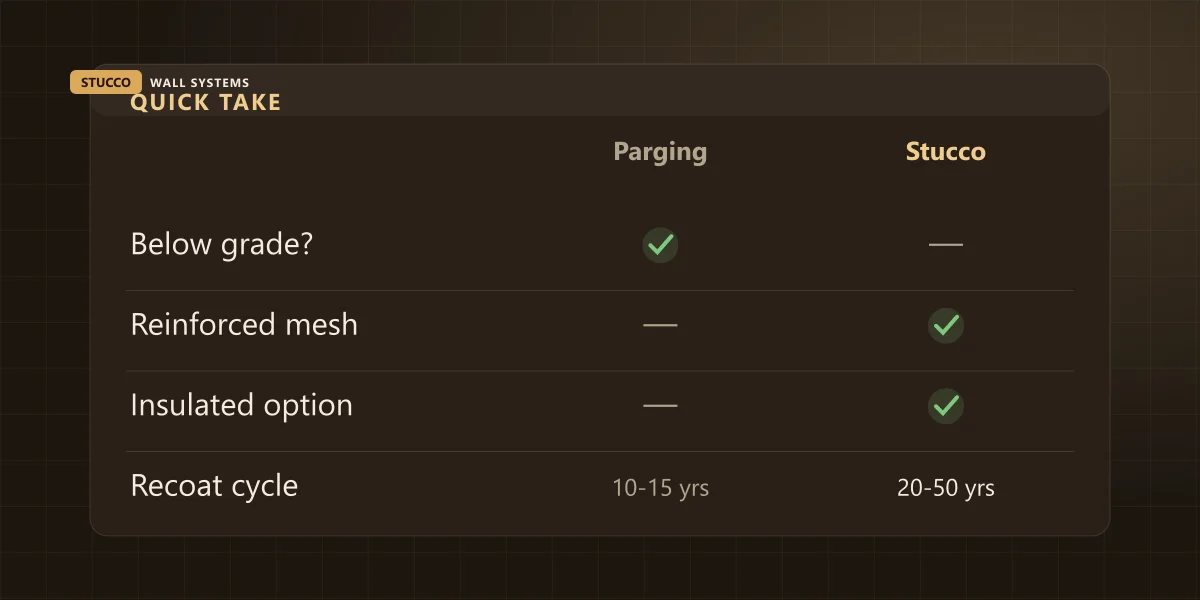
That table is the short version. The longer version is a conversation I have on almost every foundation call, because “can you stucco my foundation” usually means “this grey stuff around my basement is cracking” — and that grey stuff is parging, not stucco.
Where does parging actually belong on a house?
Parging covers the exposed part of your poured concrete or block foundation — from grade level down to where the wall disappears into the soil, and sometimes the interior basement wall too. It’s a cosmetic and light-protective layer over structural concrete, never a cladding system, and it was never engineered to manage bulk water on its own.
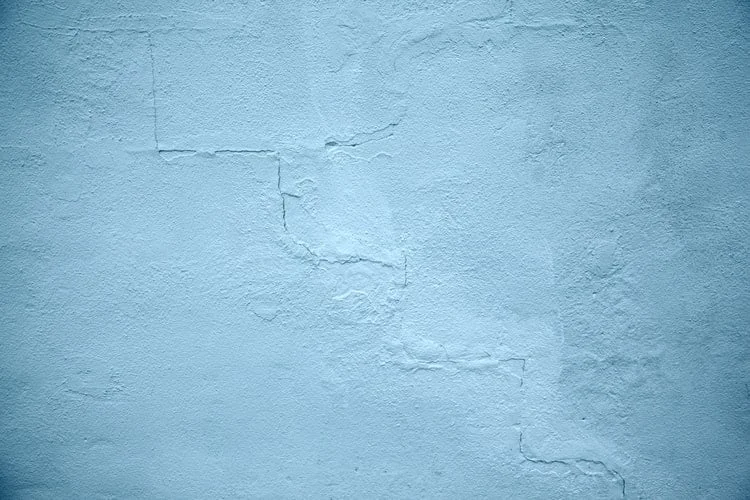
On older stock — 1960s-70s bungalows scattered through Etobicoke, north Mississauga, parts of Scarborough — the original parge coat is often 40-plus years old, patched two or three times by whoever owned the house before, in whatever grey happened to match closest at the hardware store that day. You can usually see the seams. It’s not dangerous, but it tells you the coating’s been fighting freeze-thaw a long time with no real plan behind it.
Parging also isn’t waterproofing. It sheds surface water and covers the concrete, but it’s not a substitute for proper below-grade damp-proofing and drainage at the footing — see CMHC’s guidance on managing moisture around foundations. That’s a membrane-and-weeping-tile job done at excavation, not something a trowel coat fixes from the outside once the house is built.
Parging shows up inside the house too — unfinished basements and cold cellars often get a parge coat over the block or poured wall as a moisture and dust barrier before anyone thinks about drywall. Same material, same logic: cosmetic and light-protective, not a waterproofing system. If a basement wall is actually wet, no amount of interior parging fixes that — the water’s coming from outside, and that’s a grading, downspout or exterior damp-proofing problem, not a trowel problem.
Where does stucco actually belong?
Stucco is the cladding on the framed or masonry wall above the foundation — sheathing, a weather-resistive barrier or insulation board, wire lath, a reinforced base coat, then the finish coat, tied together with control joints and flashing at every opening. It’s a full assembly, not a surface treatment, built to be the house’s primary weather barrier for 20 to 50-plus years depending on the system.
The two meet at one critical detail: the weep screed, the metal strip at the bottom edge of the stucco wall that lets moisture trapped behind the finish drain back out — right above where the foundation parging takes over. I’ve opened up more than one wall where that transition was buried under mulch or a paving-stone patio, turning a drainage detail into a dam. If you’re chasing a stain right at that line, it’s worth reading through the signs water’s gotten behind your stucco before you assume it’s just tired old parging.
Everything in that assembly is designed to work together — the lath holds the base coat, the base coat carries the reinforcing mesh that keeps hairline cracking from turning into structural cracking, and the finish coat is the only layer anyone ever actually sees. Skip a layer to save a day on the schedule and the wall looks identical for about a year before the shortcut starts showing.
Why does parging crack, bulge or fall off?
Most parging failure comes down to three things: a weak bond to the concrete underneath, water getting behind a coat that was never keyed in properly, or plain freeze-thaw fatigue after a decade or two facing the coldest, wettest part of the house. None of that means the foundation itself is failing — parging is a coating, and coatings wear out long before the concrete behind them does.
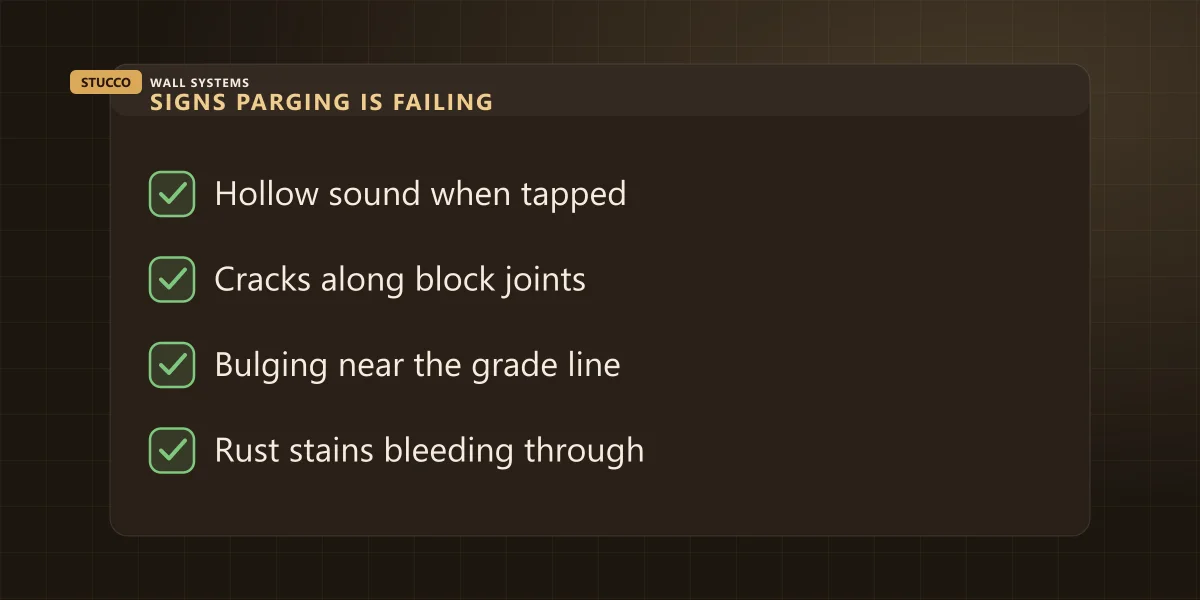
A few tells I look for on a site visit: a hollow sound when I tap the surface (the coat’s let go from the concrete behind it), horizontal cracking that lines up with the block joints on a block foundation (the parge coat is telegraphing movement it can’t hide), bulging or flaking low down near the grade line (usually snow load or splash-back freeze-thaw), and rust stains bleeding through — a sign there’s reinforcing steel corroding somewhere behind the coat, worth a proper look before it just gets recoated over.
Can you put real stucco on a foundation instead of parging?
Sometimes, on new construction. Extending an insulated EIFS or cement system down to grade with the right below-grade damp-proofing and drainage board behind it is a legitimate detail on a new build, and I’ve specced it that way on a few Kleinburg and Oakville custom homes where the client wanted a seamless look from footing to roofline. It’s a decision made at the drawing stage with the builder, not a repair swap on a house that’s already standing.
On an existing house, ripping off sound parging to install a full stucco assembly on the foundation almost never pencils out — you’d be excavating or building elaborate flashing transitions to protect a system that was never meant to go there. If your parging’s failing, the honest fix is usually better parging: proper prep, a bonding agent, and a coat put on thick enough and keyed in right the first time.
What does parging repair cost in the GTA?
Small parging repairs run in the same range as our other cement repair work — a few hundred dollars for a crack touch-up, up to a few thousand if water’s gotten in behind it. What moves the number is linear footage of exposed foundation, how much of the old coat has to come off first, and whether we’re patching a section or redoing the whole perimeter.
| Repair | Typical range |
|---|
| Hairline crack touch-up | $300–$800 |
| Localized re-coat, one section | $500–$1,500 |
| Full perimeter re-parge (avg. home) | $1,500–$3,000 |
| Water damage behind the coat | $1,500–$5,000+ |
That last line is the one to take seriously. A stained or bulging patch of parging is almost always smaller than the wet area behind it — the same rule that applies to stucco repair above grade. We open it up, see what’s actually happening to the concrete and the grade around it, and quote it honestly in writing before touching anything.
If what’s behind the crumbling parging turns out to be an actual water intrusion problem — not just old, tired coating — the fix moves outside our scope into excavation and exterior damp-proofing, and we’ll tell you that honestly instead of recoating over a problem that’s going to come right back.
How do I know if I need a parging contractor or a stucco contractor?
If the cracking, crumbling or staining is at or below the point where your foundation meets the ground, that’s a parging call. If it’s on the wall above — the actual siding of the house — that’s stucco. Most jobs we quote end up touching both, because the two meet at the same wall and a proper assessment covers the whole envelope, not just the part that’s visibly failing.
We’re based in Oakville and run crews across the GTA — Toronto, Mississauga, Vaughan and everywhere between. Send a couple of photos and the address and we’ll tell you honestly which one you’re dealing with, what it needs, and what it costs — free, fixed, in writing, no guessing over the phone.