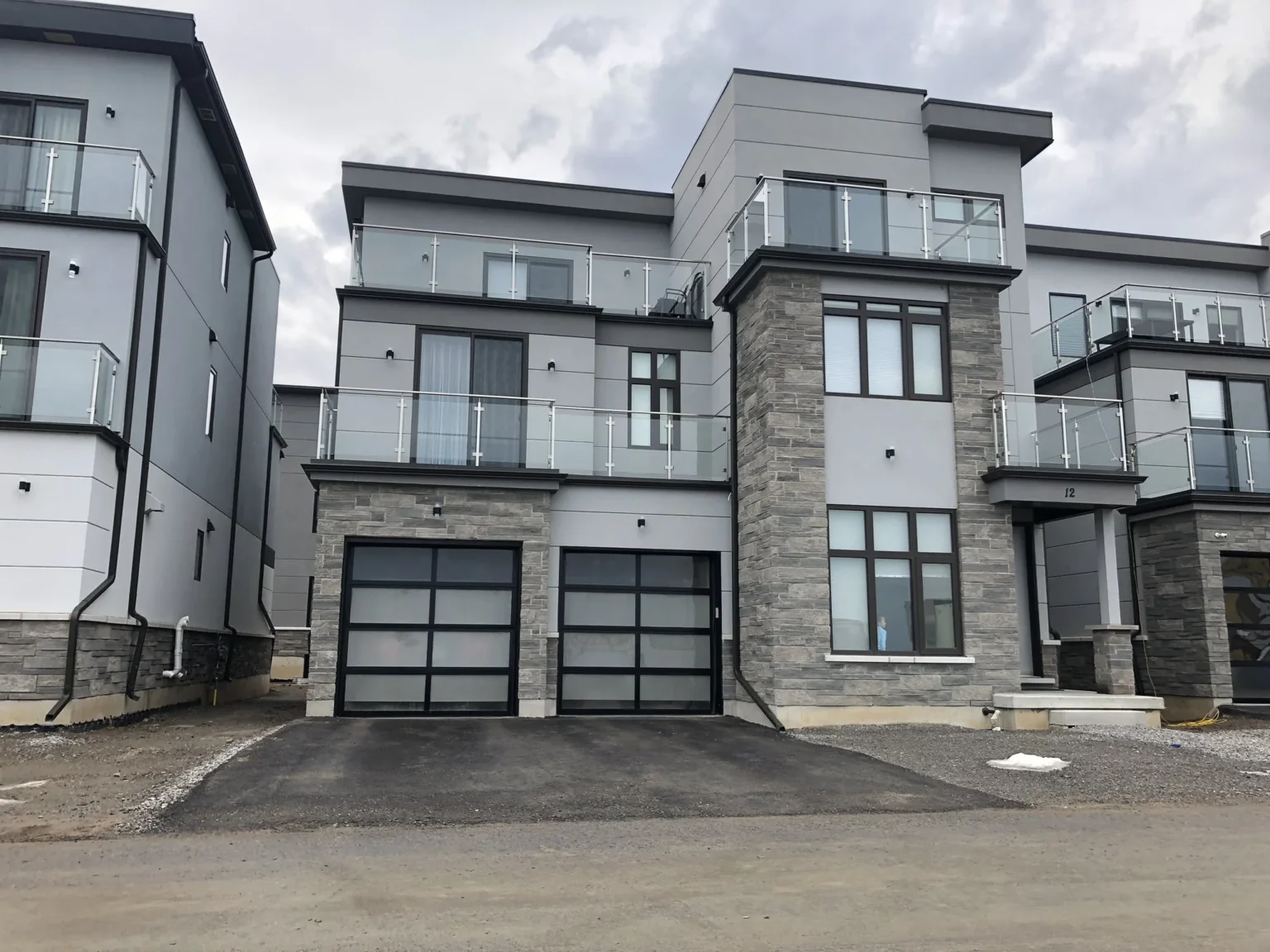
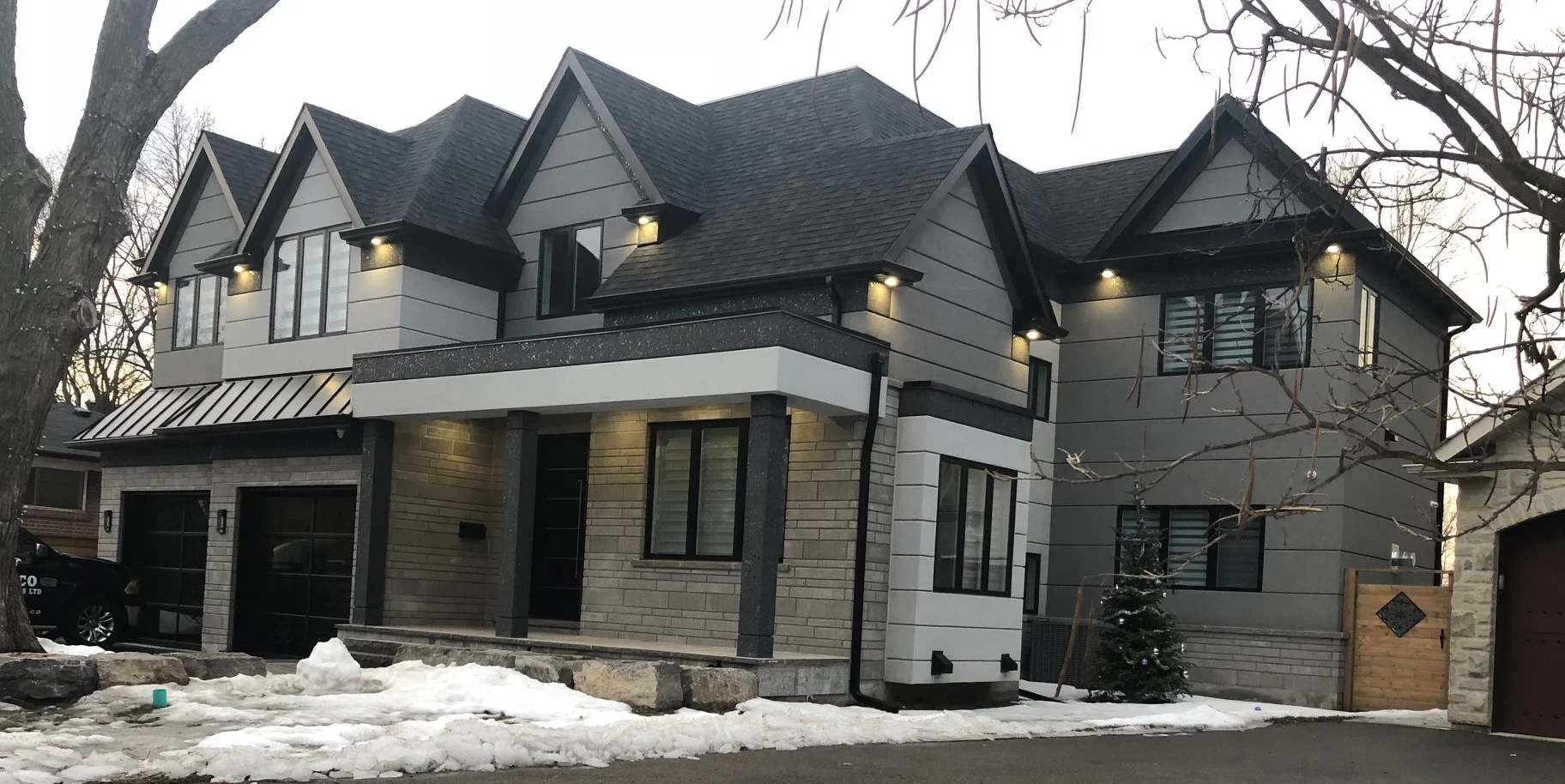
Every listing season I get some version of the same question, usually from a homeowner about to call an agent, sometimes from the agent directly: “Will putting new stucco on this house help it sell for more?” It’s a fair question and it deserves a straight answer, not a sales pitch. There’s no published dollar-for-dollar chart for stucco and resale value the way there is for a kitchen or a garage door, because unlike a kitchen reno, almost nobody re-clads a whole house purely to sell it. What actually moves the needle at resale isn’t the material on your wall — it’s the condition of it. Twenty-five years of walking GTA houses before and after they sell has shown me exactly where that line sits, and where it doesn’t.
Does stucco actually add resale value in the GTA?
No reliable stucco-specific resale figure exists the way it does for kitchens or garage doors, because almost nobody re-clads a whole house purely to sell it. What genuinely moves buyers and inspectors is condition, not material — a sound, well-maintained wall is a non-issue, while a cracked, stained or hollow one becomes a bargaining chip against you.
If anyone ever tells you a fresh coat of stucco adds a flat percentage to your sale price, ask them where that number came from — twenty-five years in and nobody’s ever shown me the study, because there isn’t one. Agents don’t put “new stucco!” on a listing sheet the way they put “renovated kitchen” or “finished basement.” Buyers don’t walk through a house mentally pricing the exterior finish the way they price countertops. What they do notice, and what their home inspector absolutely notices, is whether the wall looks cared for. A stucco or EIFS wall that’s clean, crack-free and has an inspection report with nothing flagged on it costs you nothing at the table. A wall with visible cracking, staining, or a soft spot the inspector can push a thumb into becomes a line item in the buyer’s negotiation — and that’s where the real money moves, not in some invented per-square-foot resale premium for the cladding itself.
What do home inspectors actually check on a stucco wall?
A home inspector does a visual walk and a tap test, looking for cracking patterns, staining or discolouration, hollow-sounding sections, missing or damaged flashing at windows and rooflines, and failed caulking joints. They’re not judging your colour or texture choice; they’re flagging anything that reads as a moisture risk the buyer could inherit.
| What the inspector checks | Common finding | What it usually triggers |
|---|
| Cracking pattern across the wall | Hairline map cracks vs. diagonal or stair-step cracks | Hairlines noted, not flagged; larger cracks get a recommendation to evaluate |
| Staining or discolouration | Streaks with no visible crack above them | Flagged as a possible moisture source — often written up for “further evaluation” |
| Tap test on the wall | Solid sound vs. hollow or soft response | A hollow section gets called out by name in the report |
| Flashing at windows & rooflines | Present and lapped correctly vs. missing or reversed | Missing flashing is one of the most common write-ups on older GTA homes |
| Caulking & sealant joints | Flexible and intact vs. cracked, shrunk or missing | Noted as routine maintenance unless it’s clearly been failed a while |
None of that is subjective the way paint colour or landscaping is. An inspector’s report is a checklist against a moisture risk, and a wall that passes clean simply doesn’t come up again in the deal. I go through what each of these signs actually means, sign by sign, in 6 signs water is behind your stucco — the same list a good inspector is quietly working through on their walk-around.
Does a stucco crack actually lower your home’s appraisal?
Rarely directly — an appraiser isn’t pricing out crack repair line by line. What actually costs you is the home inspection report: a line like “recommend further evaluation for moisture intrusion” gives a buyer’s agent real leverage to ask for a price credit or a pre-closing repair, which lands the same in your pocket as a lower sale price.
| Path | Typical cost to you | Timing |
|---|
| Fix it before listing (routed, meshed, matched crack) | $120–$400 per crack | Weeks before your first showing, on your schedule |
| Fix a small patch or a cluster of cracks before listing | $450–$1,200 | Before listing, invisible by the open house |
| Leave it, buyer’s inspector flags it, negotiate a credit | Buyer typically asks for the repair cost plus a margin for risk | During your firm conditional period — adds days and stress to closing |
| Leave it and it turns out to be a real moisture problem | $1,500–$5,000+ (section rebuild or worse) | Discovered at the worst possible moment: mid-negotiation |
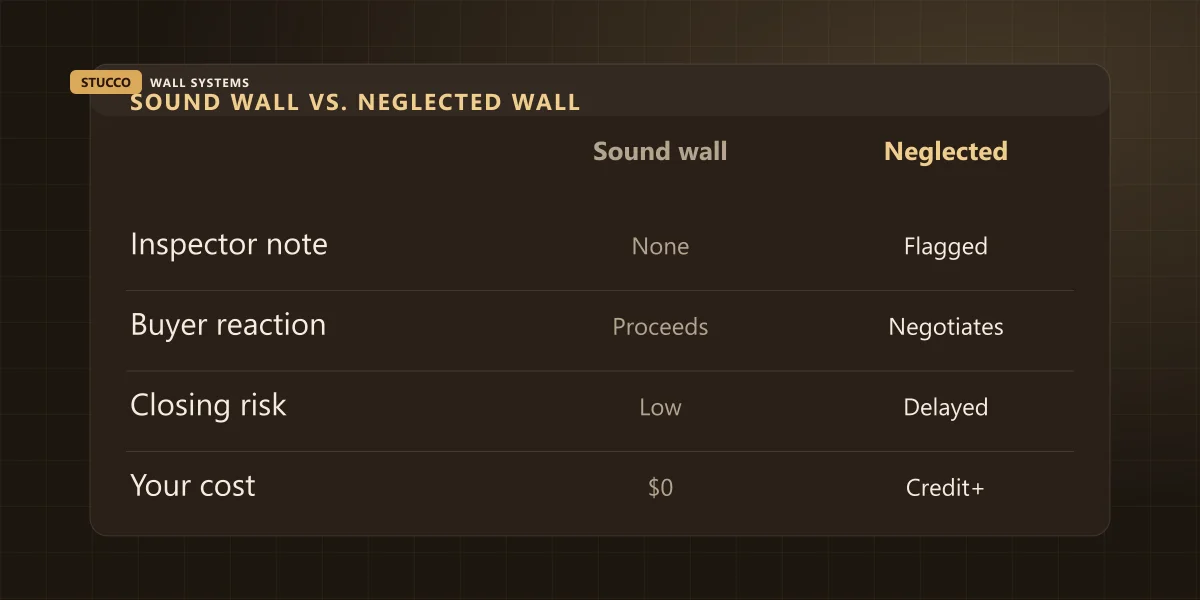
I’ve watched this play out the same way often enough to trust the pattern: a crack fixed on the seller’s own schedule, weeks before a showing, disappears into “no issues noted” on the inspection. The identical crack left alone and caught by a buyer’s inspector almost always costs more once it’s on the table, because at that point it’s priced as an unknown carrying risk, not a known, fixed repair — and a nervous buyer’s agent will build in a margin for exactly that uncertainty. That gap is the whole argument for dealing with it before your first showing, not after your first offer. I break down exactly what each crack type costs to fix properly in stucco crack repair costs in the GTA.
Should you repair stucco before listing, or let the buyer negotiate it?
Fix anything a buyer could actually see or that would show up on an inspection walk — staining, hollow sections, missing flashing, cracked corners. Hairline cosmetic cracks can usually wait. A documented repair before your first showing reads as maintenance; the same issue sitting open in a conditional offer reads as leverage against your price.

The order I’d actually do it in, three to four weeks before your first showing:
Patch anything visible. Cracks, chips, an old satellite-dish hole nobody ever finished — texture-matched so it disappears rather than reads as a fresh repair, which can actually draw attention to itself.
Reseal window and door trim. Old, cracked or missing caulking is one of the cheapest things to fix and one of the first things a sharp-eyed inspector checks, because it’s the most common entry point for water.
Soft-wash the walls. Algae streaks and grime read as neglect even on a perfectly sound wall — a wash costs almost nothing next to what a “this house looks tired” first impression costs you in offers.
Get it looked at in writing. If you’ve had a stain or a soft spot you’ve been ignoring, get an honest assessment before you list, not after a buyer’s inspector finds it for you. A dated, written “no active moisture found” note from a contractor is worth more at the negotiating table than you’d think, and it costs a lot less than a holdback.
Do GTA buyers actually see stucco differently depending on the neighbourhood?
Yes, but it’s about expectation, not prejudice against the material. Buyers touring new builds in Vaughan or Kleinburg expect stucco and EIFS — it’s the default look, so a clean wall reads as normal, not a feature. Buyers in older brick-dominant neighbourhoods sometimes read a re-clad exterior as a question mark and ask why it was done.
| Buyer type | How they read your wall | What actually matters to them |
|---|
| New-build buyer (Vaughan, Kleinburg, Nobleton) | Stucco/EIFS is the expected look — a non-issue if clean | Flatness, banding and detailing quality, not the material choice itself |
| Older-neighbourhood buyer (Etobicoke, North York, East York) | A re-clad exterior can read as “why was this done?” | A clear, honest answer — and a paper trail if it was a repair, not a cover-up |
| A cautious buyer who’s read about EIFS problems | Assumes worst-case until shown otherwise | A moisture reading or written assessment that puts the question to rest fast |
| Investor or flip buyer | Prices the wall as a line item, not an emotional read | A real repair estimate, not a guess — they’ll ask a contractor before they ask you |
That third row is the one worth a straight answer of its own, because it’s not paranoia — it comes from a real history.
Does the EIFS reputation problem from the 90s still affect resale?
For most buyers, no — drained EIFS installed since the late 90s doesn’t carry the same risk that barrier EIFS did. But in a handful of older GTA subdivisions built with the old barrier systems, a cautious buyer or a sharp inspector may still ask pointed questions, and a documented assessment or moisture reading is the fastest way to put that concern to rest.
I wrote the full history of why that reputation exists and how to tell which system is actually on a wall in why EIFS got a bad name in the 90s. The short version for a seller: if your house was built or re-clad in that 80s-to-mid-90s window and you don’t already know which system you have, that’s worth finding out before a buyer’s home inspector finds it out for you and writes it up as an open question instead of a closed one.
What’s the honest bottom line on stucco and resale value?
Don’t expect a dollar-for-dollar return chart the way you’d see for a kitchen — that number doesn’t exist for stucco, and I won’t invent one to make this article sound more useful than it is. What’s real is this: neglecting the wall costs you leverage at exactly the wrong moment — during a home inspection, with a buyer already looking for a reason to ask for money back. A wall that’s been maintained, patched promptly and has nothing to hide costs you nothing at resale, and it usually means a smoother, faster closing because there’s one less thing on the table to fight about. Canada Mortgage and Housing Corporation makes the same point about home maintenance generally: a maintenance plan is how you protect the investment you’ve already made in your home, sale or no sale (see CMHC on maintaining your home).
If you’re thinking about listing in the next few months and you’re not sure whether your stucco needs anything before the sign goes on the lawn, send me a few photos through our contact page and I’ll give you a straight, written read — repair, leave it, or nothing at all. That’s the same free assessment I’d give a homeowner staying put for another twenty years. If a repair or a full residential re-clad does make sense, our stucco repair team handles the small stuff too, and you can see finished work across Oakville and the rest of the GTA in our project portfolio.