Nine times out of ten, texture gets picked in about thirty seconds — a homeowner runs a hand over three sample boards on the tailgate of my truck and points at the one that “feels right.” Fair enough, it’s a real decision. But stucco finish textures aren’t just a look — float, dash, smooth trowel and the heavier aggregate finishes clean differently, crack differently, and patch differently for the next 20-plus years. After 25+ years troweling all of them across the GTA, here’s what I actually tell people before they point at the sample board.
What are the main stucco finish textures?
Most GTA jobs choose from four families: sand/float (fine, even grain), dash or lace (splattered, heavier texture), smooth trowel (flat, almost polished), and a coarser aggregate finish sometimes called “popcorn” or cotswold texture. Each is applied with a different trowel technique and hides — or shows — different things on the wall underneath.
| Texture | What it looks like | Where it fits |
|---|
| Sand / float | Fine, even, sandpaper-like grain | The GTA default — most cement stucco and EIFS |
| Dash / lace | Splattered, heavier, shadow-casting texture | Older builds, some heritage-district Toronto homes |
| Smooth trowel | Flat, almost polished, minimal grain | Modern custom builds, Kleinburg and Vaughan new construction |
| Heavy aggregate ("popcorn"/cotswold) | Coarse, lumpy, deep shadow lines | Large commercial facades, some heritage restorations |
None of these are “better” in the abstract — they’re a set of trade-offs between how forgiving the finish is on an imperfect substrate, how it holds dirt and shade, and how visible a future patch will be. That’s the conversation worth having before the sample board decides it for you.
How does texture affect maintenance and cleaning?
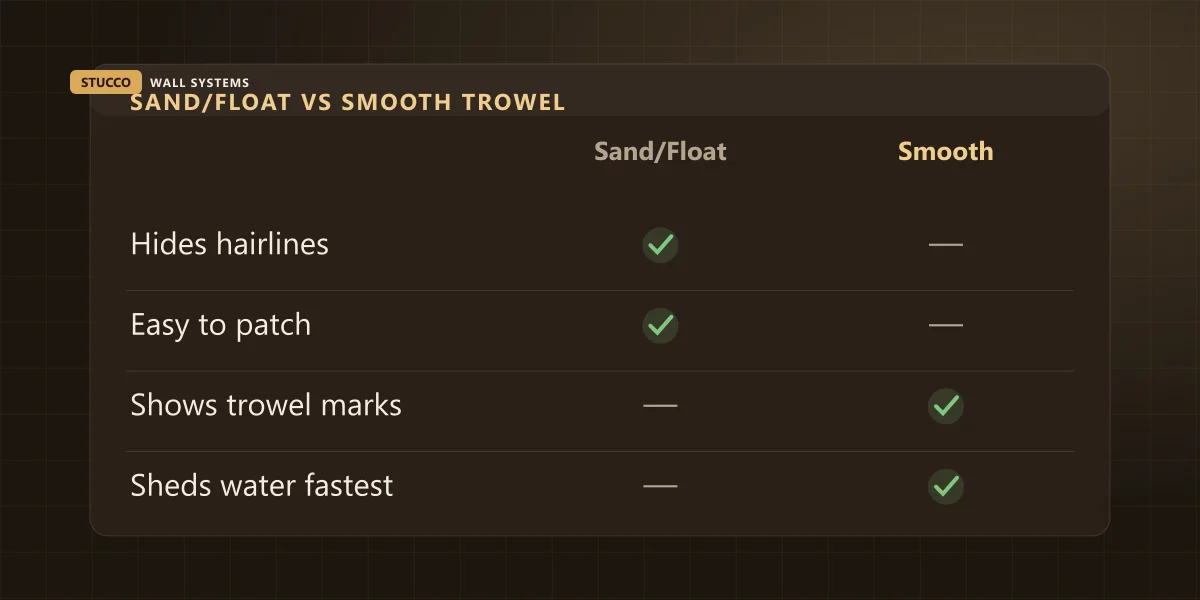
Texture depth decides how much dirt, pollen and algae a wall holds onto. Flatter finishes like smooth trowel shed rain and grime fastest; deeper textures like dash and heavy aggregate trap more debris in the valleys, which shows up as streaking and green staining on shaded, north-facing walls first.
| Texture | Dirt / algae holding | Typical cleaning effort |
|---|
| Sand / float | Low-moderate | Annual rinse usually keeps it clean |
| Dash / lace | Moderate-high | Deeper valleys hold grime; needs a scrub brush, not just a hose |
| Smooth trowel | Low | Sheds water fastest; least maintenance of the four |
| Heavy aggregate | High | Hardest to clean thoroughly; shade-side algae shows fastest |
I see this play out on the same street every summer — two nearly identical houses in Erin Mills, one with a fine sand finish and one with an old dash finish on the shaded north wall, and the dash wall is visibly greener by August. It’s not a defect in either wall, just physics: more surface area and deeper shadow means more moisture sits longer after a rain, and algae doesn’t need much of a head start.
Which texture hides cracks and patch repairs best?
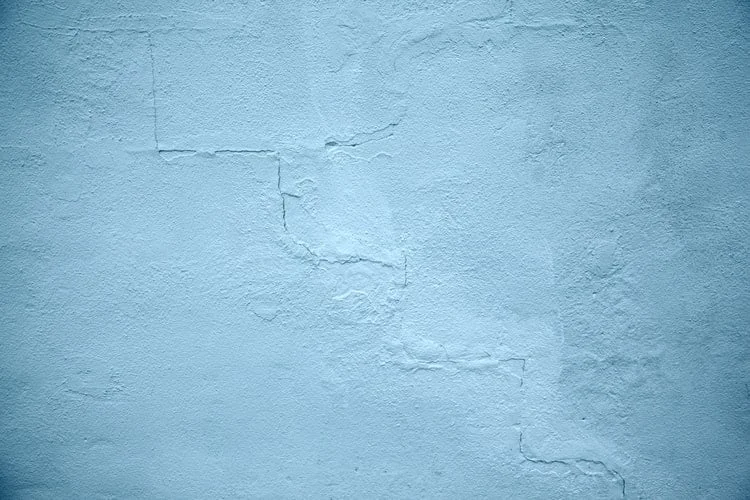
A medium sand finish hides hairline cracking and small patches best, because the grain breaks up the eye’s ability to track a straight line. Smooth trowel shows everything — every hairline crack and every patch edge reads clearly on a flat surface, which is exactly why it demands the most disciplined substrate prep going in.
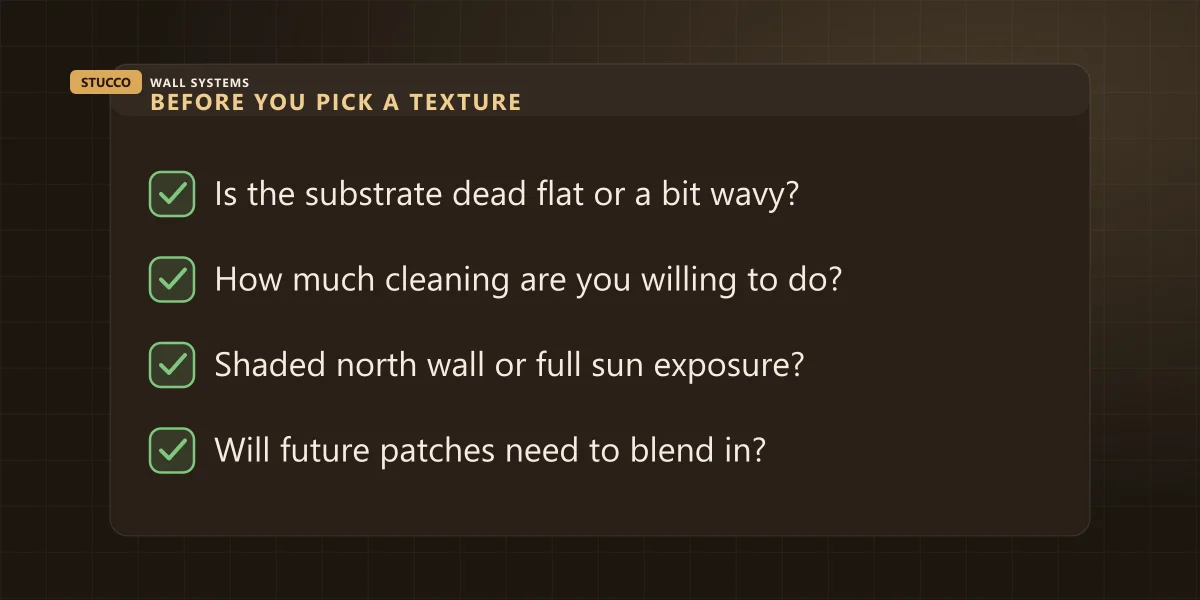
Patch-matching is where texture really earns its reputation. Sand and dash finishes are applied by hand, in a rhythm that’s part material and part the applicator’s wrist motion — a skilled hand can blend a patch into an existing sand finish so it disappears within a few feet. Smooth trowel and heavy aggregate finishes are far less forgiving: a smooth patch next to 15-year-old smooth stucco often reads as a slightly different sheen even when the colour is dead-on, and a heavy aggregate patch needs the exact same lump size and spacing as the original crew used, which isn’t written down anywhere — it lives in whoever troweled the original wall.
Smooth trowel finish: the modern look with the strict substrate
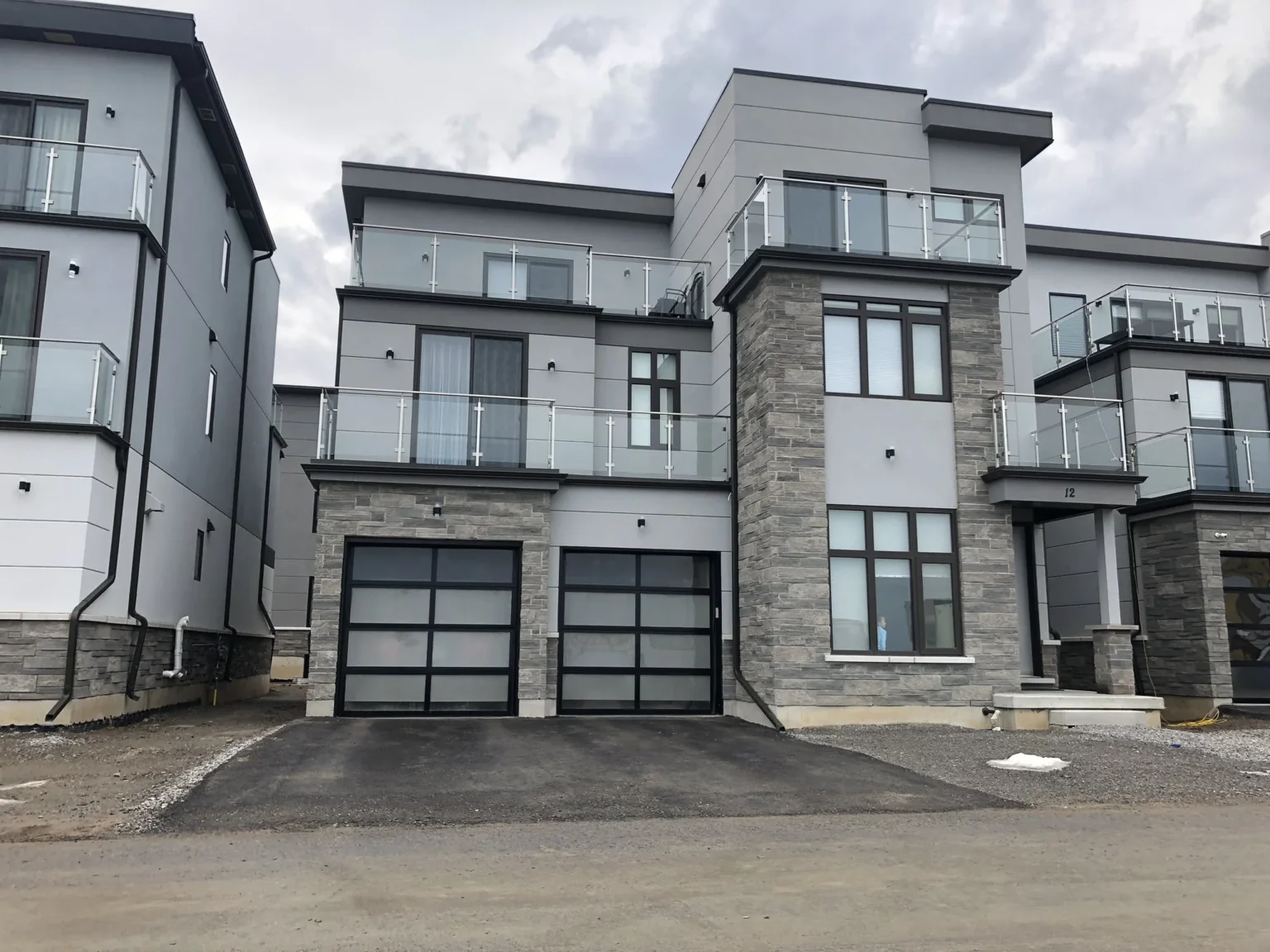
Smooth trowel is what most of my Kleinburg and Vaughan custom-build clients want — clean lines, minimal shadow, a finish that reads almost like polished concrete against black window frames. It looks fantastic when the wall underneath is dead flat, because there’s no texture to hide waviness in the base coat. The trade-off: it needs more finishing passes, a flatter base coat, and a crew that won’t rush the final trowel — rush it and you get visible trowel-lap marks that never go away, because there’s no grain to disguise them.
Sand and float finish: the GTA workhorse
If I had to put one texture on a wall sight-unseen, it’s medium sand. It’s forgiving of minor substrate imperfections, hides hairline shrinkage cracking that’s normal in the first year of cure, cleans reasonably well, and patches invisibly in a skilled crew’s hands. It’s the default on the large majority of jobs we quote across Mississauga, Oakville and the rest of the GTA for exactly that reason — it’s not the flashiest option, it’s the one that ages the best with the least fuss.
Dash, lace, and heavy aggregate: where they still make sense
Dash and lace finishes were more common on 1970s-90s GTA builds and still show up on some heritage-district homes in older Toronto neighbourhoods, where matching the existing texture on an addition matters more than picking the “best” one. Heavy aggregate — sometimes marketed as a popcorn or cotswold texture — still gets specified on some large commercial EIFS facades, because the coarse shadow pattern hides substrate irregularities across a big, flat expanse that would show every ripple under a smooth finish. On a home, I’ll usually steer people away from it unless they’re specifically matching an existing heritage look, mostly because of the cleaning and patch-matching trade-offs above.
Does the texture I pick change the cost?
Texture moves labour more than material cost, so the swing is modest but real. Sand and dash finishes are fastest to apply and sit at the base of our normal $8–$16 per square foot residential range. Smooth trowel adds a bit more finishing time for a flatter, more disciplined application. Heavy aggregate is often faster to apply per square foot but adds cost elsewhere — more material volume and a harder-to-match future repair.
| Texture | Cost impact vs. sand finish | Why |
|---|
| Sand / float | Baseline | Fastest to learn, apply and touch up |
| Dash / lace | About the same | Different technique, similar labour time |
| Smooth trowel | +5–10% | Flatter base coat prep, extra finishing passes |
| Heavy aggregate | Roughly baseline to +5% | Faster application, more material volume |
On a system level, texture is a smaller cost driver than choosing between EIFS and traditional cement stucco in the first place, or the colour decision that usually gets made in the same conversation — see our guide to choosing stucco colours for GTA homes if you’re picking both at once, since integral colour and texture interact more than most homeowners expect.
Can you change texture during a repair or recoat?
On a full recoat of the whole wall, yes — you can move from dash to sand, or sand to smooth, as long as the new system is compatible with what’s underneath. On a spot repair, no: the patch has to match the surrounding texture and trowel technique, or it will read as a visible scar no matter how well the colour is matched. That’s the single biggest reason a “quick patch” from an unfamiliar crew ends up looking worse than the crack it fixed — different hands, different trowel rhythm, different result. Canada Mortgage and Housing Corporation’s guidance on maintaining exterior wall finishes makes the same point in plainer terms: repairs that don’t match the original material and technique shorten the finish’s effective life, not just its looks — see CMHC’s homeowner maintenance guidance.
So which texture should you actually pick?
For most GTA homes, medium sand is the safe, proven default — forgiving, low-maintenance, and easy to patch for decades. Go smooth trowel if you want the modern look and your wall (and your contractor) can deliver a genuinely flat substrate. Consider dash only if you’re matching an existing texture on an addition or older heritage home. And think twice about heavy aggregate on a house unless you specifically want that look, mostly because of what it costs you later at repair time.
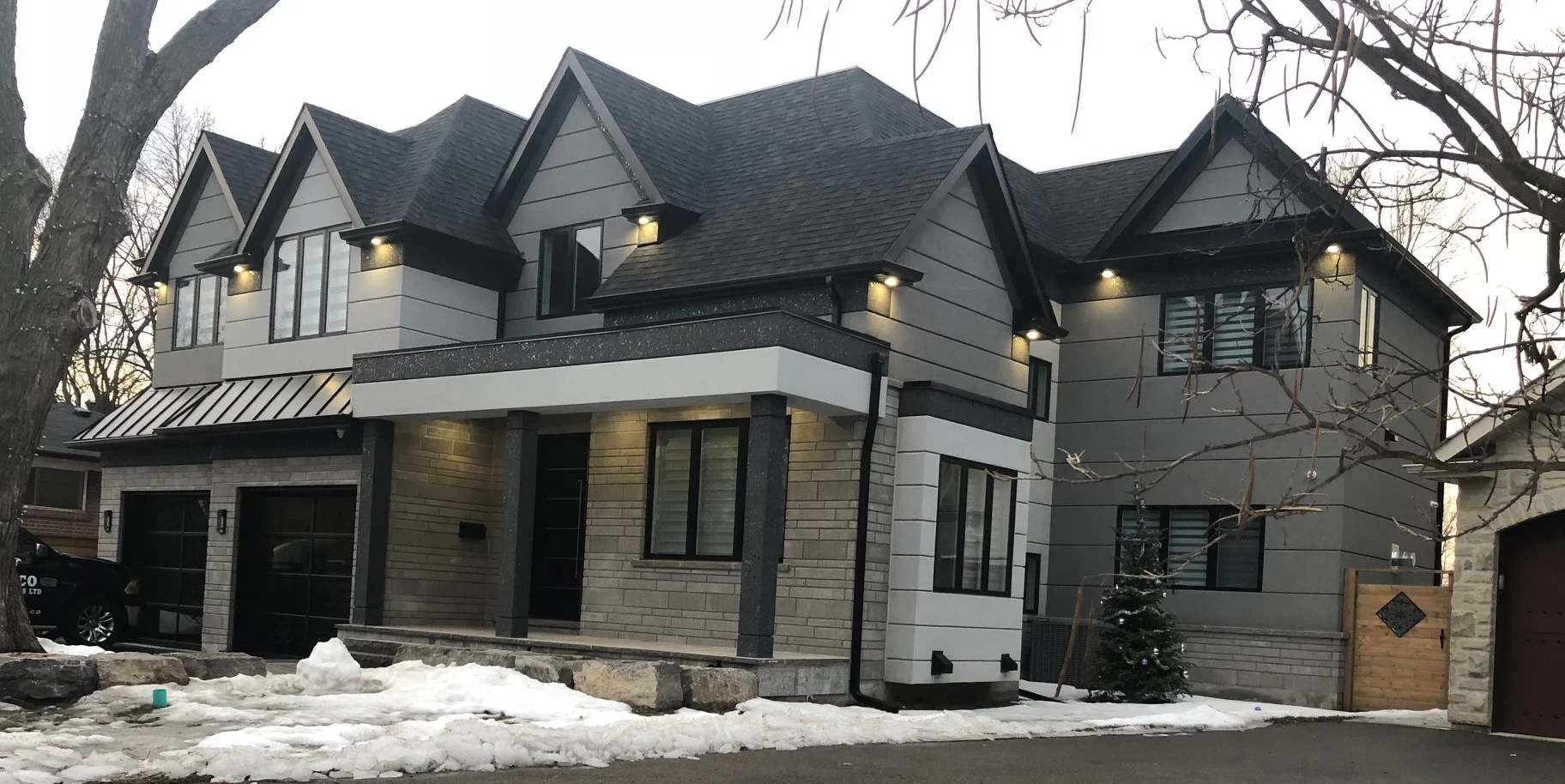
Bring me a photo of your wall or the neighbour’s finish you’re trying to match, and I’ll tell you honestly which texture actually fits — not just which one looks best on a sample board. We quote residential and commercial work right across the GTA; see recent finishes in our project gallery, or send us the details and we’ll assess it properly, free and in writing.