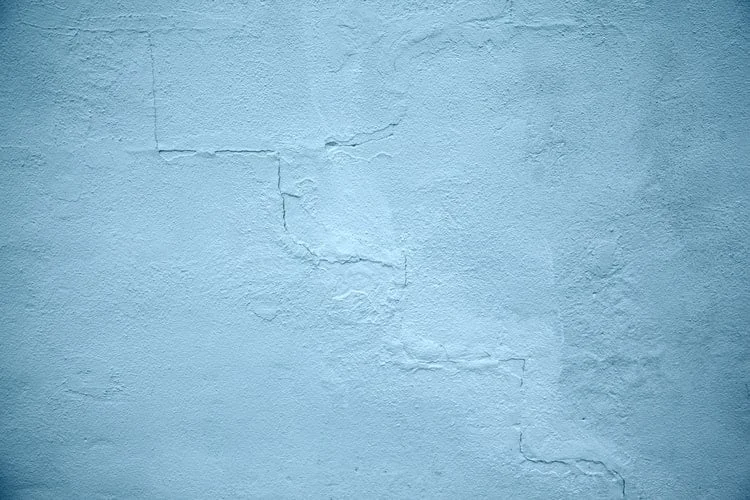
Two calls about block walls come in every fall. One owner has a bare grey block garage, or the block back wall of a small plaza unit, and wants it to look like the rest of the property. The other already has stucco on concrete block and a crack climbing across it like a staircase. Both come down to the same thing: what the block underneath is like decides how the coat goes on and how it fails.
I'm Musa Kastrati. I've put stucco on walls across Halton, Peel, Toronto and York region for 25+ years, on houses and on commercial buildings, and a good share of those walls were block. Block is a friendly base for stucco. It just plays by different rules than the wood-framed walls most of this blog is about.
Can stucco go straight onto concrete block?
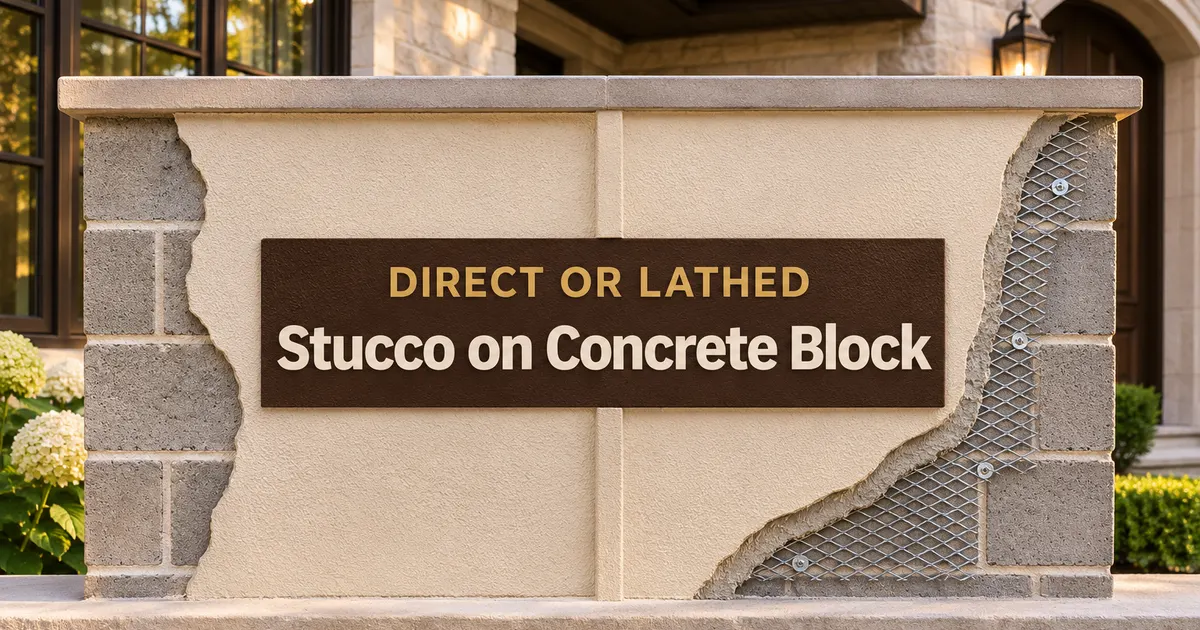
Yes, if the block is clean, bare and sound. The base coat bonds straight into the open pores of the block, so the wall needs no building paper and no metal lath. That bond is the whole system: there is no gap behind the coat for water to sit in. Paint, sealer, dust or a crumbling face breaks that bond, and then the method changes.
On a wood-framed wall the stucco is a skin hung on lath, with paper behind it and a drainage path down to a weep screed. On bare block the coat and the block become one heavy wall. Rain soaks into the outer layer and dries back out again, the way the block itself did before anyone covered it. That is why a direct-applied coat on good block lasts so well, and why a direct-applied coat on bad block lets go in sheets.
The splash test you can do this weekend
Before anyone quotes your wall, find out what the face of the block will do with wet cement. A spray bottle and two minutes tell you most of it. Do it on a dry day, on a few spots: low, high, and wherever the wall looks different.
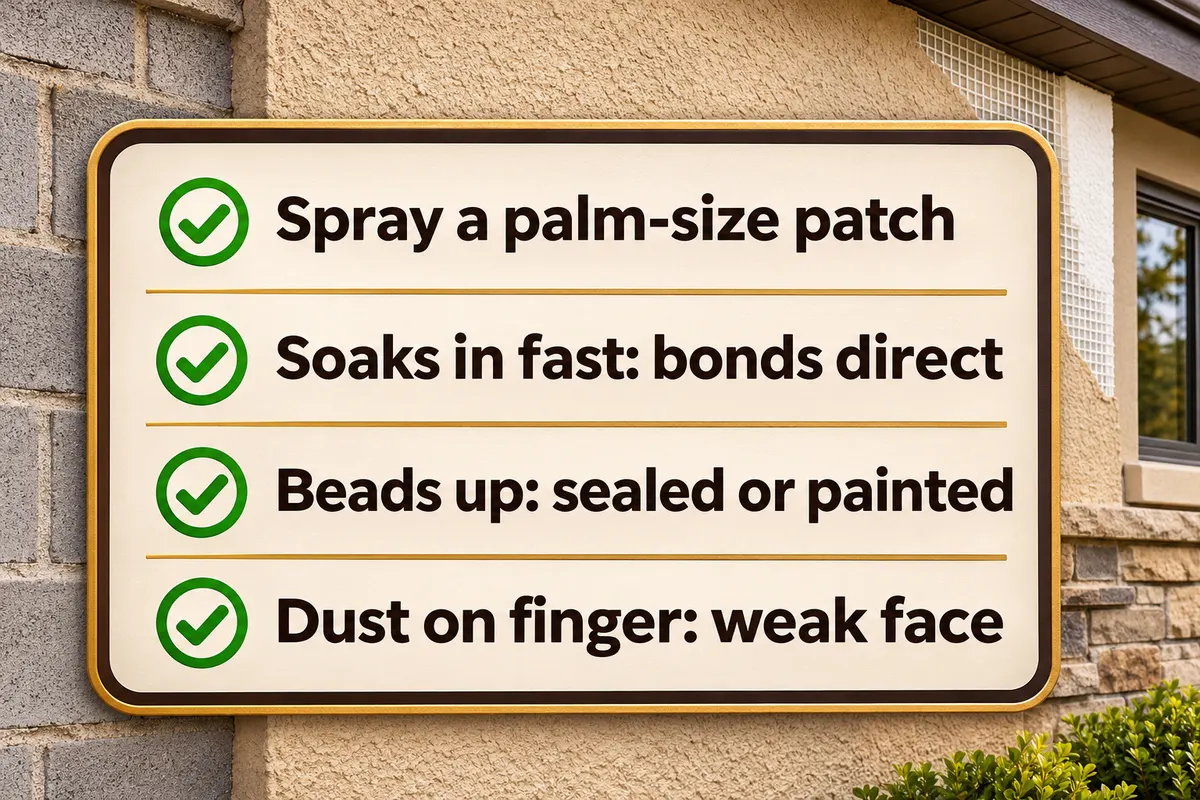
Spray a patch about the size of your palm until it looks wet.
Watch it for a minute. Water that darkens the block and disappears means open pores: the coat can bond direct.
Water that sits in beads or runs off means paint, sealer or a coating is on the face, even when you cannot see it.
Rub the dry block hard with a finger. Sand or grey dust coming off means the face is weak and will take the coat with it.
Old block walls often fail the test in patches. A garage that was painted once, twenty years ago, will soak up water where the paint has worn off and bead it where the paint is still hanging on. That wall is a painted wall for our purposes, because a coat that grabs half the surface lets go of the other half. White crust from the salts in the block is a separate warning: it shows water is moving through the wall, and my post on white stains and efflorescence explains where it comes from.
Direct-applied or paper and lath: block by block
Lath is not an upgrade on block. On new, bare block it is extra work that gives the coat a reason to crack, because the coat is now tied to wire fastened at points instead of bonded across the whole face. Lath belongs where the face of the block cannot be trusted.
| The block you have | How the coat goes on | Why |
|---|
| New or clean bare block that soaks up the spray | Base coat bonded straight to the block, then the finish | The best bond there is; lath here only adds fastener points and cracks |
| Block painted or sealed, where the coating can be ground or blasted off | Cleaned back to bare block, then direct | You pay for surface prep once and keep the full bond |
| Block painted, coated or patched in too many places to clean | Metal lath fastened into the block, coat on the lath | The coat holds onto the wire instead of onto old paint |
| Block with a soft, sandy or flaking face | Loose face removed; badly weathered areas lathed | Stucco is only as strong as the skin of the block it grabs |
| Block below, wood frame above, under one coat | Each part done its own way, with a joint at the line | Two walls that move differently need a planned break |
New stucco on a house sits in the $8 to $16 per sq ft band on our residential stucco page. Direct-applied on clean block skips the paper and lath, so less of the job is spent before the first coat goes on. Commercial block walls, the side and rear walls of plazas and small industrial units, are $10 to $18 on our commercial stucco page, mostly because of access and working hours around a business.
Why does stucco on block crack in steps?
Because a coat bonded to block moves with the block. When the wall below shrinks or a corner settles, the block cracks along its mortar joints, which run in a staircase. The stucco on top shows the same staircase. So a step crack is a message about the block wall, and filling it without asking why only hides the message for a winter.
| What the crack looks like | What moved | Who looks first |
|---|
| Steps along the mortar lines, tight and not growing | The block shrank as it aged; the coat followed | A stucco crew: route, mesh and refinish |
| Steps that widen year to year, or one side standing proud | A corner or a footing is moving under the block | A mason or engineer, then us |
| Straight vertical lines at even spacing down a long wall | The block wall needed movement joints and the coat bridged them | A stucco crew: a sealed joint over each line |
| A level line along the top course, under the roof | The wood roof or wall framing sitting on the block moved | A stucco crew: a joint at the block-to-wood line |
| Hollow sound and patches falling off after a thaw | The bond let go; water got behind and froze | A stucco crew, after the wall behind is checked |
The width of a step crack matters less than whether it is growing. Put a pencil mark at each end and the date beside it, then look again after the first hard freeze and in April. A tight step crack that stays put is a repair at $120 to $400 per crack on our stucco repair list. The hollow, falling patches are usually a bond problem rather than a movement problem, and I've covered how to tell which layer let go in my post on peeling stucco.
Where block meets wood, the wall needs a joint
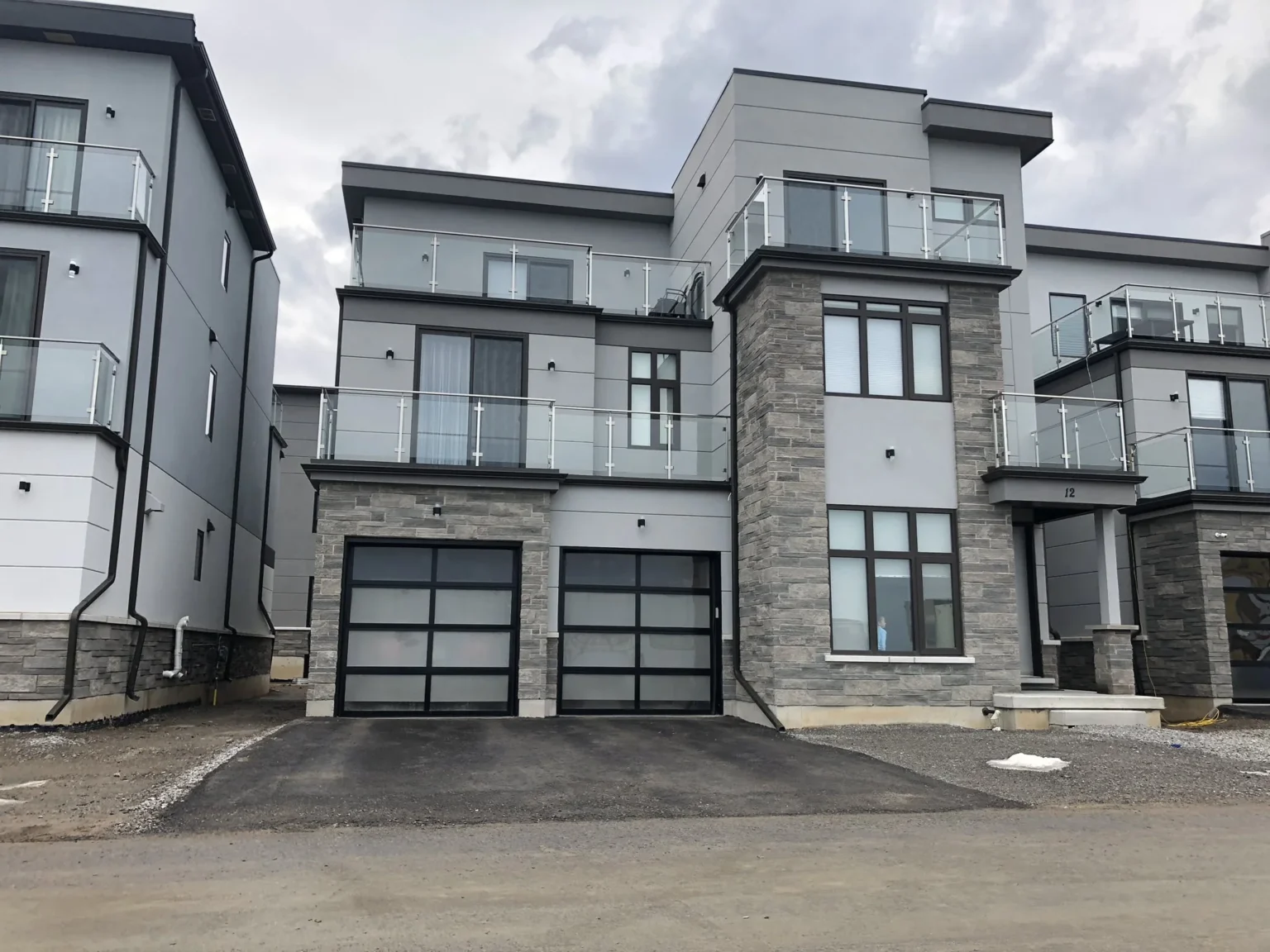
Plenty of GTA buildings are block at the bottom and wood above. The 1950s to 70s bungalows of Etobicoke and North York often have block walls with a wood-framed gable or roof sitting on top. A block garage gets a framed second floor. A plaza has a block wall with a framed parapet or sign band above it. The stucco crews who finished them often ran one coat straight over both.
Wood frame: paper, lath and coat, drains down to a screed
The line: a screed or a sealed joint, never one coat carried across
Concrete block: coat bonded straight to the block
Those two walls do not behave alike. Wood shrinks across its grain as it dries and swells a little in a wet spring. Block barely moves with moisture at all, and it moves with heat and cold on its own schedule. A rigid coat carried across the line gets pulled two ways and cracks level along it, usually within the first few winters. Water then runs down the paper of the framed part and lands on top of the block with nowhere to go.
The fix is to give the wall the line before it picks one: the framed part drains out over a screed or drip at its bottom edge, and the block part starts below it with a sealed joint between them.
On an existing wall that has already cracked at that line, the repair is the same idea done afterwards: cut a straight joint along the line, put in a backer, seal it, and match the finish either side. My guide to control joints on a stucco wall explains why a planned line beats a crack the wall chooses for itself.
What a block wall costs to finish
Here is one wall worked out from our published prices, as an illustration of the arithmetic, not a quote. A detached block garage side wall, 24 feet long and about 9 feet high, minus a side door, comes to roughly 200 sq ft of wall. Its gable is wood-framed, so the joint runs the full 24 feet along the top of the block.
- Stucco on bare block, about 200 sq ft at $8 to $16
- $1,600 to $3,200
- Sealed joint where block meets the framed gable, 24 ft at $6 to $12
- $144 to $288
- This wall
- $1,744 to $3,488
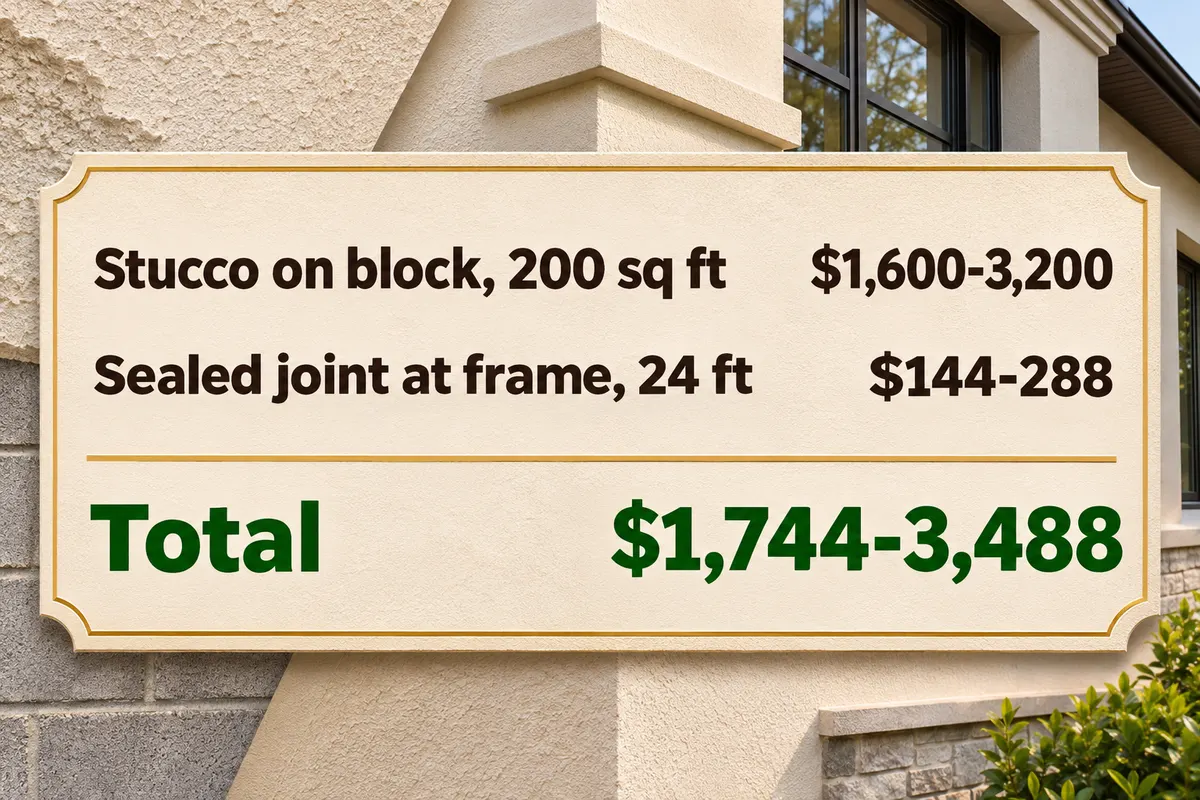
Three things move that number. A painted wall that fails the splash test adds either the stripping or the lath. A small wall on its own sits at the top of the band, because the setup and the cure days are the same whether the wall is 200 sq ft or 2,000. And a wall that needs repair first, with step cracks to route and hollow patches to cut out, adds those at the repair list prices before the new coat. A quote written from a car window will not tell you which of the three your wall has; tapping it and spraying it will.
Cement stucco needs temperatures above about 5 C to cure, so a block wall found at the end of November is a spring job. A wide step crack that takes water can still be sealed before the snow. For a free-standing wall in the yard rather than a building, my post on stucco garden walls covers footings and caps.
Getting your block wall looked at
Send three photos through the contact page, or text them to (905) 973-6470: the whole wall from far enough back to see where it meets the rest of the building, any crack close up with a coin beside it, and a spot you sprayed with water about a minute after you sprayed it. I call back usually within a day, and the written quote is free and fixed. For the older block bungalows in the west end, start with the stucco contractor page for Etobicoke.